
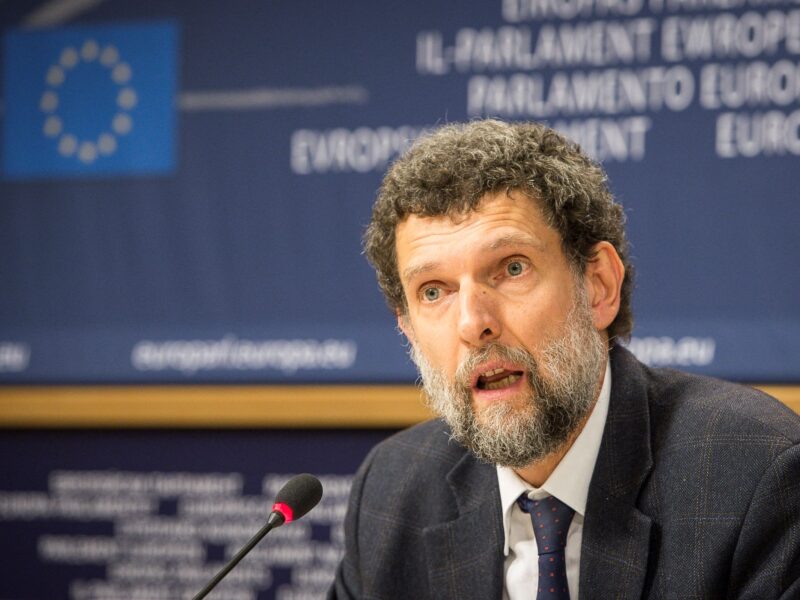
Osman Kavala has been in prison for almost nine years, despite repeated binding judgments that he should be free.(CN) — An acquittal and two binding European judgments failed to unlock Turkish activist Osman Kavala’s cell, so after nearly nine years, Europe’s top human rights judges on Tuesday handed Ankara a final, two-part order: Free him and erase the conviction.Kavala, a philanthropist, activist and businessman, asked the European Court of Human Rights’ Grand Chamber to review his detention and the trial that condemned him to life without release. He accused Turkey of punishing activism by denying him liberty, a fair trial and peaceful expression. He sought acquittal, protection from further retaliatory prosecution and stronger safeguards for Turkish civil society.The court’s Grand Chamber, convened in exceptional circumstances, backed Kavala 15-2 on every central issue. It found no proof he committed, encouraged or supported violence but said Turkey’s criminal courts treated his meetings, research, international contacts, and support for peaceful protest as evidence of an attempt to overthrow the government.The Turkish courts also held Kavala responsible for violence committed by others during the 2013 Gezi Park protests without showing he participated or incited anyone. The European judges warned such logic could scare activists and ordinary citizens out of public debate.Turkey’s trial and appeals courts never explained how Kavala’s conduct caused violence, refused to hear some defense witnesses and left him to disprove the prosecution’s sweeping theory. Judges who acquitted him faced disciplinary proceedings. The Grand Chamber said those events, alongside political pressure, raised serious doubts about an independent judiciary.“The applicant’s situation is one of exceptional gravity and is highly emblematic,” the court said. The judges found Turkey prosecuted, detained and convicted Kavala to punish his Gezi involvement and human rights work, silence him and warn others away from dissent.Philip Leach, Kavala’s lawyer and a professor of human-rights law at Middlesex University, told Courthouse News: “It is an unequivocal and unprecedented judgment from the Grand Chamber which declares Osman Kavala’s criminal conviction null and void and orders his immediate release at the earliest possible date.”Leach singled out the finding that Turkey wielded its legal powers for a political purpose. “After nearly nine years, his illegal incarceration and this gross injustice must now be put to an end,” he said.Kavala, 68, is a businessman and civil-society figure who founded the cultural nonprofit Anadolu Kültür in 2002. His road to prison runs through Gezi Park, one of central Istanbul’s few green spaces. Environmental activists occupied it in May 2013 to block a redevelopment project that included a shopping center. A violent police raid turned the sit-in into nationwide protests against then-Prime Minister Recep Tayyip Erdoğan’s government. Millions joined, most peacefully, though some groups clashed with police and damaged property.Police arrested Kavala four years later. Prosecutors portrayed him as organizing and financing an attempt to overthrow the government, then linked him to a failed 2016 coup. He was acquitted of the Gezi charge in February 2020 but remained jailed. Authorities detained him on another accusation, an appeals court overturned the acquittal and a different court imposed aggravated life imprisonment in April 2022. Turkey’s highest appeals court upheld the conviction in September 2023.Europe’s human rights court ruled in 2019 that Kavala’s detention was intended to silence him. Turkey refused to release him, prompting the Council of Europe’s Committee of Ministers to launch a rarely used enforcement procedure. In 2022, the Grand Chamber found Turkey had disobeyed the binding judgment.Turkish President Recep Tayyip Erdoğan dismissed the process. “We do not recognize those who do not recognize our courts,” he told reporters. “What the European Court of Human Rights says, what the Council of Europe says, does not concern us much.”The Turkish government maintains its judiciary is independent. It did not immediately respond to a request for comment Tuesday.The Grand Chamber describes Kavala’s prosecution as part of a systemic pattern where criminal laws are stretched against political opponents, journalists and human rights defenders. It called for stronger protections for judges and safeguards against serial prosecutions and excessive pretrial detention.Judges Faris Vehabović and Saadet Yüksel dissented, arguing Kavala should have waited for the Turkish Constitutional Court to decide pending applications. Yüksel, who is Turkish, said Kavala’s complaint about a life sentence had not been raised domestically and was partially time limited.The majority found further waiting offered no realistic prospect of relief. It awarded Kavala 70,000 euros (about $81,700) for nonfinancial harm and 43,342.57 euros (about $50,600) in legal costs.There is no appeal. Grand Chamber judgments are final, and the Committee of Ministers will supervise Turkey’s compliance. Turkish law allows the criminal proceedings to be reopened so the conviction’s consequences can be removed.Courthouse News reporter Eunseo Hong is based in the Netherlands.Subscribe to our free newslettersOur weekly newsletter Closing Arguments offers the latest about ongoing trials, major litigation and rulings in courthouses around the U.S. and the world, while the monthly Under the Lights dishes the legal dirt from Hollywood, sports, Big Tech and the arts.Additional Reads
European court lobs third order to free Turkish activist jailed for life
Full Article
Original Source
Read the full article at Courthousenews →KhanList aggregates and links to publicly available news content. We do not host full articles from third-party sources. Always verify important information with original sources.