
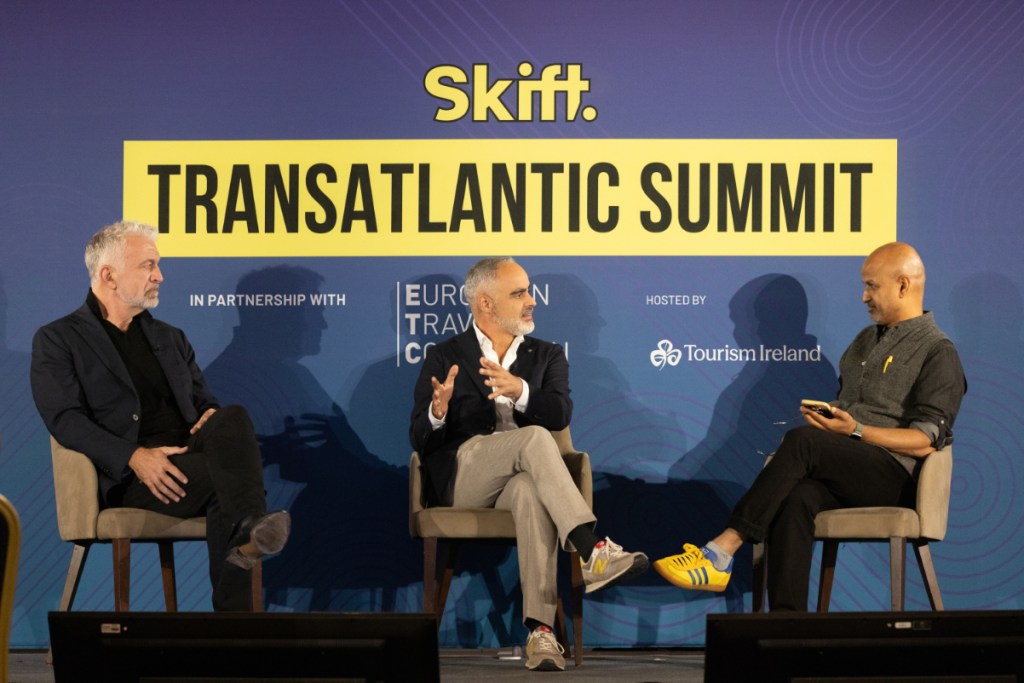
October 20th, 2026 at 6:00 AM EDT Photo Credit: Left: Dylan Ratigan, Journalist, Author, and Entrepreneur, Reservations.AI; Center: Eduardo Santander, CEO, European Travel Commission; Right: Moderator: Rafat Ali, CEO/Founder, Skift. They spoke at the Skift Transatlantic Summit 2026 in Dublin, Ireland, on October 15, 2026. Skift / Bryan Brophy France wants international visitors to spend €100 billion a year by 2030, up 29% from last year’s level, without adding to the crowds in Paris and its other best-known cities. The plan relies on longer stays, higher spending per night, and more off-peak travel. France isn't alone. Ireland's tourism policy, published in December, targets a 15% rise in revenue from overseas visitors by 2031. The Netherlands, Spain, and Croatia have also written visitor dispersal into their national strategies. One obstacle stands in the way. Travelers increasingly pick destinations by asking an AI chatbot, and tourism boards haven't figured out how to get their lesser-known places into the answer. Another problem: Once a visitor lands at a hub airport, moving on by train, connecting flight, or rental car remains complicated, costly, and largely unprotected if anything goes wrong. Artificial intelligence could help with both issues. But only if the industry Sean reports on the hotel industry. He's based in Washington, D.C., near Marriott's and Hilton's headquarters. Send scoops. Tags: aer lingus, AI, artificial intelligence, european union, france, ground transportation, iceland, ireland, multi modal, omio, overtourism, rome2rio, skift intelligence, spain, tourism, tourism boards, wanderlust
Europe Wants Tourists Beyond Big Cities. AI Search Stands in the Way.
Full Article
Original Source
Read the full article at Skift →KhanList aggregates and links to publicly available news content. We do not host full articles from third-party sources. Always verify important information with original sources.