
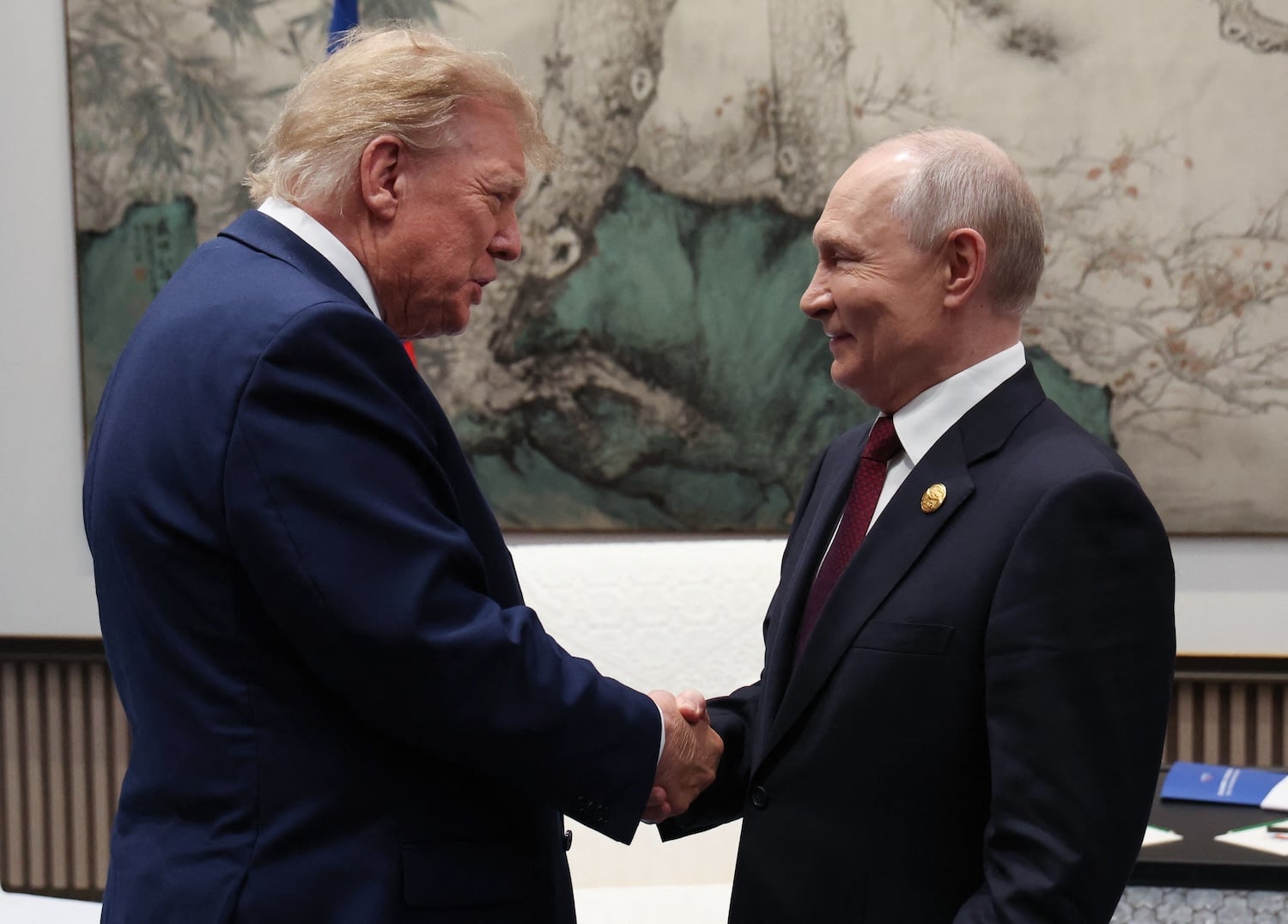
Now that the Trump administration appears to have turned unequivocally against Kyiv and in favor of Moscow, it falls to Europe to backstop Ukraine’s survival. This week will be crucial, with the European Council meeting on Nov. 26-27 to decide on an additional loan of 45 billion euros (about $49.5 billion) to tide Ukraine over next year as it wrestles with nonstop missile strikes, jet-powered drones, and a gaping hole in its budget. The Trump administration has, since the start of its second term, been implacably hostile to Kyiv, from Oval Office beatdowns to a relaxation of sanctions on Russia to demands that Ukraine desist from carrying out long-range strikes against Russian oil facilities. That hostility, like the war, has only escalated, with U.S. President Donald Trump suspending sanctions on Russian diesel exports (in a bid to lower fuel prices) and neutering the latest legislation meant to economically punish Moscow. Now that the Trump administration appears to have turned unequivocally against Kyiv and in favor of Moscow, it falls to Europe to backstop Ukraine’s survival. This week will be crucial, with the European Council meeting on Nov. 26-27 to decide on an additional loan of 45 billion euros (about $49.5 billion) to tide Ukraine over next year as it wrestles with nonstop missile strikes, jet-powered drones, and a gaping hole in its budget. The Trump administration has, since the start of its second term, been implacably hostile to Kyiv, from Oval Office beatdowns to a relaxation of sanctions on Russia to demands that Ukraine desist from carrying out long-range strikes against Russian oil facilities. That hostility, like the war, has only escalated, with U.S. President Donald Trump suspending sanctions on Russian diesel exports (in a bid to lower fuel prices) and neutering the latest legislation meant to economically punish Moscow. “It began with the diesel deal. This is the longest sustained effort by Team Trump” to put its thumb on the scales, said John Herbst, a former U.S. ambassador to Ukraine. “It annoys me even more that they are helping [Russian President Vladimir] Putin do this. Putin wants to undermine NATO, and that is why it is so frustrating.” Trump had previously adumbrated his approach to Ukraine by delaying approval of the bipartisan legislation, championed by former Sen. Lindsey Graham, that would have levied stiff tariffs on Russia’s trading partners and put additional sanctions on top Russian officials. When the legislation finally did pass, Trump watered it down, waiving the sanctions and for once forgetting about tariffs. “I found U.S. policy over the last six weeks depressing,” said Steven Pifer, another former U.S. ambassador to Ukraine. “I think Trump is lost to the cause, even if the American people are not.” Now it falls to Europe to fill the gap, both in terms of Kyiv’s budget and its defense needs. About half of the new loan is earmarked for Ukraine’s administration and the other half for defense procurement. The European loan is not a done deal. There are four holdouts among the usual suspects—Hungary, Slovakia, Bulgaria, and the Czech Republic—that are leery of signing onto more blocwide debt to support a country they view askance. But by Friday, informed observers say, the European Union will probably be able to hammer through a fresh 45 billion on top of the 90 billion euro loan for Ukraine that it is still doling out. European Commission President Ursula von der Leyen has said the latest loan would be backed by frozen Russian assets held in Europe. Those central bank assets total about $300 billion worldwide, with just over $200 billion in Belgium. Despite years of posturing, four years into the war, neither Europe nor the United States nor the United Kingdom has moved from freezing to seizing, fearful of the potential legal, financial, and other consequences of grabbing illicit Russian money. That makes the ultimate collateral for this new European loan something of a question mark. “Europe has no choice but to fund Ukraine’s defense. The question is how you do it,” said Timothy Ash, a Russia expert at Chatham House. “I find it incredible, when you put it across like this, which taxpayers should pay for this: Europe’s or Russia’s?” (He has some thoughts.) The bigger question is broader. Europe knows that enabling Ukraine to survive the war, or at least avoid a dishonorable peace, is critical to the country’s survival as well as its own. The problem, which has been apparent since January 2025, is that Ukraine and Europe are on their own. The United States has not provided any fresh financial support for Kyiv since Trump came back to office, has at times interrupted intelligence-sharing and satellite links, and continues to block the sale of much-need missile interceptors held in European inventories. U.S. Undersecretary of Defense Elbridge Colby scolded Ukraine last week for striking Russian oil facilities, arguing that such attacks were ineffective. (Ukraine’s long-range strikes have taken offline about half of Russia’s refinery capacity in recent months, cratered its energy exports, and are leading to lines at gas stations in Russia.) Meanwhile, Russian missiles and drones continue to rain down on Kyiv, Kharkiv, and other major cities. “Trump is just defending Putin and making it harder for Ukraine to defend itself,” Herbst said. One question that looms now is whether Europe’s determination to support Ukraine—Europe has already provided nearly 240 billion euros (about $260 billion), far more than the United States or any other country—will push Trump into reprisal mode. He has in the past slapped tariffs on Europe while waiving penalties on Russia. Over the weekend, Trump posted a photo of himself with Putin titled, simply, “My Friend.” “If Trump wants to go down that route, it might get ugly in Europe, but I don’t think Europe can afford to let Ukraine lose. There is a real understanding in Europe about how high the stakes are for them,” Ash said. “It will be interesting to see where this goes in terms of the U.S.-EU relationship. This could be a huge crisis. We have to see how far he is willing to take this.”
Europe Steps Into the Breach on Ukraine
Full Article
Original Source
Read the full article at Foreignpolicy →KhanList aggregates and links to publicly available news content. We do not host full articles from third-party sources. Always verify important information with original sources.