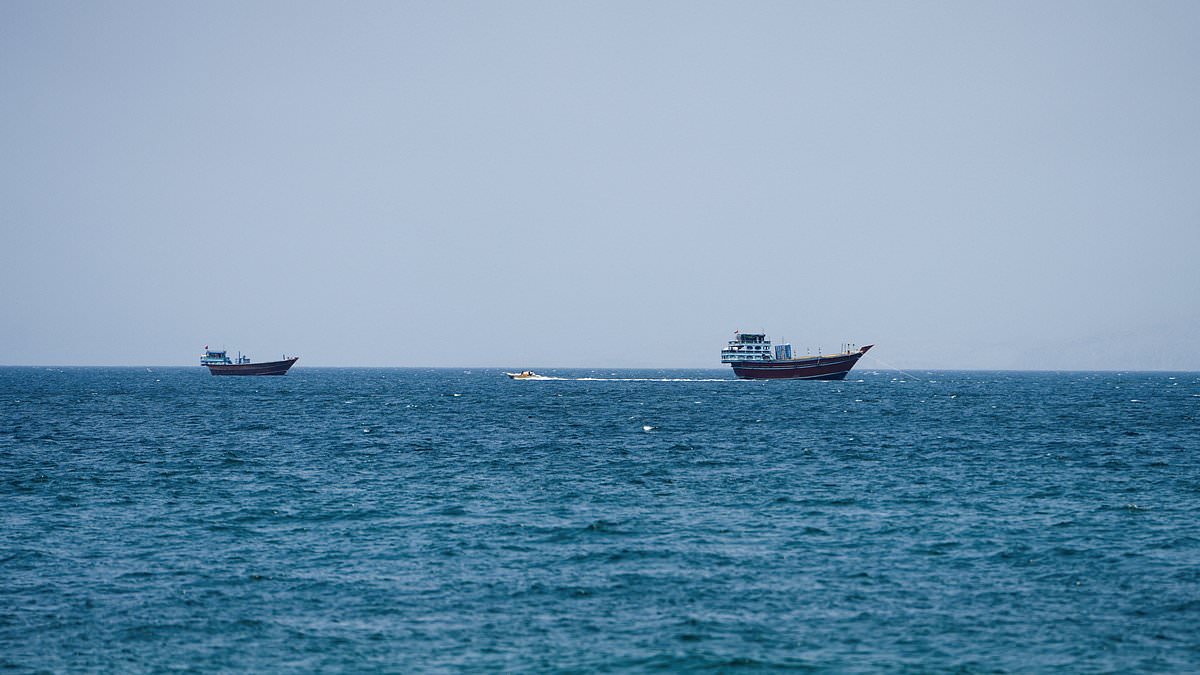
Europe is facing an imminent energy crisis with gas stocks plummeting to historical lows as a result of the war in Iran.Energy consultancy Wood Mackenzie has warned that storage sites across the continent are just above 50 per cent full, which is a very low level for this time of year. Previously, storage sites were at 90 per cent capacity, but now, Europe is looking at entering the winter months with only 75 per cent capacity.Wood Mackenzie's vice president of gas research, Massimo Di Odoardo, cautioned that low storage levels and heightened competition for liquefied natural gas (LNG) would result in higher energy prices in the near future.He said: 'Low European inventories, strong Asian demand and limited new LNG supply growth almost guarantee elevated prices through this winter and into 2027.' LNG imports into Europe have slowed sharply since the outbreak of the Iran war. Imports are on track to total just 6.3 million metric tons in July, the lowest since September 2024, according to Kpler. Part of the reason is that Asia has returned to the market with force. LNG demand across the region has climbed in recent months, attracting a record four million tons of US supply in June and July. A liquid natural gas storage tank is pictured at Isle of Grain Terminal in Rochester, England Vessels at the Strait of Hormuz, as seen from Musandam, OmanThose purchases have diverted cargoes that might otherwise have headed for Europe. When the Strait of Hormuz briefly opened following the US-Iran interim peace deal in April, many hoped that Qatar, which accounted for around a fifth of global LNG supply before the conflict, would quickly restore exports. But the renewed blockade of the strait in recent weeks amid escalating US-Iran tensions has dashed any hopes of that.The European market is thus becoming increasingly alarmed by the combination of low inventories, weak imports and a deteriorating supply outlook. Benchmark European gas prices rose above €60 per megawatt hour last week, climbing above their previous Iran war peak to their highest level since early 2023.Higher prices should eventually attract additional LNG cargoes to Europe. Yet even if imports recover during the coming months, the region appears likely to enter winter with gas inventories well below its targeted 80 per cent storage level.Bryn Jones, head of fixed income at Rathbones Asset Management, said: 'Natural gas inventories are at record lows in Europe at a time they should be increasing to build stocks for the winter. Energy independence is becoming key for Europe.'Last week the EU unveiled an electrification action plan to make Europe the world's first "electro-powered" continent. 'By doubling electrification to 46 per cent by 2040, the EU could save well over €250 billion annually on fossil fuel imports.'Compared with 2021–22, Europe is better positioned to withstand disruptions to gas supply. Dependence on Middle Eastern LNG remains limited, with Qatar providing only a small share of imports, approximately six per cent, while the US has become the dominant supplier.'With LNG accounting for about 50 per cent of EU gas imports, the region's supply base is significantly more diversified than during the energy crisis.'Of course, Europe has relaxed rules on the filling of natural gas and, as the forward curve is negative, this waiting might have more to do with price than availability.'However, we can't ignore the fact that the Strait of Hormuz and the Red Sea are putting pressure on prices globally – and do create inflation.'Analyst Samantha Dart from Goldman Sachs warned that Europe has 'only small room for error' in its gas stockpiling.She added: 'European gas storage remains tight, and there's limited time left for storage injections ahead of Europe's heating season, which starts on Nov 1.' Europe faces similar challenges in diesel, a market that has quietly become one of the most acute areas of energy stress this year.The region is heavily dependent on diesel imports, and the fuel plays a dual role in Europe's economy, powering transportation and industry while also serving as the feedstock for heating oil. Consumers and fuel distributors typically build inventories during the summer months to prepare for colder weather. Instead, inventories have been shrinking.The Iran war has disrupted important Middle Eastern supply routes and reduced diesel exports. Operators work at Enagas regasification plant, the largest LNG plant in Europe, in Barcelona, Spain Traders work on the floor of the New York Stock Exchange. Global stock markets rallied and oil prices tumbled MondayThe loss of those barrels has forced consumers to draw down stocks, pushing inventories to multi-year lows.European diesel inventories are at their thinnest level since 2022. Additionally, stocks in the United States, the world's largest diesel exporter, fell in May to a 23-year low before recovering by around 10 per cent in the week ending July 17, according to the US Energy Information Administration.The situation has been compounded by policy decisions in two of the world's biggest fuel exporters.China has restricted fuel exports since the outbreak of the Iran war as it seeks to conserve supplies. How it plans to manage its production and exports moving forward remains a huge unknown.Meanwhile, Russia, the world's second-largest diesel exporter in 2025, moved to ban diesel exports in July after relentless Ukrainian drone attacks damaged some of its refining facilities and reduced domestic fuel availability.Russia had been shipping nearly one million barrels per day, or around 12 per cent of global diesel exports, before the recent escalation in the war with Ukraine. The result of the ban has been an extraordinary surge in refining margins. European diesel crack spreads recently climbed to a record of nearly $65 per barrel.Unsurprisingly, those high prices are beginning to curb demand. Diesel demand in Europe dropped by over 6 per cent in April to 5.53 million bpd, according to the International Energy Agency. Some of the decline may reflect the continued shift toward gasoline-powered and electric vehicles, but persistently elevated prices are also forcing consumers and businesses to cut consumption.Even if tensions in the Middle East ease quickly, the damage to inventories has already been done. Global LNG and diesel markets are likely to remain undersupplied for months as countries rebuild stocks and compete for limited supplies.That leaves Europe increasingly dependent on a factor it cannot control: the weather.A mild winter could provide enough breathing room to avoid a full-blown crisis. But a prolonged cold spell that sharply increases heating demand would expose just how little margin for error remains in Europe's energy system. After years of successive shocks, the continent once again finds itself one harsh winter away from a serious energy crisis.
Europe facing imminent energy crisis with gas stocks at historical lows as a result of Iran war
Full Article
Original Source
Read the full article at Dailymail →KhanList aggregates and links to publicly available news content. We do not host full articles from third-party sources. Always verify important information with original sources.