
EU and UK leaders meet in Brussels on Friday for a pivotal summit that could mark the most decisive political break with the Brexit era, a decade after the referendum that drove the two sides apart. ADVERTISEMENT ADVERTISEMENT British Prime Minister Andy Burnham, who has made rebuilding relations with Europe a political priority since taking office in July, has been openly critical of Brexit, describing the current relationship with the EU as "not good enough" and even floating the prospect of rejoining the bloc. With Europe under growing pressure to take greater responsibility for its own security and boost its economic competitiveness, there is also a political imperative on both sides of the Channel to put years of acrimony behind them. Brussels and London are expected to unveil a package of agreements covering trade, defence industry cooperation, agrifood standards, youth mobility, economic security and access to the EU electricity market. Draft summit conclusions circulated to European governments on Tuesday evening shed light on how the EU and UK intend to forge closer ties than at any point since Britain left the bloc in 2020. But the document, seen by Euronews, also reveals the limits of the rapprochement, with negotiators still haggling over several politically sensitive issues just days before the summit. Bilateral agreements The two sides have all but finalised an agreement to align agrifood standards, which would scrap existing border controls and certification requirements for “the vast majority” of animal and plant products traded between the UK and the EU from 1 March 2028. They are also expected to confirm a deal linking the UK and EU Emissions Trading Systems (ETS), which would remove the need for carbon border levies on trade between them, although the draft statement sets no date for its application. Sticking points remain over a deal integrating the UK into the EU electricity market. Britain has some of the highest energy prices in Europe, while Brussels wants to make access conditional on a financial contribution to the bloc’s funding for its poorest regions. Both sides commit to concluding negotiations in 2027. The EU and UK are also set to launch a digital partnership in early 2027 covering secure connectivity, artificial intelligence and digital identities. However, a commitment to apply the EU's AI Act and Cyber Resilience Act to Northern Ireland under the Windsor Framework has been struck out. Youth mobility Youth mobility remains a key point of contention. EU countries want their students to receive equal treatment at British universities, notably on tuition fees, while the UK argues that it attracts far more European students than it sends to the continent. The thorny question of fees has been moved into a parallel agreement. The draft statement currently contains two options: equal treatment for EU nationals or “significantly reduced undergraduate fees.” The statement sets a clear timeline for the Youth Experience Scheme (TES), which would let young people live in each other’s territory for up to three years to work or study. The aim is to seal the agreement by 2028 at the latest and have the scheme running by January 2030. The total number of participants has not been decided yet, although sources say it is likely to be around 100,000. Defence integration Defence industry cooperation has been a source of friction, with France pushing to restrict British firms' access to the EU's Security Action for Europe (SAFE) programme over concerns about competition from across the Channel. But the two sides are being pushed closer, as the US eyes a drawdown of its military presence in Europe, while also backing Ukraine’s war effort and attempting to fill the strategic gaps the Americans leave behind. The UK has already been included in the Ukraine Support Loan, and the summit looks set to pave the way for closer defence industrial integration. “Given the global security context, we intend to enhance exchanges on defence industrial issues and will identify ways to deepen capability collaboration, taking into account the objective of developing resilient European supply chains and capabilities and addressing critical capability gaps, including through the Capability Coalitions,” the text reads. The Capability Coalitions allow EU member states to work together to address military shortfalls in strategic areas such as air defence, drones and ammunition. Steel safeguards Earlier this year, the EU adopted steel safeguards to counter Chinese overcapacity, which affected all exporters to the European market, including the UK. The two sides now commit to exploring bilateral safeguards based on their respective quota allocations, to protect their industries from global overcapacity. “A long-term sustainable solution for movement of UK originating steel to Northern Ireland would also be put in place,” the document states. Economic security London and Brussels will set up a dialogue on economic security, covering export controls, technology leakage in critical sectors and supply chain disruption. A reference to coordination on market access, public procurement and subsidies has been removed. Discussions within the EU on whether a European preference in public procurement should also apply to the UK are still ongoing. Notably, the EU wants the UK to ensure its national policies produce outcomes equivalent to the bloc’s, while London has proposed much softer language on protecting supply chains consistently and pre-empting circumvention. Home affairs and migration The EU's demand that the UK suspend its regime for deporting foreign national offenders has been dropped from the statement. Instead, the two sides commit to providing advance notice of such removals and exploring bilateral cooperation on prisoner transfers. The two sides also acknowledge the difficulties law enforcement authorities face in obtaining electronic data from other jurisdictions. They commit to exploring ways “to reinforce mutual and reciprocal exchanges of data on criminal records of third country nationals, in the light of technical developments.” The statement calls for more systematic, structured and reciprocal information exchange between EU member states and the UK to prevent migrant smuggling and human trafficking across the Channel, including by enabling the work of the EU border agency Frontex.
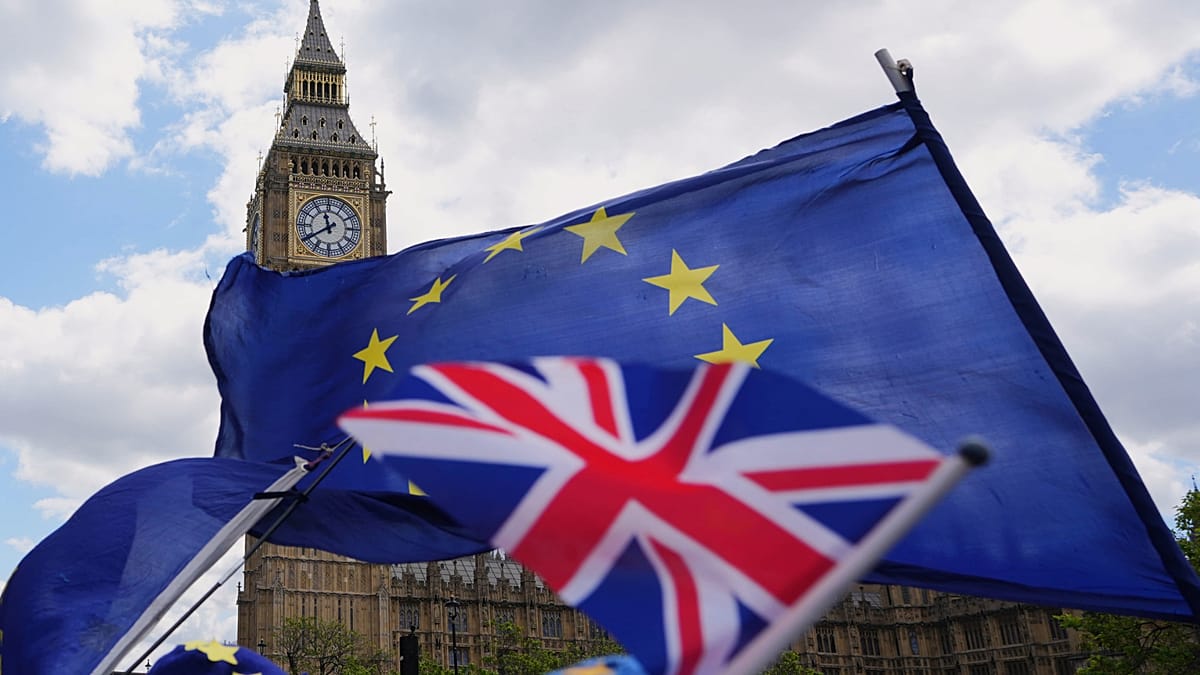
EU-UK summit: Leaked draft reveals ambition and limits of Brexit reset
Full Article
Original Source
Read the full article at Euronews →KhanList aggregates and links to publicly available news content. We do not host full articles from third-party sources. Always verify important information with original sources.