
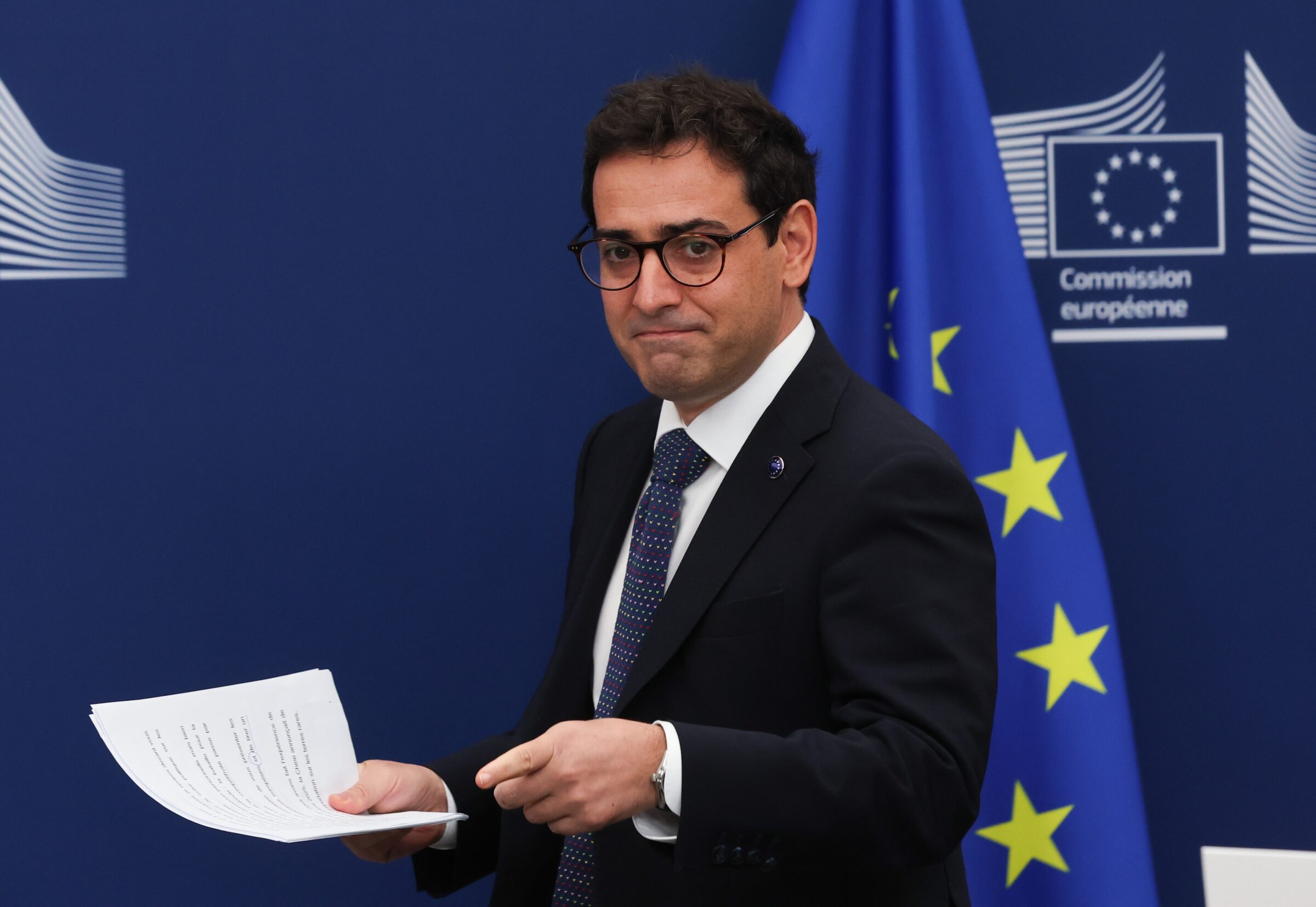
The European Commission has added 46 projects to its list of critical raw materials investments, but its own figures show little EU money has reached similar schemes it selected last year. The new projects are to be spread across 16 EU countries and cover all but two of the EU’s list of 17 strategic raw materials, said the commission on Friday (9 October). The priority is copper, used in power grids, which featured in 19 of the 46 new initiatives. Battery materials also top the list: with 12 projects involving nickel, 10 cobalt, seven lithium, five manganese, and four graphite. Only four of the new projects concern rare earths used in magnets, wind turbines, and electric motors, for which the EU relies almost entirely on imports, mainly from China. The new projects suggest the commission sees recycling as a core pillar in its quest to reduce dependency on Chinese imports. Of the 46 new ones, 19 focus on recycling, 11 on processing and eight on extraction. ‘Very tangible‘ “The results are very tangible,” EU industry commissioner Stéphane Séjourné told reporters in Brussels on Friday, pointing to the impact of the first list of strategic investments, selected in March 2025. He mentioned Keliber in Finland, which he said is now extracting and processing lithium, and the French company Carester’s plant in Lacq, which recycles magnets and separates heavy rare earths. He said Carester could eventually account for around 15 percent of global production of dysprosium and terbium oxides, used in the powerful magnets in electric car motors and wind turbines, and that Greek company Metlen is already producing gallium, important for semiconductors and defence equipment. He didn’t mention that all three projects were already well advanced before they received strategic status in March 2025.
EU puts 46 more mines and recycling plants on ‘strategic’ list, without closing funding gap
Full Article
Original Source
Read the full article at Euobserver →KhanList aggregates and links to publicly available news content. We do not host full articles from third-party sources. Always verify important information with original sources.