
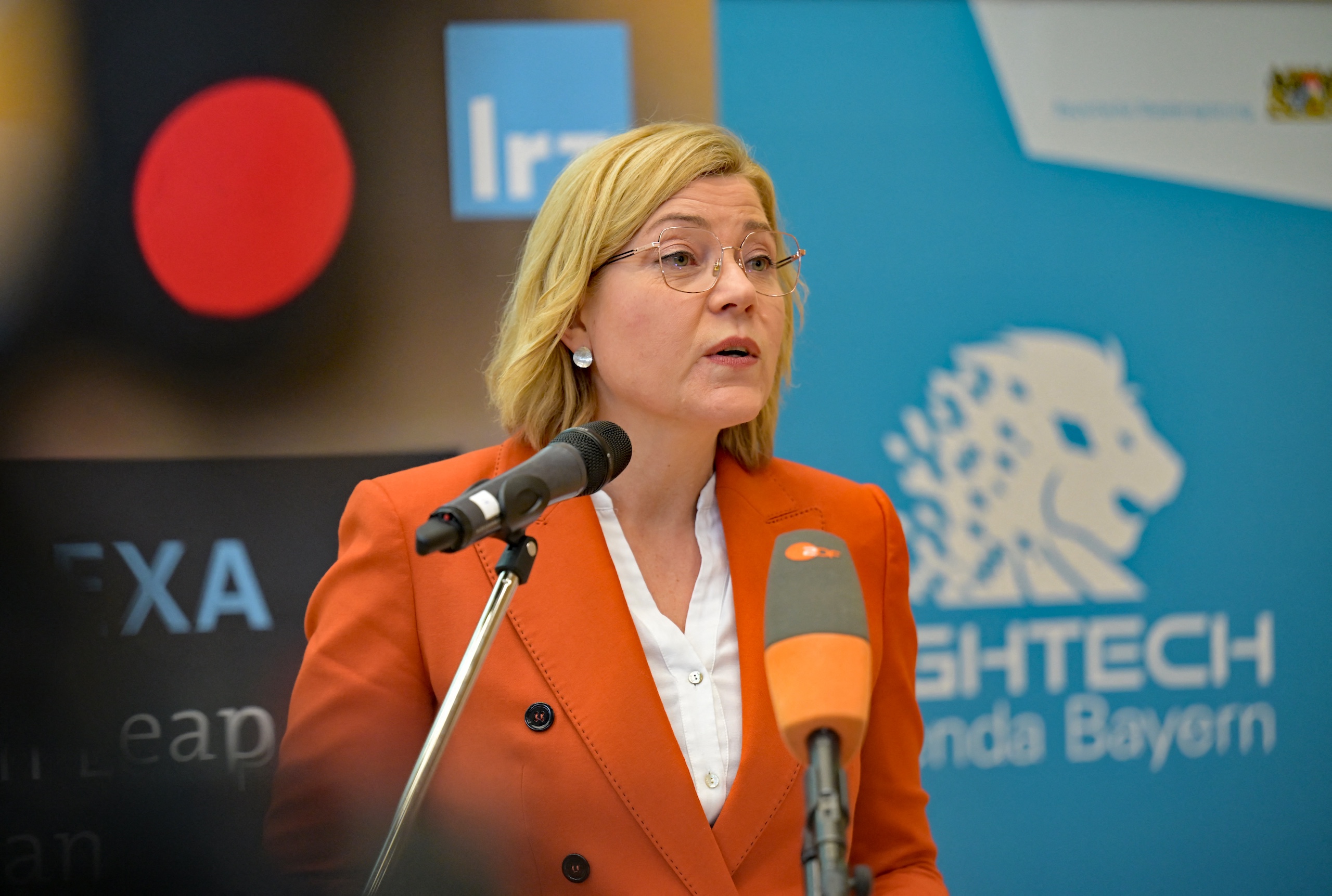
The EU aims to become a global leader in quantum computing by 2030. The bloc already leads in quantum research but has been slower to turn that research into commercial products.(AFP) — The European Union announced plans Wednesday for a fund of up to 50 billion euros ($55 billion) to boost artificial intelligence and quantum computing as the bloc seeks to keep from falling further behind the United States and China in advanced technologies.The fund would “ensure access to innovative funding instruments, not only for quantum technologies, but more widely for all critical technologies which are necessary to our tech sovereignty and economic security,” EU technology chief Henna Virkkunen said at a news conference at the European Parliament in Strasbourg, France.“We want to build a fund and our target scale is now 50 billion euros,” she said, calling it a “sufficient starting point.”Virkkunen unveiled the Sovereign Tech Equity Fund as she presented proposed rules to support quantum technology development in Europe. Both are part of the bloc’s efforts to reduce its reliance on technology from the U.S. and other countries outside Europe.Quantum computers use the principles of quantum mechanics, which govern how matter behaves at atomic and subatomic scales, to tackle certain problems that could take conventional computers much longer to solve.The EU says quantum computing could help researchers develop drugs, diagnose diseases earlier and design more efficient batteries. It could also accelerate AI development.The proposed rules would encourage public authorities to favor European businesses when awarding public funds. Virkkunen said Europe remained open to working with “like-minded international partners” on quantum technology.“This is not a blanket requirement that every component be manufactured in the EU,” the European Commission said.EU member countries and the European Parliament would have to negotiate the final version before the rules could take effect.Limited capitalThe EU aims to become a global leader in quantum computing by 2030. The bloc already leads in quantum research but has been slower to turn that research into commercial products.“Our industrial ecosystem is fragile due to fragmented support across the member states and also lower access to private capital compared to USA and China,” Virkkunen said.European quantum startups attract just 5% of global private funding in the field, compared with 50% for U.S. startups, she said.The EU says advances in quantum technology could lead to more secure communications for military and national security operations and help develop more advanced defense equipment.Quantum computing also poses cybersecurity risks because it could break some forms of encryption used to protect digital data.The European Commission said last week that an AI-assisted cyberattack hit its systems in October. The attack followed hacks targeting store freezers across Europe that caused significant food losses.Subscribe to our free newslettersOur weekly newsletter Closing Arguments offers the latest about ongoing trials, major litigation and rulings in courthouses around the U.S. and the world, while the monthly Under the Lights dishes the legal dirt from Hollywood, sports, Big Tech and the arts.Additional Reads
EU plans to invest $55 billion in AI, quantum computing
Full Article
Original Source
Read the full article at Courthousenews →KhanList aggregates and links to publicly available news content. We do not host full articles from third-party sources. Always verify important information with original sources.