
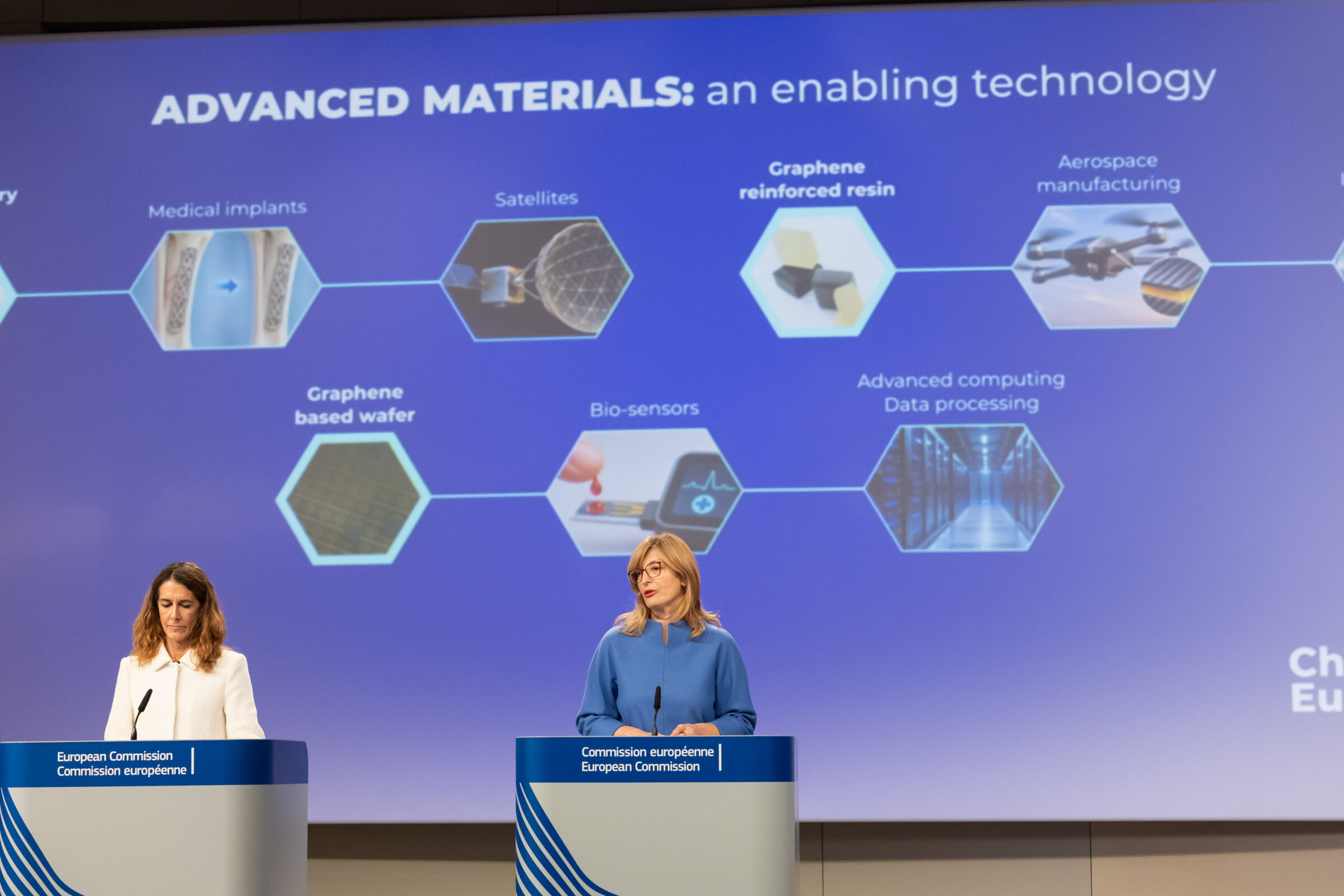
The European Commission, on Wednesday (18 November), set out three new targets to increase investment in and production of advanced materials by 20 percent, but shied away from proposing a new law that would enshrine them. The EU executive says that it wants the Advanced Materials for Europe agenda to make the EU a world leader in designing, producing, and using safer and more sustainable advanced materials by 2035. That will require EU states to work together to increase investment in advanced materials research and innovation by 20 percent, create 20 percent more EU-based startup businesses in the sector, and increase the number of projects reaching higher deployment levels in advanced materials by also 20 percent. Advanced materials are engineered substances such as carbon fiber-reinforced polymer, silicon, alloys and ceramics which are used in the manufacturing of high-tech goods, primarily in the electronics, energy, construction, mobility, health, and aerospace defence sectors. The blueprint is the latest move to shore up the EU’s industrial base and reduce its reliance on Chinese industrial inputs. China also provides almost 100 percent of the EU’s supply of heavy rare earth elements, creating supply chain vulnerabilities and geopolitical risks. To read this story, log in or subscribeEnjoy access to all articles and 25 years of archives, comment and gift articles. Become a subscriber for as low as €1,75 per week.Read without limitsAlready a subscriber? Login
EU opts for voluntary targets to secure key materials used in high-tech industries
Full Article
Original Source
Read the full article at Euobserver →KhanList aggregates and links to publicly available news content. We do not host full articles from third-party sources. Always verify important information with original sources.