
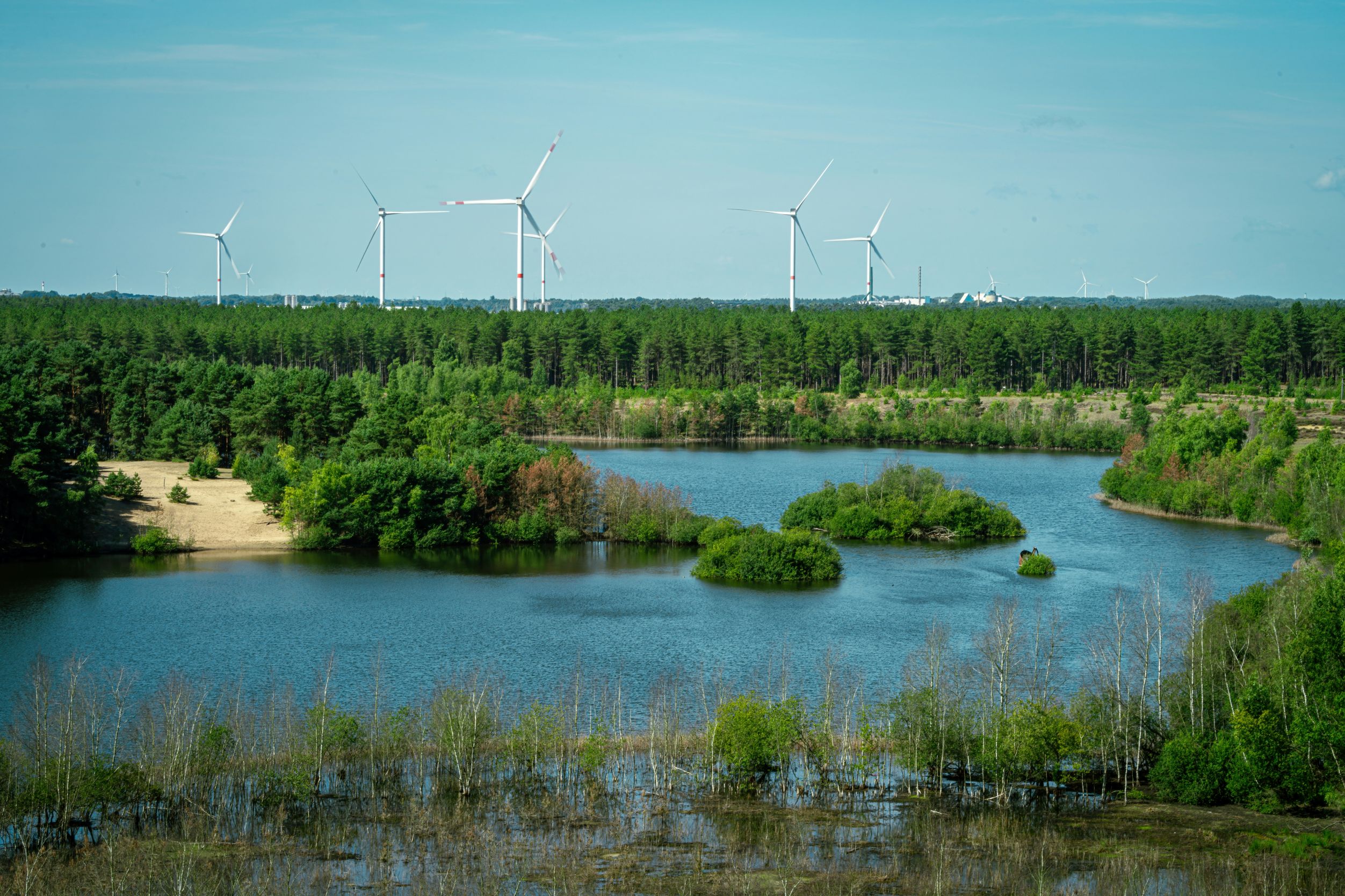
Europe fast-tracked renewable energy permits after Russian gas supplies fell. A Belgian case tested how much discretion local officials still had under those rules.(CN) — The Belgian region Wallonia said no to two wind turbines near its capital to protect the views, but the EU’s top court ruled Thursday that even scenery could take a back seat to qualifying renewable projects under the bloc’s emergency rules.Eneco Wind Belgium asked the national Council of State to overturn the Walloon region’s refusal to let it build and operate the turbines in Andoy, on the outskirts of Namur. The company argued officials had overlooked the priority its project should receive under an emergency EU rule. The Belgian judges asked the Court of Justice of the European Union how far that rule could go.Eneco filed for its permit in April 2023, a few months after the EU moved to speed up renewable energy construction. Russia’s invasion of Ukraine and cuts in Russian gas supplies had sent energy prices soaring. Getting wind and other renewable projects online faster offered a way to replace some of that fuel.In Andoy, the plans called for access roads, a substation and underground cables. A public inquiry drew complaints, and Walloon officials turned down the project that October, citing the area’s landscape and heritage. Officials reviewing Eneco’s appeal recommended a permit with conditions. The ministers handling the appeal missed the deadline to notify Eneco of a decision, so the refusal stood.The EU judges said projects recognized as serving an overriding public interest had to get priority even when the competing concern fell outside EU rules on birds, habitats and waterways. Limiting that advantage to those environmental laws, they reasoned, would blunt a measure designed to speed up permitting.For Hendrik Schoukens, a professor of environmental law at Ghent University, the ruling narrowed officials’ discretion in an area where governments set their own standards. “This is important, since landscape protection is not a harmonized interest by EU law,” he said.Officials could still put a competing interest first if they gave reasons specific to the project. The judges pointed to the rule’s instruction to weigh those interests case by case. “That provision would be devoid of purpose if the priority of those projects were to arise automatically from the mere recognition of their being of overriding public interest,” the court wrote.For projects that needed an exception to EU bird or habitat protections, there was still the question of whether they could go ahead another way. Harm Dotinga, a senior legal adviser on nature protection at BirdLife Netherlands, said a well-supported refusal could still protect biodiversity. He pointed to separate legal requirements, including the need to show there was no satisfactory alternative. “Those may also justify rejection of the project if properly motivated,” he said. Schoukens said it was striking how little attention the Belgian proceedings had paid to alternatives, given that a more sustainable option could still sink a project.Whether a project qualified for priority in the first place depended on what stood in its way. Officials could rely on an existing presumption that it served an overriding public interest, including where national law extended that presumption to landscape protection. Where the presumption did not apply or was called into question, the project needed formal recognition.Eline Dhaen, a spokesperson for Eneco Belgium, said the company was reviewing the ruling. The Walloon Region did not respond to a request for comment.A permit with conditions, as officials had recommended in Andoy, was another option. The court said authorities could require developers to limit or make up for environmental damage and, where the law allowed, let some measures follow approval. Where species protection was at stake, the priority rule required conservation measures backed by sufficient funding and land.Elisa Cristea, a senior associate specializing in energy and environmental law at Romanian firm Țuca Zbârcea & Asociații, welcomed the ruling and saw conditional permits as its most practical point.“This reflects a shift in the approach to permitting: Authorities should consider how competing interests can be accommodated rather than treating them solely as grounds for refusing a project,” she said.Cristea said the judges left officials more leeway than Advocate General Athanasios Rantos, who had proposed that departures from the priority rule be exceptional and backed by a detailed assessment. She said the ruling could outlast the expired emergency measure if EU lawmakers adopted a European Commission proposal to restore priority over a wider range of competing interests.Thursday’s ruling is binding and cannot be appealed. Belgium’s Council of State now has to apply it to the question still open in Andoy: whether Wallonia’s refusal stands.Courthouse News reporter Eunseo Hong is based in the Netherlands.Subscribe to our free newslettersOur weekly newsletter Closing Arguments offers the latest about ongoing trials, major litigation and rulings in courthouses around the U.S. and the world, while the monthly Under the Lights dishes the legal dirt from Hollywood, sports, Big Tech and the arts.Additional Reads
EU court puts wind power first in permit fights over scenic views
Full Article
Original Source
Read the full article at Courthousenews →KhanList aggregates and links to publicly available news content. We do not host full articles from third-party sources. Always verify important information with original sources.