
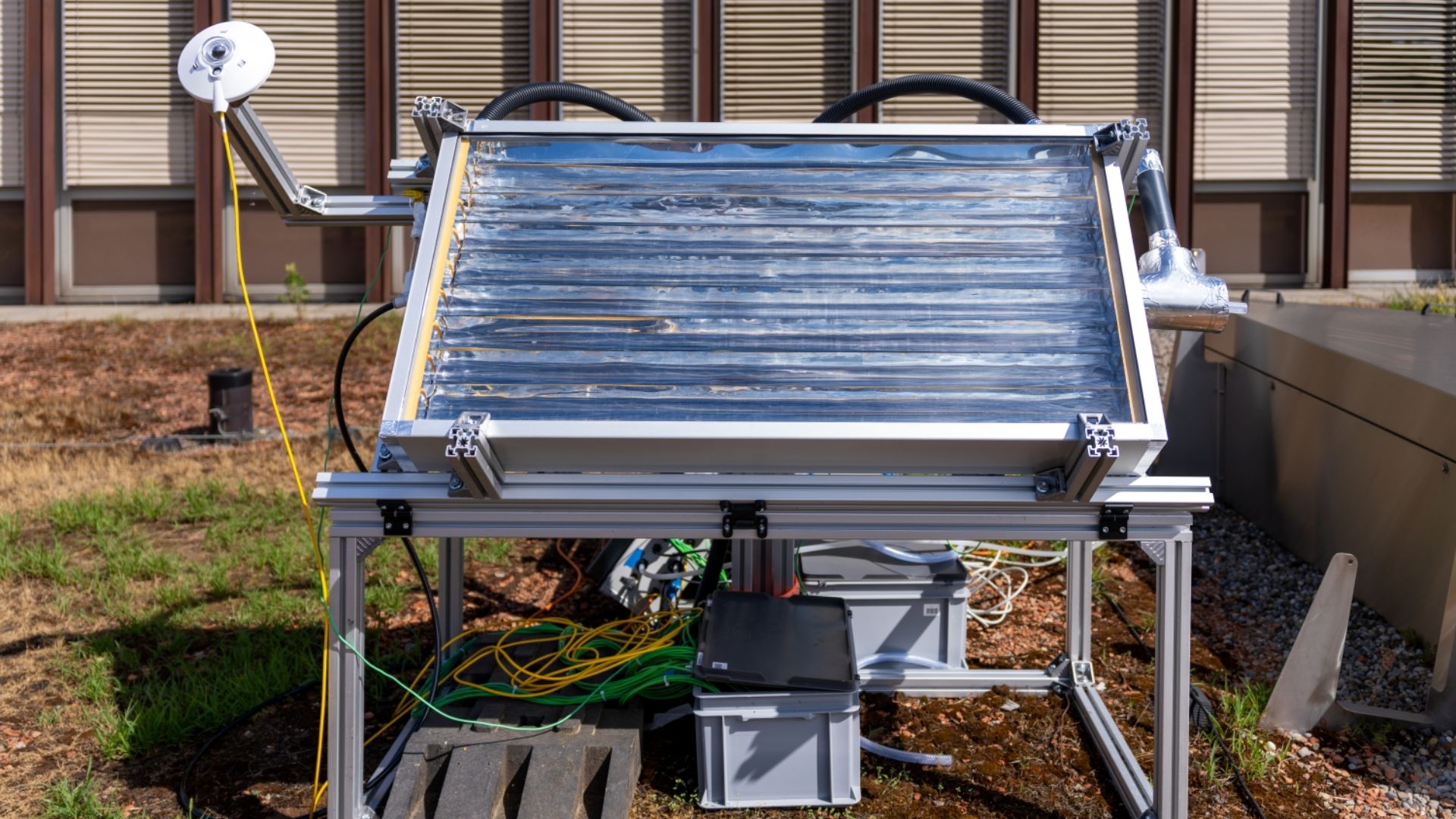
An ETH Zurich engineer is developing a solar thermal collector designed to provide industrial facilities with process heat, potentially offering a lower-cost alternative to burning fossil fuels for applications such as pasteurization, drying, cleaning, and chemical processing. The prototype, developed by mechanical engineer and ETH Pioneer Fellow Luca Thommen, is designed to concentrate sunlight and convert it directly into usable heat. The project targets an often-overlooked part of industrial decarbonization. Replacing the fossil fuels used to generate heat rather than electricity. Tackling industry’s heat problem Solar energy is most commonly associated with photovoltaic panels that convert sunlight into electricity. Thommen’s approach instead focuses on capturing solar energy as heat. The collector uses reflective elements to direct sunlight toward an absorber panel, where the energy is trapped and transferred to a medium such as air or water. Insulation is then reduces heat losses. According to ETH Zurich, the system is intended for industrial processes requiring temperatures of up to around 302°F. That range covers a variety of applications, including pasteurization and sterilization of dairy products, cooking and cleaning in food production, and distillation processes in the chemical and pharmaceutical industries. Many of these processes currently depend on natural gas or other fossil fuels to generate the required heat. Designed to make solar heat cheaper Solar thermal technology itself is not new. The challenge, according to Thommen, is making it economically attractive enough for industrial companies to adopt. His approach is centered on simplifying the collector’s construction and reducing its reliance on expensive materials. Much of the prototype is made using lightweight, readily available insulation material, while metal is used only where necessary. The goal is to achieve similar performance to existing collector technologies at a significantly lower cost. “The technology I have further developed already exists in principle, but it is not yet cost-effective,” Thommen said, according to ETH Zurich. The first rooftop prototype has already demonstrated that the system can reach its target temperatures, providing an early validation of the design. Potential uses beyond conventional factories The technology could potentially serve industries that require moderate levels of process heat but are difficult to electrify directly. ETH Zurich said Thommen has also received interest from companies, including carbon removal company Climeworks. The ETH spin-off uses heat of around 212°F in absorption and desorption processes associated with extracting carbon dioxide from the atmosphere, placing its requirements within the proposed collector’s operating range. The technology is still in the early stages, however. Thommen is using the ETH Pioneer Fellowship to further develop the system, engage with potential customers and investors, and prepare it for testing at a pilot facility. His goal is to develop a market-ready product within the next year. If the technology can prove both technically and economically viable at a larger scale, it could offer industrial operators another way to reduce their dependence on fossil fuels, not by generating more renewable electricity, but by using sunlight directly to produce the heat their processes already require. Get the latest in engineering, tech, space & science - delivered daily to your inbox.Kaif Shaikh is a journalist and writer passionate about turning complex information into clear, impactful stories. His writing covers technology, sustainability, geopolitics, and occasionally fiction. A graduate in Journalism and Mass Communication, his work has appeared in the Times of India and beyond. After a near-fatal experience, Kaif began seeing both stories and silences differently. Outside work, he juggles far too many projects and passions, but always makes time to read, reflect, and hold onto the thread of wonder.
ETH engineer develops solar collector that turns sunlight into industrial heat
Full Article
Original Source
Read the full article at Interestingengineering →KhanList aggregates and links to publicly available news content. We do not host full articles from third-party sources. Always verify important information with original sources.