
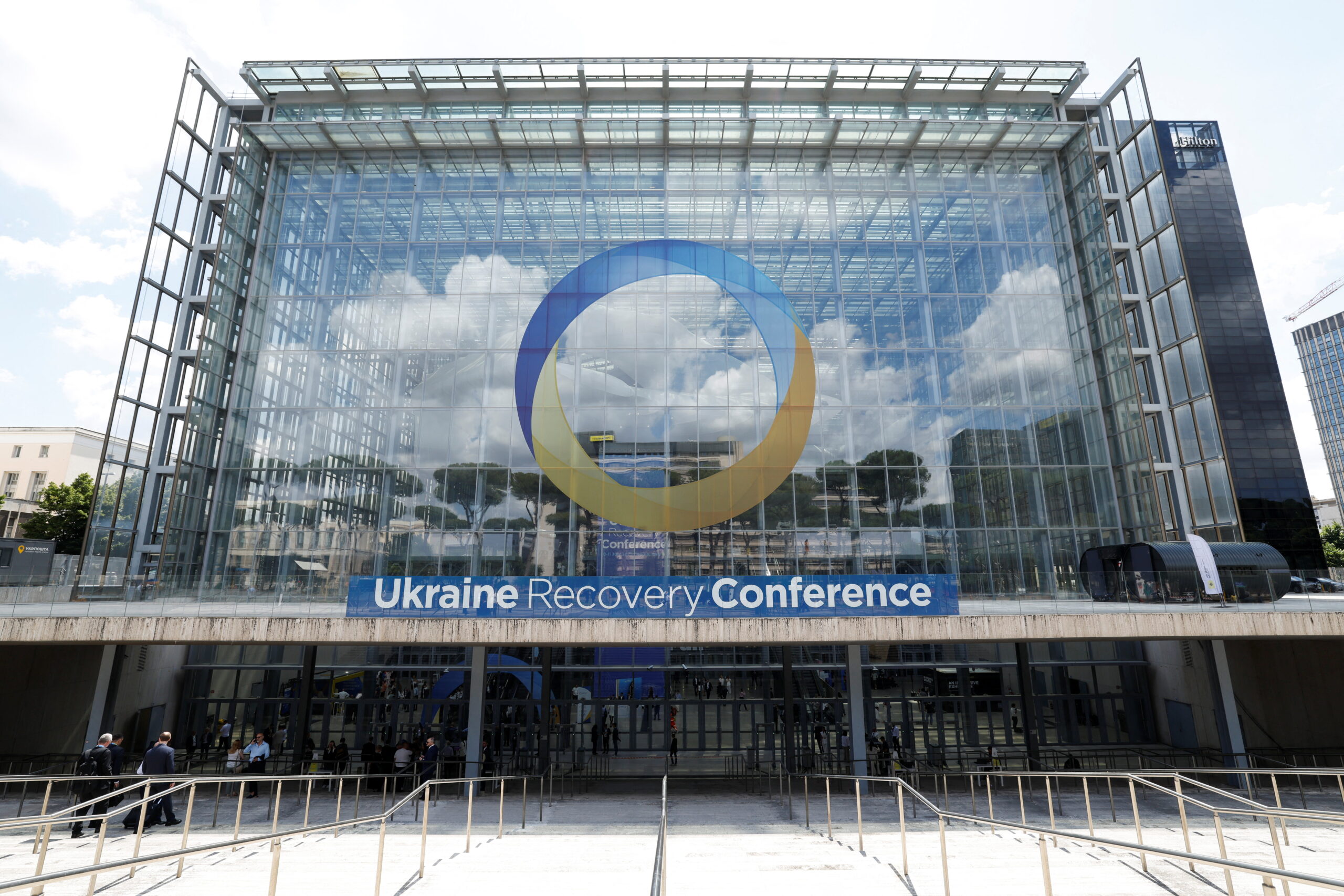
The 2027 Ukraine Recovery Conference in Tallinn has been knocked off course by its own timing in January. This could actually be an opportunity, however, to turn the event from a one-off series of signing ceremonies into a substantive discussion of Ukraine’s future. Shortly after the Gdańsk Ukraine Recovery Conference in June 2026, Ukraine watchers were taken aback to see that the next URC, to be held in Estonia, was scheduled for late January. Not only does this place the event just seven months after the last one; it also means gathering senior Ukrainian officials outside the country during what is expected to be the most difficult winter since the start of Russia’s full-scale invasion. For Ukrainian government officials, being seen abroad at a high-profile conference talking about future deals while the country’s citizens sit in freezing darkness makes for poor optics. The January date was widely seen as driven by Estonia’s own parliamentary elections in March. By late October, Ukrainian President Volodymyr Zelenskyy had told the Estonian defense minister that senior Ukrainian attendance in Tallinn was unlikely. After months of behind-the-scenes debate, the Estonian and Ukrainian governments announced in a joint statement that the focus of the conference would shift from “recovery” to “resilience,” with the goal of producing “concrete decisions, specific financial commitments, and assistance mechanisms” that could be put to work this winter. This new emphasis is understandable. Russian attacks on Ukraine’s energy infrastructure, transportation network, economy, and civilian population mean the country will need urgent help to get through the winter and keep functioning, but the episode nonetheless risks becoming yet another missed opportunity for Ukraine and its partners. To see why, it helps to recall why these conferences exist in the first place. The “R” in URC originally stood for “reform” not “recovery.” The first URC was the Ukraine Reform Conference, which took place in London in 2017. It was intended to be an annual opportunity for Kyiv to report on the reform agenda launched after the country’s 2014 revolution, and for partners to stay invested in that effort. Further conferences followed in Copenhagen in 2018, Toronto in 2019, and, after a COVID pause, Vilnius in 2021. Lugano was supposed to host the fifth reform conference in July 2022, but after the full-scale invasion, the Swiss and Ukrainian governments agreed to rename it and focus on post-war recovery. The Lugano Declaration tied recovery to continued reform and the country’s European integration. Resilience, therefore, was already written into its principles. In the years since, annual conferences have strayed from that original concept. A major reason was the assumption that the end of the war was just around the corner. As long as peace seemed close, a heavy investment component made sense. Reconstruction would inevitably require private capital on an unprecedented scale, while countries and companies would want to position themselves early. The war has not ended, however, leading to disconnects between URC content and Ukrainian context. London in 2023 and Rome in 2025 leaned heavily into business and investment promotion even though Ukraine was under constant Russian attack and no end to the fighting was in sight. Berlin in 2024 struck more of a balance. Organized around business, human, regional, and EU accession dimensions, it explicitly presented itself as carrying on the spirit of the reform conferences, with foundational issues such as building institutional capacity given real weight alongside investment. Gdańsk was something of a mixed bag. The event took place against the backdrop of a bilateral dispute over World War II era history between Ukraine and Poland. According to the Ukrainian government, the 2026 conference still produced 160 agreements, contracts, and memoranda, following over 200 in Rome. The problem is that signing ceremonies and ever-higher donor pledges have become the main measures of URC success. Far less attention has been given to whether Ukraine is continuing to develop the capacity to deliver what is being signed. Memorandums of understanding make convenient, easily quantifiable “deliverables,” but their number says little about actual progress. The result has been mounting frustration. While companies come to these conferences on the hunt for bankable projects, many of the Ukrainian ministries, municipalities, and agencies they meet are looking for assistance, especially to help prepare projects in the first place. A company hunting for a commercial opportunity and a city trying to rebuild its water system are not having the same conversation. Outside a few specific sectors such as energy and defense, the conditions for large-scale private investment in a country under sustained attack and still engaged in major reforms are simply lacking. Stay updated As the world watches the Russian invasion of Ukraine unfold, UkraineAlert delivers the best Atlantic Council expert insight and analysis on Ukraine twice a week directly to your inbox. As the first Recovery Conference host that, like Ukraine, spent decades under Soviet rule, Estonia is uniquely positioned to understand the challenges Ukraine faces and help mobilize partner resources to address them. Estonia’s own transformation, culminating in EU and NATO membership, was hardly preordained. It required difficult decisions and sustained help from partners, with Nordic neighbors Finland and Sweden prominent among them. Estonia understands in its bones that adopting European laws is one thing; building institutions capable of implementing them is quite another. As a front line state bordering Russia and having endured hybrid attacks of its own, Estonia also has every reason to take the Russian threat seriously. Estonia’s experience speaks directly to Ukraine’s most urgent needs. Ukraine already has many of the ingredients for recovery, including the DREAM and Prozorro digital platforms, a ministerial-level Strategic Investment Council, and a Single Project Pipeline. What is most urgently needed is strategic planning capacity and the connective tissue to ensure these elements are working in concert with each other. This will help settle outstanding questions including who decides which investments best serve Ukraine’s national priorities, and how these decisions become projects that can be prepared, financed, procured, and executed to EU standards. EU accession makes this question all the more urgent. The accession process is very demanding, even at the best of times. It requires governmental capacity to coordinate policy across ministries, implement complex regulations, and absorb and manage substantial European funds transparently and effectively. Even stable peacetime governments would struggle with these needs; Ukraine is trying to build this capacity while fighting a war. For years, the United States, working closely with the EU, helped address these needs through intensive technical assistance and capacity-building support. The US Agency for International Development (USAID) was in many ways uniquely able to provide this type of assistance in a manner that built, rather than displaced, Ukraine’s own natural capacity. Its extensive experience helping the countries of Central and Eastern Europe reform and prepare for EU membership was brought to bear in Ukraine, particularly after the full-scale invasion. The dismantling of the agency meant the dismissal of embedded advisers, a withdrawal of coordination, and a loss of much of the institutional knowledge that had helped Ukrainian reformers turn policy into results. Eurasia Center events There is no clean way to separate what is needed for resilience from what is needed for recovery. Ukraine has to survive the war in order to recover from it, but preparing for recovery cannot wait until the fighting stops. That preparation involves more than just identifying deals or trying to mobilize financing. It means building the government’s capacity to turn those resources into results on a scale not seen since the Marshall Plan after World War II. When the fighting ends, Ukrainians are very quickly going to expect tangible improvements in their lives. Refugees will come home and will expect housing, jobs, schools, and medical services. Veterans will return from the front, most wanting jobs and many suffering from severe PTSD requiring treatment. How fast and effectively their government can deliver all of this will matter enormously. Russia knows this. When the guns fall silent, Moscow’s efforts to undermine Ukraine will not end, but will simply enter a new phase. The struggle will shift from open conflict to weakening democratic institutions, eroding public confidence, and exploiting frustrations with the pace of recovery. Ukraine’s ability to deliver recovery to its people will therefore be a matter of national survival. The authors of the Lugano Declaration understood that reform and recovery were intertwined. Tallinn should not try to pull them apart, but rather knit them ever more closely together. There is a way for Estonia to take better advantage of the January timing for the 2027 URC, while capitalizing on its useful vantage as one of Ukraine’s closest allies and a neighbor of Russia. The January Tallinn meeting could be treated as the opening of a year-long effort, with Ukrainian authorities firmly in the lead, to strengthen the institutions Ukraine needs to recover, continue with necessary reforms, attract investment, and further its EU integration. Ukraine already has more than enough initiatives and coordination bodies. The work should therefore start by identifying the biggest bottlenecks to success. These could lie in the strategic planning process across ministries, or be linked to project preparation, procurement, or the capacity of local governments to implement their own priorities. Partners can then discuss how best to plug the gaps. This may mean calling for changes in policy or institutional arrangements, while other needs could be addressed through targeted technical assistance or temporary staff working alongside Ukrainian counterparts. Estonia’s record in digital government gives it an obvious role in applying tools such as artificial intelligence to help Ukrainian institutions manage information and stretch scarce human resources. Tallinn could use January’s gathering to set priorities for the year, leading to a series of smaller working sessions focusing on specific issue areas. A spring gathering on reform and institutional strengthening could be held in partnership with the annual joint UK-German Wilton Park series of meetings that draw together partners of Ukraine from the governmental, inter-governmental, and non-governmental sectors, while a summer gathering could focus more fully on investment. A capstone in the last half of the year could review progress and set the stage for 2028, making the URC a useful continuum rather than a showy one-off. Estonia need not do this alone. It is currently the chair of the Nordic-Baltic 8, which is already supporting the Tallinn URC. The European Commission, international financial institutions, the Nordic and Baltic governments, Germany, Poland, Canada, and the United Kingdom are all engaged in different parts of this work and could assist. Success would be cumulative, and not just measured by the deal count. If Tallinn can steer the URC away from superficial displays of agreement signings and back toward its original purpose, Estonia will have made a substantial contribution during its year as host. This could help turn what appeared to be a scheduling issue into an advantage for Ukraine and its partners. Luke Zahner served for over two decades at the US Department of State, most recently as Senior Advisor to the US Special Representative for Ukraine’s Economic Recovery. He has spent roughly a quarter century working on democracy promotion, electoral assistance, and political development, including in the Balkans with the OSCE. He is currently advising on several technical assistance initiatives related to reconstruction in Ukraine. Further reading Image: A general view shows the venue for two-day Ukraine Recovery Conference (URC2025) on plans for the reconstruction of Ukraine, in Rome, Italy, July 10, 2025. REUTERS/Remo Casilli
Estonia has a chance to reboot the Ukraine Recovery Conference
Full Article
Original Source
Read the full article at Atlanticcouncil →KhanList aggregates and links to publicly available news content. We do not host full articles from third-party sources. Always verify important information with original sources.