
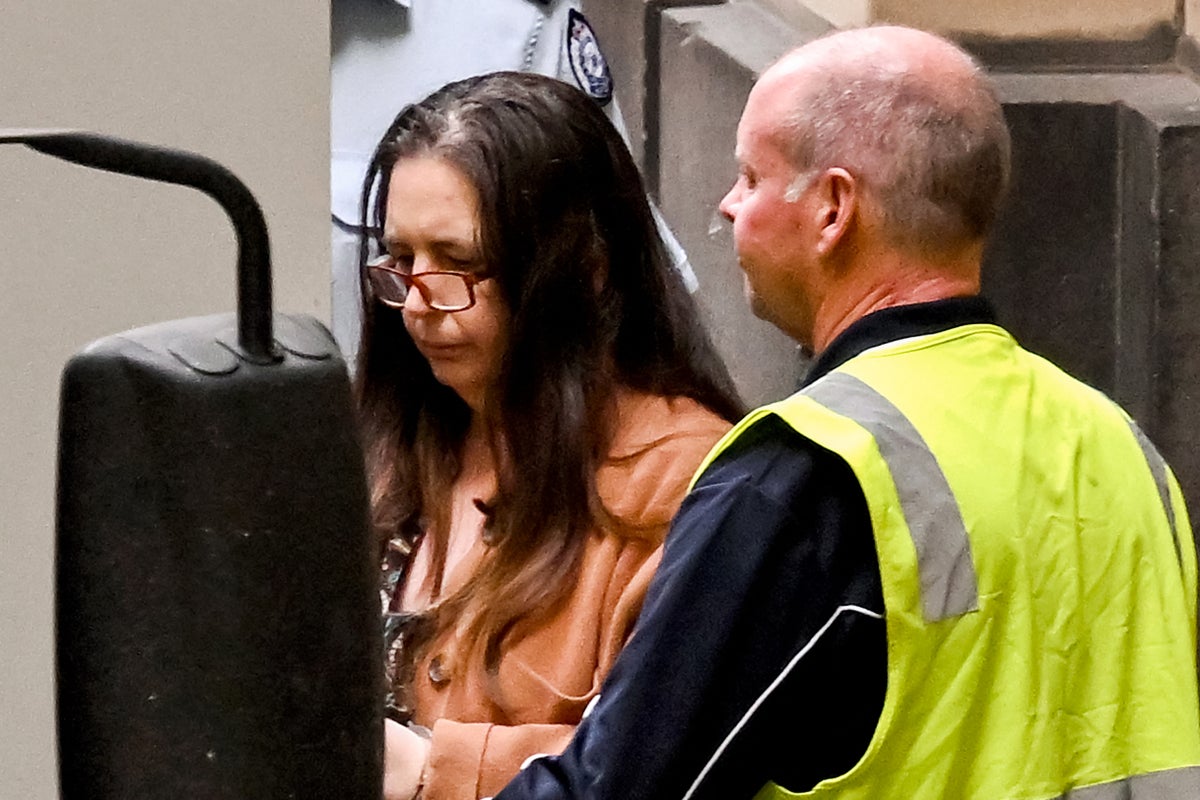
Erin Patterson, who was convicted of murdering three relatives with a beef wellington laced with death cap mushrooms, has applied to Australia's high court to appeal against her convictions.Her lawyers filed an application on Friday for special leave to appeal, which is the high court's permission to hear a case.Ms Patterson, 52, had 28 days from the Victorian court of appeal's judgment on 30 October to apply, and that period ended on Friday. She wants the high court to examine both her convictions and her sentence of life imprisonment without parole.The court is not obliged to accept the application, and it hears appeals in only about 10 per cent of cases.The court's last sitting period of the year runs from 30 November to 11 December, so Ms Patterson could learn the outcome within the next fortnight. If the application is not decided then, the court does not sit again until 1 February.All seven high court justices are expected to decide the written application. If they cannot do so on the papers, they can refer it to a hearing for oral argument.Applications are typically referred to the justices the week before a sitting period and considered on the Monday, before decisions are published the following Thursday. The court would not comment on the application.Members of Erin Patterson's legal team, (front row L-R) barrister Veronika Drago, barrister Richard Edney and lawyer Bill Doogue arrive at the Supreme Court (AFP/Getty)Ms Patterson was found guilty last year of murdering her estranged husband's parents, Don and Gail Patterson, and Gail's sister, Heather Wilkinson, after she served them a lunch of beef wellington at her home in rural Victoria in 2023.She was also convicted of the attempted murder of Ms Wilkinson's husband, Ian Wilkinson, a local pastor, who survived eating the lunch after spending weeks in hospital. He has ongoing health issues because of the poisoning.Her estranged husband, Simon Patterson, was meant to attend the lunch but cancelled at the last minute, in part because he believed his wife had repeatedly tried to poison him over several years.The trial judge sentenced Ms Patterson in September last year and allowed a non-parole period of 33 years because of the "harsh prison conditions" she would likely face.Victoria's court of appeal ruled last month that her appeal against the convictions should be dismissed. It granted an appeal by the director of public prosecutions against her sentence, finding that the original sentence of life imprisonment with a non-parole period of 33 years was too lenient, and resentenced her to life without parole."This offending was extraordinarily cold and calculated and stands to be denounced in the strongest terms," said justices Lesley Taylor, Stephen McLeish and Peter Kidd in their judgment on 30 October.The judges said they had given anxious consideration to whether to rule out a non-parole period, given the gravity of that conclusion and the different view taken by the experienced sentencing judge. The features of the offending led each of them to conclude that "this is a case of such shocking criminality that it is inappropriate to fix a non-parole period".Ms Patterson's lawyers argued seven grounds of appeal against the convictions in the court of appeal, and all but two were dismissed without leave to appeal being granted.
Erin Patterson asks Australia’s highest court to overturn mushroom murder convictions
Full Article
Original Source
Read the full article at Independent →KhanList aggregates and links to publicly available news content. We do not host full articles from third-party sources. Always verify important information with original sources.