
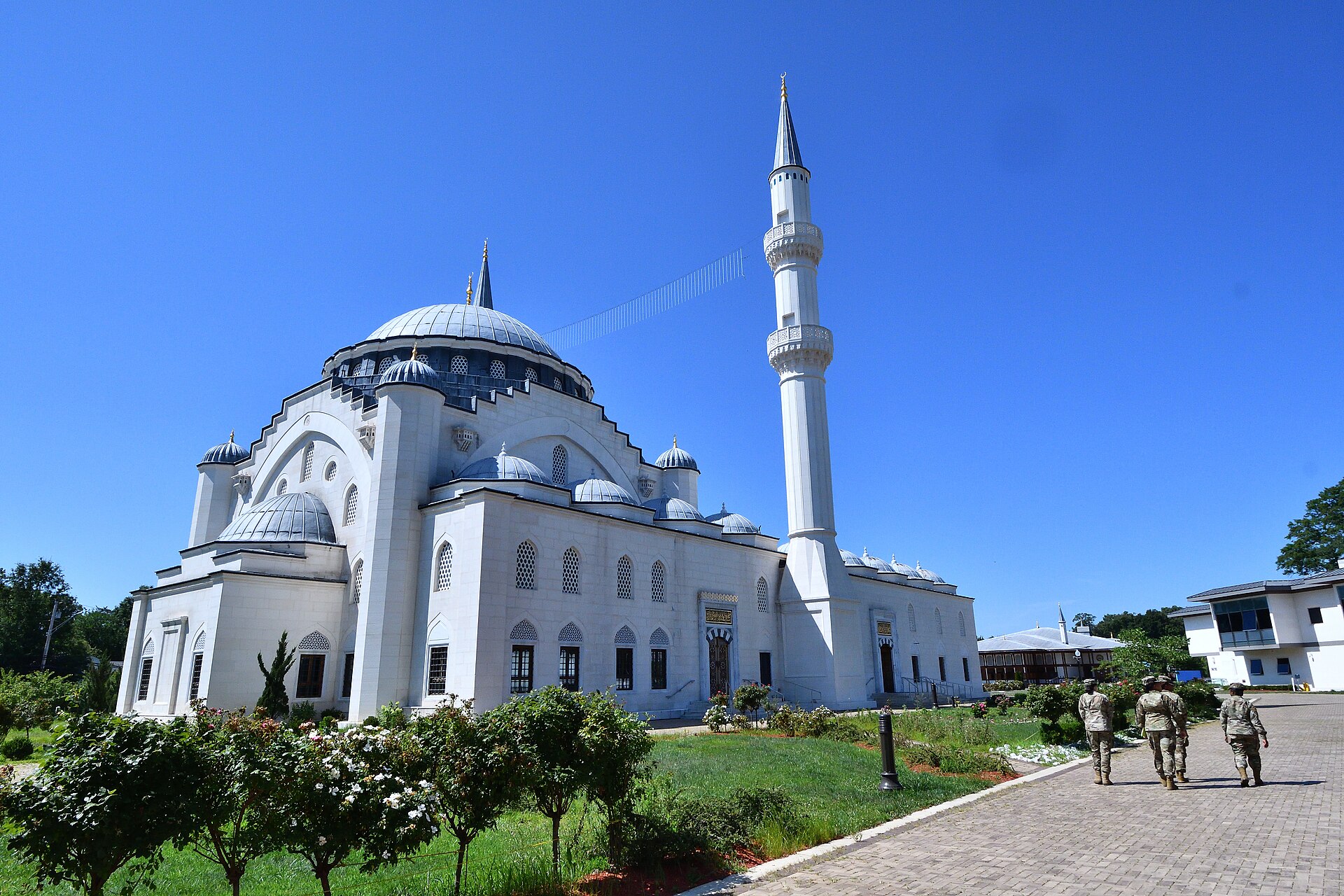
Late this past September, Turkey’s Education Ministry entered into an agreement with the Ensar Foundation, an organization that claims to advance educational objectives in keeping with what it calls the teachings and requirements of Islam. This agreement authorized the foundation to organize a knowledge competition for high school students. A week before, the Diyanet Center of America, a significant religious institution near Washington, D.C., launched a leadership program for imams. And in June, a New York-based nonprofit established by two Erdogan-linked charities submitted its latest Foreign Agents Registration Act (FARA) report, detailing its activities on behalf of Turkish clients. These developments are interconnected and form part of a wider, long-term initiative: President Recep Tayyip Erdogan’s strategy to develop what he calls “a pious generation.” Ongoing for more than a decade, this effort operates through Turkish government agencies and foundations affiliated with the Erdogan family, widening its reach from West Africa to suburban Maryland. In the United States, the Turken Foundation, which maintains family ties to the Erdogans, holds tax-exempt status as an educational charity. American policymakers should examine and assess these organizations according to their financial records, governance structures, and official documentation, which indicate they function primarily as instruments of the Turkish state and the Erdogan family. Erdogan has never hidden his intentions. In 2012, he declared that his administration sought to raise a generation of religious youth. Five years later, at Ensar’s general assembly, he expressed disappointment that, after fourteen years in power, his movement had not yet achieved dominance in social and cultural spheres or produced the desired religious generations. At the same event, he contrasted the Gezi Park protesters with the youth who resisted the 2016 coup attempt, characterizing the latter as committed to religious observance and national symbols. Subsequent domestic policies reflected this vision. Enrollment in religious imam-hatip schools (schools with a historic mandate and focus to educate future imams in Turkey) increased from approximately 84,000 in 2002 to about 1.3 million by 2017. The 2017 curriculum eliminated the teaching of evolution and mandated that imam-hatip students study jihad as a patriotic concept. The 2024 “Century of Türkiye” curriculum prompted a lawsuit from opposition parties who argued that it was ideologically motivated, and Erdogan has criticized Turkish schools for concentrating exclusively on “materialistic” content. In 2018, he told a six-year-old in military uniform that, if she became a martyr, she would be wrapped in the Turkish flag. The overarching vision emphasizes Sunni religious devotion, nationalism influenced by Ottoman heritage, reverence for martyrdom, and a historical perspective that characterizes Western-style education as materialistic and bereft of the teachings of Islam. Erdogan’s educational ambitions have not stopped at Turkey’s own borders, but Ankara’s international educational vision predates Erdogan. During the ruling party’s alliance with the late, reclusive imam Fethullah Gulen, schools affiliated with Gulen’s movement served as instruments of Turkish soft power in countries such as Azerbaijan. Turkish officials later identified 688 Gulen-affiliated schools operating in 113 countries, and shortly before severing ties with the network Erdogan himself participated in the movement’s 2013 Turkish Language Olympics, which featured participants from 140 countries. Following the 2016 coup attempt, he encouraged African leaders to transfer these schools to the newly established Turkish Maarif Foundation. The president of Maarif has acknowledged that approximately one-third of its network resulted from such transfers. Ankara’s efforts also target American educational institutions, as it has opposed the over 100 schools Gulen-linked charter schools believed to operate in the United States. Maarif does not function as a charity in any substantive sense. Legally, it is the sole organization aside from the Education Ministry authorized to establish schools abroad on behalf of Turkey; a 2024 presidential decree signed by Erdogan allocated up to 5.7 billion lira ($115 million) in ministry funds to Maarif. The organization currently reports 601 facilities in 64 countries and serves over 75,000 students. In South Africa, for instance, its schools incorporate a character development curriculum in addition to the national syllabus. Maarif’s newsletter articulates its mission as cultivating virtuous individuals who are müzahir, or supportive, of Turkey. Erdogan positions Maarif as the vanguard of an educational model anchored in fıtrat, the Islamic concept of innate human nature, and asserts that this education is provided by a nation with “no stain of colonialism” in its history, in direct contrast to Western counterparts. The organization’s former vice president, a Turkish diplomat, described it as Turkey’s educational presence in Africa. Africa represents Maarif’s most significant area of operation. In 2023, 24 out of the 51 countries hosting its institutions were located on the continent. At the inaugural graduation ceremony for its school in The Gambia, participants observed a minute of silence for the “martyrs” of Turkey’s coup attempt. The local Maarif representative outlined the foundation’s strategy: identify high-achieving students, immerse them in Turkish language and culture, and encourage further education in Turkey. Maarif constitutes only one component of a wider system. The Turkish Diyanet Foundation, for example, facilitates the enrollment of international students in Turkish imam-hatip schools and theology faculties. In 2024, the foundation supported 2,853 scholarship recipients from 114 countries and referred to its 10,755 alumni as “voluntary ambassadors” for Turkey. According to a senior foundation official, these graduates return to their home countries to represent both the foundation and Turkey. A 2025 government agreement linked the program, which attracts students from 95 countries, to the “Century of Türkiye” initiative. The Yunus Emre Institute serves as the initial point of contact, teaching Turkish to approximately 91,000 individuals across 68 countries in 2024, with the explicit goal of expanding Turkey’s network of allies. In Germany, a Diyanet attaché reported that Turkish language classes had commenced in mosque associations in collaboration with the institute, despite objections from secular Turkish teachers’ and parents’ organizations regarding the qualifications of imams as language instructors. These activities have already had ramifications in European countries. German prosecutors conducted searches of imams’ residences after Diyanet instructed clerics to report information on Gulen sympathizers to Turkish diplomatic missions. In 2018, Austria initiated the deportation of Turkish-funded imams following the emergence of photographs depicting boys in a Diyanet-affiliated mosque in Vienna reenacting the Gallipoli campaign and simulating death beneath Turkish flags; a congregation representative told the weekly Falter that the events shocked them. Swiss media reported a comparable war game involving Turkish children, apparently with embassy involvement. Ultimately, Berlin reached an agreement with Ankara in 2023 to phase out the use of imams employed by the Turkish state—an arrangement, as the Associated Press reported, that had served as a conduit for Ankara’s influence over the diaspora for decades. A similar network operates within the United States. The Turkish government financed the $110 million Diyanet Center of America in Lanham, Maryland, which a center spokesperson stated Erdogan intended to serve the wider Muslim community—not solely Turkish nationals. The center offers a Sunday school program for children aged 4 to 16, focusing on Qur’an memorization and Islamic studies. In 2024, its mosque hosted Ankara’s official July 15 commemoration of the 2016 coup attempt. Maarif’s inaugural American school, located in Clifton, New Jersey, provides instruction in both Islamic and secular subjects, and the Yunus Emre Institute has maintained centers in Maryland and Washington, D.C. since at least 2017. The most convincing evidence that the initiatives are political rather than philanthropic resides in their leadership structures. Turgev, another Turkish foundation, was founded in 1996 under Erdogan’s direction, with his daughter Esra Albayrak serving on its board; his son Bilal has also served on the board. The Turkish government acknowledged that Turgev received nearly $100 million in foreign funds between 2008 and 2012, but did not disclose the sources. During the 2013 corruption investigations targeting the Erdogans, prosecutors later dismissed Bilal’s alleged use of the foundation to facilitate bribes, an allegation Erdogan denied. Ensar Foundation is another entity with similarly close ties. Bilal Erdogan has served on its general assembly and has publicly said that, aside from his wife, he interacted most often with Ensar’s chairman. In 2017, the Education Ministry authorized nearly 1,000 public education centers to host Ensar courses—an expansion that occurred one year after a teacher at the foundation’s Karaman branch was convicted of sexually abusing ten boys. A cabinet minister defended the foundation by asserting that the abuse was an isolated incident. In 2014, Turgev and Ensar jointly established the Turken Foundation in the United States. The organization’s founding document bears Bilal Erdogan’s signature, and Esra Albayrak was listed as a board member. Turken is registered under FARA, with Turgev and Ensar designated as its foreign principals. According to the foundations themselves, registration occurred only after U.S. authorities initiated efforts to bring it under the law. Turken reports $117 million in assets, yet it supported only approximately 50 students in 2022. Ensar has stated that Turken’s Manhattan dormitory tower enables Turkish students to reside in the United States “away from the grip of ‘FETO’” (the Fetullah Gulen Terrorist Organization, Ankara’s designation for the Gulen movement). In 2024, it expended $6.3 million on lobbying activities, according to FARA data compiled by OpenSecrets. Ankara’s proponents characterize these activities as standard cultural diplomacy. Berlin’s tourism website compares the Yunus Emre Institute to Germany’s own Goethe-Institut, for instance. Maarif has committed to implementing Afghanistan’s national curriculum in the schools it assumed control of there. Somalia’s deputy education minister has commended Maarif’s educational institutions. German prosecutors concluded the imam surveillance investigation without filing charges, and a Vienna court reversed most of Austria’s 2018 mosque closures. Ankara dismissed the closures as Islamophobic, and Turken has informed the Justice Department that its political engagement is limited to discussions regarding a housing construction project. However, these arguments do not address the central concerns surrounding these state-sponsored religious institutions. Unlike the Goethe-Institut, these organizations share governance with a head of state’s children. Curricular content becomes secondary when character development initiatives and graduation ceremonies explicitly honor Ankara’s preferred martyrs. And despite the investigation’s closure, Berlin ended Diyanet’s deployment of imams. Furthermore, a foundation with $117 million in assets that supported only about 50 students in 2022 does not match the typical profile of a scholarship fund. Washington should cease extending to these organizations the presumption of legitimacy typically afforded to genuine charities. First, the Justice Department should rigorously review Turken’s disclosures and assess whether other Turkish state-funded entities in the United States, such as the Diyanet Center and Maarif’s American school, should face additional registration requirements. Second, the State Department has an existing precedent: in 2020, it designated the Confucius Institute U.S. Center as a foreign mission and required disclosure of personnel and property. Turkish state-run educational and religious institutions should be held to comparable transparency standards. Third, Congress should mandate an annual public report on foreign-government-funded religious and K-12 educational programs operating within the United States. Fourth, Washington should collaborate with Germany, which is already phasing out Diyanet’s state-employed imams, and encourage African partners—where Maarif is most active—to disclose funding and governance sources for these schools. Erdogan has consistently articulated his intention to shape a particular generation. Washington should similarly acknowledge that this effort now goes beyond Turkey’s borders, with affiliated classrooms and dormitories established in New Jersey, Maryland, and Manhattan. Sinan Ciddi is a senior fellow and director of the Turkey program at the Foundation for the Defense of Democracies (FDD) in Washington, D.C.
Erdogan’s “Pious Generation” Goes Global
Full Article
Original Source
Read the full article at Fdd →KhanList aggregates and links to publicly available news content. We do not host full articles from third-party sources. Always verify important information with original sources.