
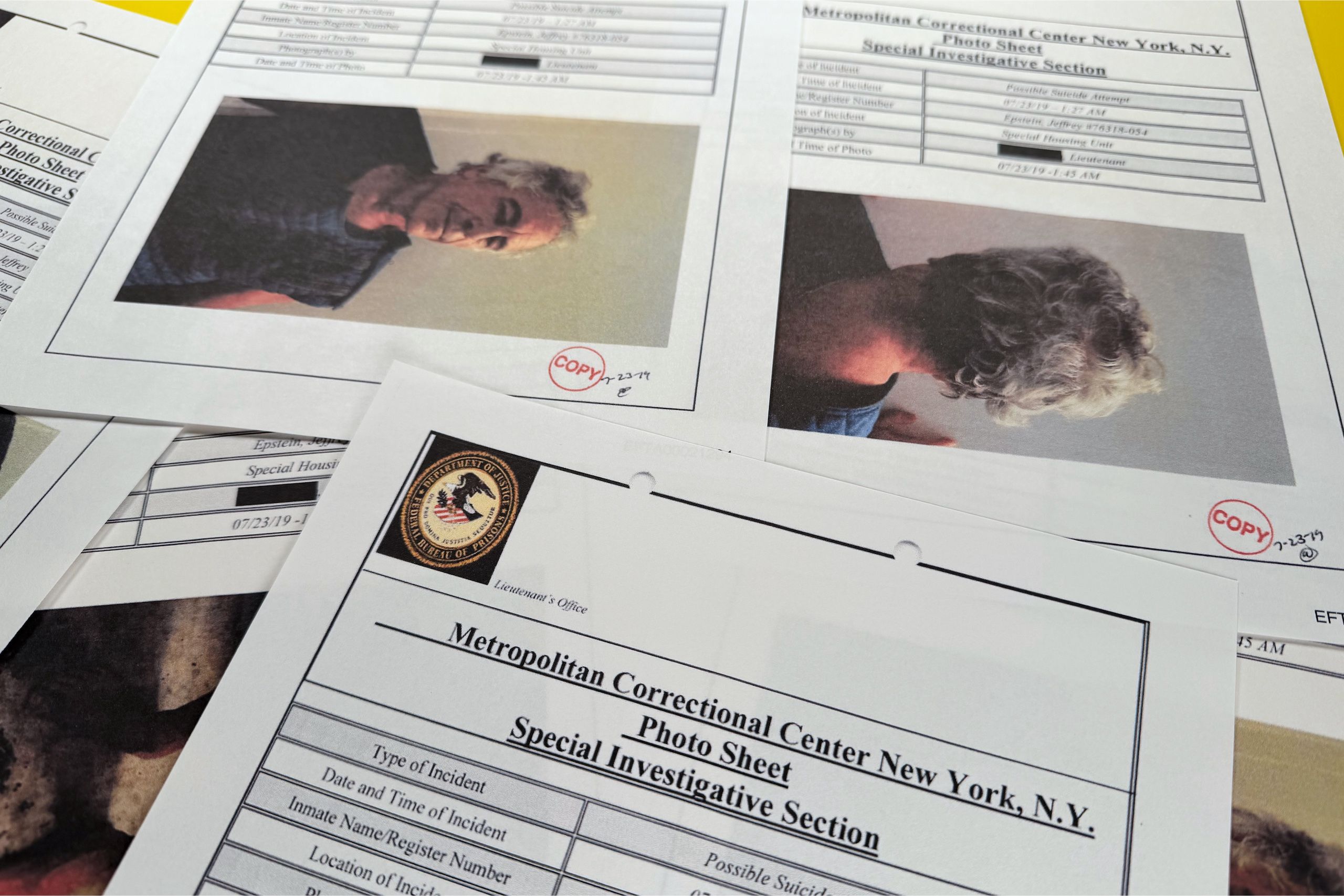
A magistrate judge said the victims have made a plausible case that the Justice Department prioritized speed ahead of their privacy when it released Epstein files.(CN) — Victims of Jeffrey Epstein say the Justice Department exposed their names, photos and home addresses when it released millions of pages of files about the convicted sex offender. They also say AI tools continued sharing the information even after the government removed most of it.On Tuesday, a federal judge in San Jose rejected the government’s attempt to dismiss their privacy claim.U.S. Magistrate Judge Virginia DeMarchi ruled the five victims, suing under the pseudonyms Jane Doe 1 through 5, had presented enough facts for their claim under the Privacy Act to move forward.The 1974 law limits when federal agencies can release records containing people’s personal information. The victims are suing on behalf of themselves and a proposed class of Epstein victims whose private information was released without their consent between December 2025 and the present.Under the Epstein Files Transparency Act, the Justice Department had 30 days to release millions of pages from its investigation into the financier. The plaintiffs say the department “outed approximately 100 victims” in late 2025 and early 2026, “identifying them to the world.”The government asked DeMarchi to dismiss the claim, arguing the victims had not shown the department acted willfully or intentionally, as the law requires. The government said Congress had given the department a “herculean task,” that it “admittedly made some mistakes,” and that it created a website where victims could ask for additional redactions.The victims say the department put transparency and a rapid release of the files ahead of their privacy, ignored or refused requests to remove their information and, in some cases, acted out of retaliation against victims who had spoken out.DeMarchi said the victims had plausibly claimed the department deliberately prioritized releasing the files over protecting their privacy. The judge added that whether the department acted willfully depends on the circumstances of each victim’s case. She said the victims’ account did not conflict with the government’s explanation that releasing the files was an enormous challenge.“For pleading purposes, those allegations appear plausible, and are not inconsistent with the United States’ assertion that DOJ was faced with a ‘herculean task’ to accomplish within ‘an impossible-to-execute time frame,’” DeMarchi wrote.The government also asked DeMarchi to consider public records, including a Justice Department memo and a letter to Congress from then-Deputy Attorney General Todd Blanche, to support its argument that the department had not acted deliberately.DeMarchi declined to use those materials to resolve disputed facts at this stage of thedisputee. She rejected the government’s argument that courts should presume federal officials properly performed their duties. Even assuming that presumption applied, she said, the victims had presented enough facts to support their claim.“Plaintiffs may prevail on their Privacy Act claim,” DeMarchi wrote.She did not decide in the ruling whether the department actually broke the law. But the victims can keep pursuing their claim. DeMarchi has already refused to pause discovery involving the government.The victims also sued Google and X.AI Corp., saying their AI tools, Google’s AI Mode and X.AI’s Grok, continued sharing the private information. Those claims are proceeding separately, and DeMarchi earlier paused discovery involving the companies while they challenged the claims.The victims filed an updated complaint on Nov. 13. DeMarchi said it didn’t change their claims against the government, so she ruled on the earlier version.Representatives for the Justice Department and the victims’ attorneys didn’t immediately respond to requests for comment.In March, plaintiffs’ attorney Elizabeth Kramer of Erickson Kramer Osborne told Courthouse News the survivors had already endured Epstein’s abuse and had been revictimized due to the government’s actions.“The government’s disclosures of their identities and personal information — and Google’s refusal to remove that sensitive material despite repeated requests — has subjected them to renewed victimization, harassment, and fear for their safety. Federal and state laws exist to protect crime victims’ privacy, and both defendants have flagrantly violated those protections.”Subscribe to our free newslettersOur weekly newsletter Closing Arguments offers the latest about ongoing trials, major litigation and rulings in courthouses around the U.S. and the world, while the monthly Under the Lights dishes the legal dirt from Hollywood, sports, Big Tech and the arts.Additional Reads
Epstein victims’ privacy claim over file release survives government’s bid to dismiss
Full Article
Original Source
Read the full article at Courthousenews →KhanList aggregates and links to publicly available news content. We do not host full articles from third-party sources. Always verify important information with original sources.