
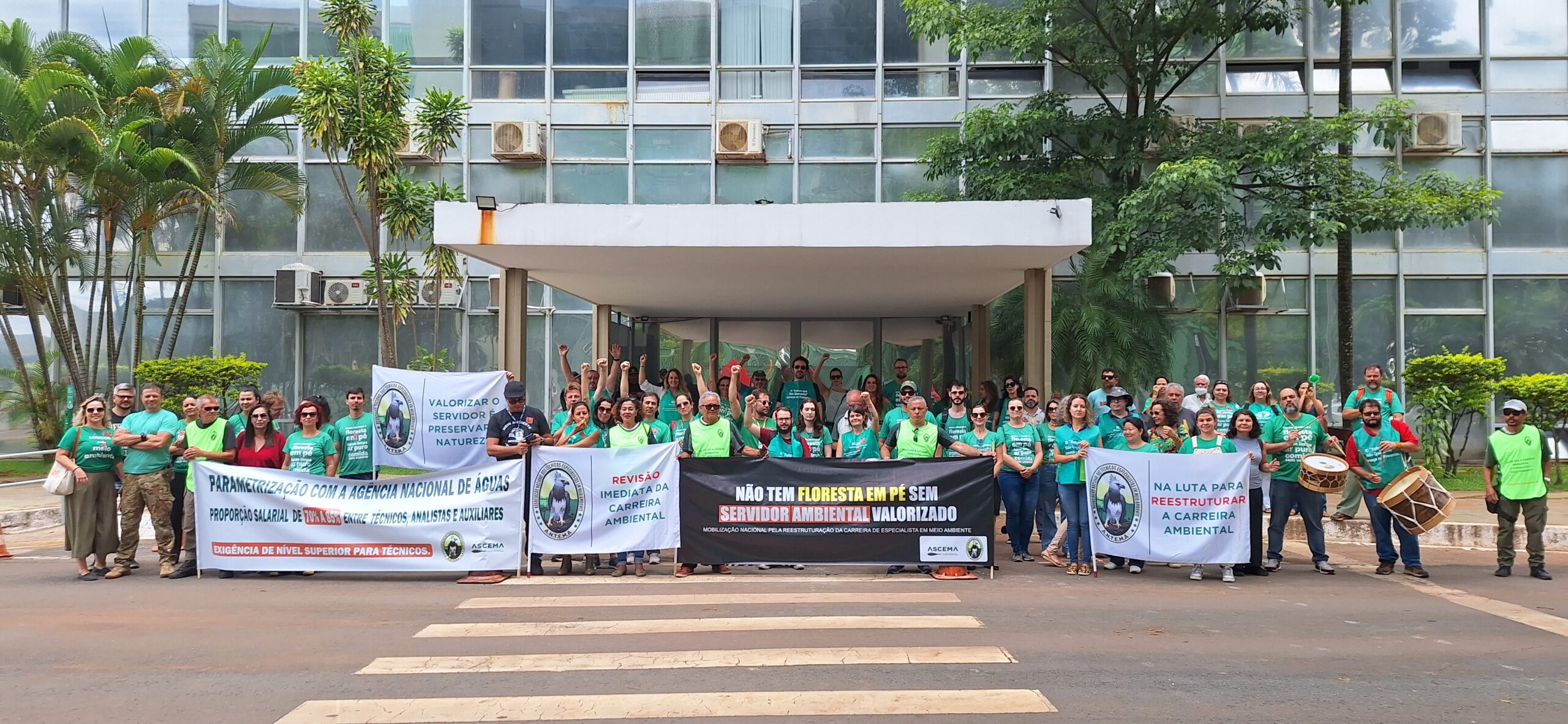
Federal employees in the environmental and Indigenous affairs sectors fear a return to the institutional harassment and dismantling of institutions they faced during the Jair Bolsonaro administration if his son, Senator Flávio Bolsonaro, wins the runoff election Sunday, Oct. 25.Complaints of harassment and violence filed with the Federal District Labor Prosecutor’s Office nearly tripled during Jair Bolsonaro’s four-year term.The weakening of regulatory agencies has led to record levels of deforestation in the Amazon and intensified violence against Indigenous groups that protect the forest.Environmental officials and Indigenous experts have launched campaigns and open letters to mobilize the public to vote for incumbent President Luiz Inácio Lula da Silva and defend them and regulatory agencies. Federal civil servants in environmental and Indigenous affairs fear a resurgence of the intimidation and institutional harassment they faced under the administration of far-right former President Jair Bolsonaro (2019-2022) if his son, Senator Flávio Bolsonaro, wins the presidency in Brazil. The candidate has announced that he will eliminate “environmental hurdles” so rural landowners can do “whatever they want on their land.” “We literally have a target in the middle of our forehead,” Tânia Maria de Souza, president of the federal environmental civil servants’ association, Ascema, told Mongabay. “It’s déjà vu.” The Bolsonaro administration brought a relentless series of actions against the environment and Indigenous rights. Bolsonaro refused to demarcate any Indigenous territories, fulfilling his 2018 campaign pledge, while deforestation and violence against Indigenous groups and public servants escalated alongside measures to open Indigenous lands to mining and agribusiness in clear violation of the Federal Constitution. “It was traumatic,”Alexandre Bahia Gontijo, former director of Ascema and former president of Asibama-DF, which represents IBAMA civil servants in the Federal District, said of the Bolsonaro administration. “Everyone is extremely apprehensive.” Activists call Flávio’s agenda “the return of the cattle herd,” referencing a 2020 statement by then-Environment Minister Ricardo Salles that the COVID-19 pandemic was an opportunity to “let the cattle herd run through” by changing environmental rules and regulations without drawing scrutiny from the National Congress and the press. Former Environment Minister Ricardo Salles left, with former President Jair Bolsonaro (right). Image courtesy of Marcos Corrêa/PR. Flávio finished first in the opening round of the presidential election on Oct. 4 with 47.03% of the vote, defying opinion polls that showed incumbent President Luiz Inácio Lula da Silva as the favorite for reelection. Flávio pledged to review the roles of federal environmental agencies such as IBAMA and ICMBio to “eliminate overlaps,” a review that would also include FUNAI, the agency in charge of Indigenous affairs. Lula and Flávio face each other again in the runoff on Oct. 25, since neither got a majority in the first round. In 2019, Bolsonaro promised to “abolish” the Ministry of the Environment (MMA), Souza said, an outcome prevented only by fierce public mobilization. But the push to eliminate the ministry resurfaced this year among Flávio’s allies, Reinaldo Azambuja, a senator elected from Mato Grosso do Sul. “The expectation that we have — I don’t know whether pessimistic or realistic — is that the Ministry of the Environment tends to be abolished with the first pen stroke, in the first provisional measure,” Souza said by phone. If Flávio wins, she believes agencies such as IBAMA, ICMBio and FUNAI would also be abolished in the first act of the National Congress. “He [Flávio] won’t leave any opening.” Flávio’s campaign staff did not respond to Mongabay’s requests for comment by publication. Although the Bolsonaro administration did not abolish the MMA, Souza noted the toll of dismantling the agency and intimidating its civil servants. “The first situation of harassment was on the first business day of January [2019]. They went around demolishing walls on top of colleagues, telling them they had to leave, that they didn’t work there anymore,” Souza said, referring to MMA departments that were “exported” to other ministries. Staff dubbed the new arrangement the “punishment room,” Souza said. She noted that her department, the water division, was transferred to the Ministry of Agriculture, where 70 people were placed in the same room. “They took down all the blinds that divided the rooms so people could be watched. There was always someone walking down the hallway to see if they were working.” Another intimidation tactic, she said, was blocking civil servants’ access to internal electronic management systems, preventing them from doing their jobs. “It worked by little notes — so as not to leave it documented,” she said, adding that access to the systems was restricted to “those who were trusted” by management. An assembly of federal environmental civil servants convenes on alert over environmental risks if far-right candidate Senator Flávio Bolsonaro is elected president in Brazil. Image courtesy of Ascema. “It is institutional harassment. It wasn’t just directed at one person, which is moral harassment,” Souza said. She added that individual workplace harassment was also widespread, including the dismissal of career civil servants, particularly at IBAMA. She cited the most “bizarre” case as Salles reportedly firing an IBAMA civil servant who had conducted an investigation at the minister’s own request. “We managed to reverse almost all the cases in court.” Salles, who stepped down as minister in 2021 amid corruption allegations, was elected to the Federal Chamber of Deputies representing São Paulo. Neither his office nor his attorneys at Podval Advogados Associados responded to Mongabay’s requests for comment by the time of publication. The Brazilian Forest Service was also transferred “lock, stock, and barrel” to the Ministry of Agriculture, Gontijo said. Beyond internal institutional harassment, he noted “how much we suffered” doing field work amid mounting threats from wildcat miners, loggers and ranchers, especially during inspection operations. Senator Tereza Cristina was the Minister of Agriculture at the time. Her office did not respond to Mongabay’s requests for comment by the time of publication. Gontijo said he faced intimidation while gathering research samples in Altamira National Forest in northern Pará state in 2019. Because it was not an enforcement mission, he said he had not anticipated any risk. But the “Day of Fire,” when vast areas of the Amazon burned simultaneously in coordinated criminal blazes that led to shelved investigations, changed the landscape, he said. Beyond the shock of seeing the forest burn, Gontijo said “it was very tense” when he and his team arrived to spend the night in the municipality of Moraes de Almeida, where ranchers were on the move, hauling fuel in pickup trucks and on motorcycles. “What saved us was my Ministry of Agriculture badge, because they wanted to know if we were inspecting anything. I said I was from the Ministry of Agriculture, that we had nothing to do with it, and then they let us go,” Gontijo told Mongabay by phone. “I keep this badge to this day, because it saved us that day.” Satellite image of the fires on Aug. 10, 2019 (Fire Day) in the Jamanxim National Forest, in Pará. Image from the Sentinel-2 satellite. Record number of harassment complaints During the Bolsonaro administration, complaints of harassment, violence and discrimination filed with the Public Labor Prosecutor’s Office of the Federal District (MPT-DF) nearly tripled, rising from 54 to 140. In 2022, complaints jumped 197% from the previous year, the largest single-year increase in records spanning 2018 to 2026, according to a report Mongabay reviewed. According to labor prosecutor Geny Helena Marques, most of the filings came from civil servants at environmental and Indigenous affairs agencies reporting burnout, anxiety, depression and other work-related disorders, “highlighting a scenario of vulnerability that demands structured institutional responsibility.” There were also cases of assault, persecution, stress, underutilization of capacity and qualifications and retaliation, Marques said. She noted that the complaints from IBAMA were “the ones that scared me the most,” as they ran completely counter to typical harassment cases where burnout stems from excessive workloads and heavy demands. “The workers were even prohibited from working, threatened for carrying out their activities, a very humiliating situation,” Marques told Mongabay by phone. Federal prosecutor Eduardo Fortunato Bim headed IBAMA at the time. Neither he nor his attorneys, Matheus Silveira Pupo and João Paulo Mazzieiro, responded to Mongabay’s requests for comment by the time of publication. Bim was indicted alongside Salles, and both are defendants in a criminal case before the Supreme Federal Court (STF) on charges including “criminal conspiracy to obstruct IBAMA’s actions” and harassment of public servants. Bim has denied all charges, according to Sumaúma, a Brazil-based environmental news website. Bim’s defense stated that “no civil servant was persecuted for his technical judgment” and that “scheduled operations were carried out, audits of management plans continued, and the destruction of equipment used in environmental crimes increased …” According to Sumaúma, Bim requested his acquittal and that the STF recognize its lack of jurisdiction to try and prosecute him. An IBAMA operation burns down the facilities of an illegal logging site in the Gurupi Biological Reserve. Image by Felipe Werneck/IBAMA. Salles’s defense team also denied the persecution allegations, arguing that they cannot rest solely on the “existence of disagreements between senior management and some civil servants” and that the transfer of civil servants was not carried out “to the detriment of the public interest.” For Gabriela Lotta, a professor of public administration at the Getulio Vargas Foundation (FGV), there is no doubt that institutional harassment will return if the Bolsonaro clan regains the presidency. “You can be sure that these past practices will not only happen, if Flávio wins the election — they will happen much more forcefully,” Lotta said in an Instagram video. Flávio’s campaign staff did not respond to Mongabay’s request for comment by the time of publication. Lotta said the offensive against civil servants will be stronger because of “the whole package that makes up the Bolsonaro administration,” and the lessons learned about how government machinery works, as well as ties and shared experiences with U.S. President Donald Trump, the rise of the far right in the National Congress and the weakening of the STF. Lotta, who has published several studies on the subject, listed five systematic attack tactics used against civil servants under the Bolsonaro administration. The first was politicizing the administrative apparatus by replacing civil servants with technical knowledge and experience with loyalists. The second was shutting civil servants out of decision-making processes, compromising their ability to challenge decisions and carry out their duties. The third was altering procedures and cutting off access to systems. “Everything was through WhatsApp,” she said, adding that directives were given “off the record,” which compromised transparency and harmed civil servants because orders left no official paper trail. The fourth was militarization across appointed leadership positions at all levels, following a “military action logic” where visible firearms in meeting rooms and at building entrances conveyed an image of “constant danger and risk.” The fifth tactic Lotta identified included censorship, individual and institutional harassment and persecution, such as monitoring staff via cameras and tapped phones, alongside formal censorship, measures like an ordinance barring ICMBio staff from publishing scientific articles and giving interviews. “By the end of the Bolsonaro administration, there were more than 10 agencies with this restriction,” Lotta said. She also cited public humiliation in meetings, the spreading of false claims targeting individual civil servants and the indiscriminate opening of administrative proceedings. “This was systematic, an unbelievable curve,” Lotta said, adding that the environmental sector served as the “laboratory” for these practices. Luiz Inácio Lula da Silva (wearing tie, at the center) walks up the ramp of the presidential palace beside representatives of Brazilian society who symbolically transferred office to him, in the absence of former president Jair Bolsonaro, who left for the United States the day before the ceremony. Image courtesy of Tânia Rego/Agência Brasil. Mobilization for Lula’s reelection When Lula took office for his third term on Jan. 1, 2023, federal civil servants in environmental and Indigenous affairs felt widespread “relief,” as Mongabay witnessed in Brasília. The following day, about 300 people gathered at FUNAI to mark a “new era” and the institution’s “reopening,” chanting, “FUNAI is ours.” In a cleansing ritual using maracás and coarse salt, Indigenous leaders and FUNAI employees walked through the agency’s departments, including the president’s office, to “cleanse” the space of the “bad energies” of the previous administration. That same day, civil servants and activists performed a “symbolic washing” with water and coarse salt at the entrance to the headquarters of the MMA and the Ministry of Culture, which had been eliminated under the Bolsonaro administration, “to drive away evil spirits,” singing along to “Faraó” by singer and Minister of Culture Margareth Menezes, Ascema’s Souza said. Seeking to mobilize the public to reelect Lula, Ascema held a broadcast on Oct. 19 to highlight what is at stake and released an open letter warning about the risks facing the environment. “We have already seen this movie. We know how it ends,” the letter reads, calling on citizens to sign on and support the cause. “Think about your future and your family’s before deciding your vote.” Civil servants from the Ministry of the Environment and activists prepare to perform a “symbolic washing” with water and coarse salt at the entrance of the building housing the Ministry of the Environment and the Ministry of Culture, which had been abolished under the Bolsonaro administration, to “drive away evil spirits.” Image courtesy of Ascema. Under the Bolsonaro administration, environmental civil servants submitted reports documenting abuses to a wide range of institutions, Souza said. “We even went to the Pope [Francis],” she said, referring to the “dismantling dossier” sent to Pope Francis. FUNAI officials published a dossier in 2022 detailing how the agency had “turned into an Anti-Indigenous Foundation” under Bolsonaro, and in its 2026 personnel development plan, the institution highlighted addressing workplace and sexual harassment and gender-based violence as essential priorities. Indigenistas Associados (INA), the association of FUNAI employees, has also taken a stand against Flávio “because of the Bolsonaro administration’s track record of dismantling” Indigenous affairs. The Alliance in Defense of Territories, which represents the political leadership of the Kayapó, Yanomami and Munduruku Indigenous peoples, also published an open letter to Brazilian society appealing for votes for Lula after wildcat miners threatened to invade their lands the day after the first-round results. “We know that part of Brazilian society is insensitive and that no one else’s suffering seems capable of touching their heart or opening their eyes and ears. But we also know that many people are still outraged by the destruction of the forest and the peoples who protect it. It is to you, who are part of this group, that we write this message.” Souza said that the environmental sector “was never a paradise,” even under the Lula administration. While many rollbacks and abuses under Bolsonaro were reversed in Congress or in court, she said that if Flávio wins, “there is nowhere to run,” because beyond the congressional majority and the power to interfere with the STF, he holds the “key advantage” of having learned how the public apparatus works. “The tendency is toward deregulation, a general laissez-faire,” Souza said. “Flávio Bolsonaro says he will end illegal deforestation. Of course, he will make all deforestation legal.” Banner image: Federal environmental civil servants mobilize to reelect Lula, warning the public about environmental risks if the Bolsonaro clan returns to power. Image courtesy of Ascema Nacional. Karla Mendes is a staff investigative and feature reporter for Mongabay in Brazil and the first Brazilian to win the John B. Oakes Award for Distinguished Environmental Journalism. A member of the Pulitzer Center’s Rainforest Investigations Network, she is also the first Brazilian and Latin American ever elected to the board of the Society of Environmental Journalists (SEJ); she was also nominated Diversity, Equity and Inclusion (DEI) chair. Read her stories published on Mongabay here. Find her on LinkedIn, Instagram, Threads, Bluesky and 𝕏. Brazil election puts unprecedented Indigenous ministry at risk if Flávio Bolsonaro wins FEEDBACK: Use this form to send a message to the author of this post. If you want to post a public comment, you can do that at the bottom of the page. Credits Topics
Environmental officials fear new wave of harassment if Flavio Bolsonaro wins in Brazil
Full Article
Original Source
Read the full article at News →KhanList aggregates and links to publicly available news content. We do not host full articles from third-party sources. Always verify important information with original sources.