
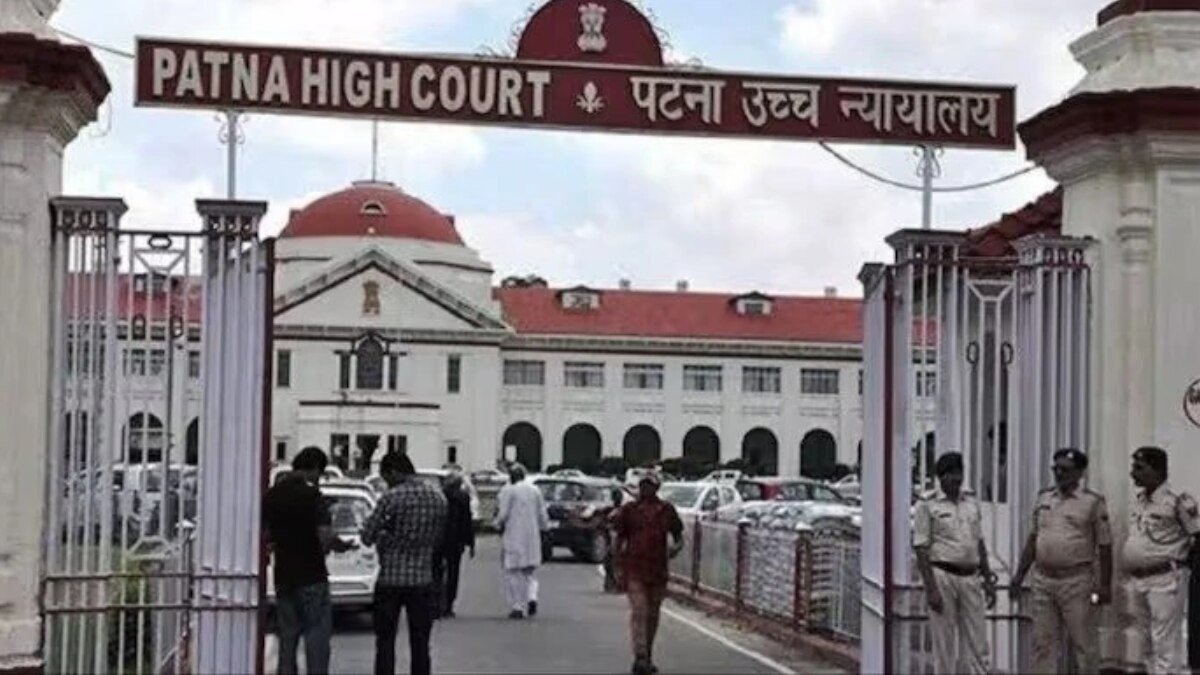
The Patna High Court recently held that entering a woman’s house late at night, extinguishing a lamp, lying on her and pressing her mouth to stifle her cries does not, by itself, amount to an attempt to commit rape in the absence of any overt act towards penetration.Justice Sandeep Kumar made the observation while partly allowing an appeal by a man convicted of attempted rape and house trespass in a case dating back to February 2010. The court held that the acts established in evidence fell short of the requirements for conviction under Sections 376/511 (rape/attempt to rape) of the Indian Penal Code (IPC), but constituted an offence under Section 354 (outraging modesty) IPC, relating to assault or criminal force against a woman with intent to outrage her modesty.The order follows an earlier Patna High Court judgment that sparked controversy over what constitutes an attempt to rape. In that case, the court held that groping a woman's breasts or untying the drawstring of her salwar did not amount to an attempt to rape. The Supreme Court subsequently took suo motu cognisance of the ruling, bringing the judgment under heightened scrutiny.WHAT THE COURT SAIDThe court noted that the woman’s testimony inspired confidence regarding the core of the incident, including the man’s entry into her house at night, extinguishing the lamp, lying upon her and pressing her mouth. However, Justice Kumar observed that the evidence did not establish what the man had done, or attempted to do, beyond these acts. The court pointed out that there was no evidence that he had undressed himself or the woman, that any garment had been removed or displaced, or that he had performed any overt act towards penetration.“The question is not what description the prosecutrix would give to the act, but whether the evidence establishes the overt act which the law requires for an attempt to commit rape,” the court observed. The judge also referred to Supreme Court rulings distinguishing an attempt to commit rape from an indecent assault. He noted that the prosecution must establish conduct showing that the accused had gone beyond preparation and taken an act towards committing rape.The court observed that the acts in the present case were capable of shocking a woman’s sense of decency and that the man’s culpable intention was evident from his conduct. However, it held that the absence of evidence of an act towards penetration meant his conviction for attempted rape could not be sustained."In the absence of any evidence that the appellant undressed himself or the prosecutrix, or did any act towards penetration, it cannot be held that he had gone beyond the stage of preparation and had done an act which, if not interrupted, would have resulted in the commission of rape," the court said.HOW THE CASE UNFOLDEDAccording to the prosecution, the incident took place around 10 pm on February 8, 2010, when the woman, a widow living with her children, was sleeping in her thatched house in Begusarai district. The man allegedly entered the house after removing its fastened door, extinguished the oil lamp and pressed her mouth when she tried to raise an alarm.The woman raised an alarm, following which villagers gathered at the spot and apprehended the man. She later approached the court after alleging that the local police had not registered her complaint and an attempt to settle the matter through a village panchayat had failed.During the trial, four witnesses were examined, including the woman and a neighbour who reached the spot after hearing her cries. Two witnesses did not support the prosecution case and were declared hostile. Neither the investigating officer nor a medical witness was examined, and no documentary evidence was produced by the prosecution.The trial court had convicted the man under Sections 376/511 and 448 (house-trespass) of the IPC, sentencing him to four years of rigorous imprisonment for attempted rape and six months for house trespass, with the sentences to run concurrently.CONVICTION FOR ATTEMPTED RAPE SET ASIDEThe High Court partly allowed the appeal, setting aside the conviction under Sections 376/511 of the IPC and substituting it with a conviction under Section 354. It upheld the conviction for house trespass under Section 448.Taking into account that the incident occurred more than 16 years ago, that the man was around 60 years old and had no criminal antecedents, and that he had spent about two-and-a-half months in custody before remaining on bail for more than 13 years, the court reduced the substantive sentences for both offences to the period already undergone.The court also imposed a fine of Rs 25,000 under Section 354, directing that the entire amount be paid to the woman as compensation. The man was directed to deposit the amount within eight weeks, failing which he would face six months of simple imprisonment.- Ends
Entering woman's house, lying on her, pressing mouth not rape attempt: Patna HC
Full Article
Original Source
Read the full article at Indiatoday →KhanList aggregates and links to publicly available news content. We do not host full articles from third-party sources. Always verify important information with original sources.