
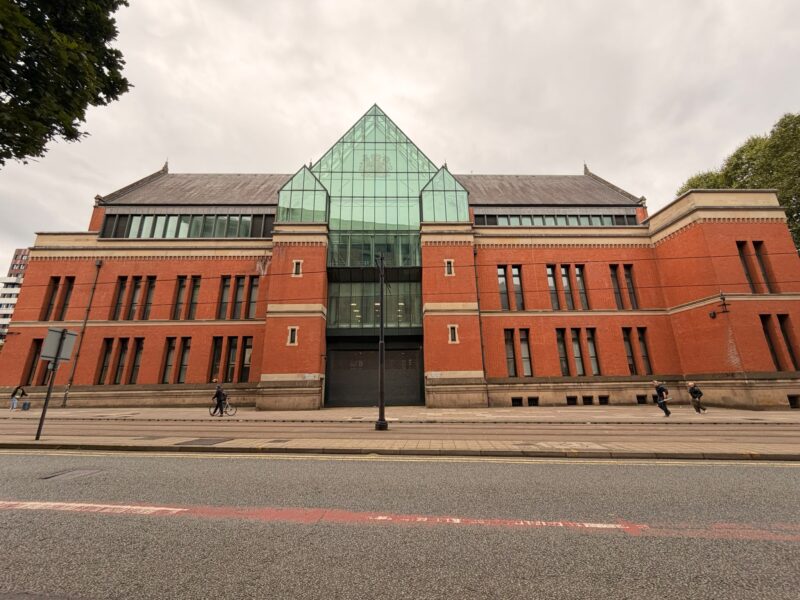
More than 15,000 sexual offense cases are clogging England and Wales’ senior criminal court, with survivors often waiting months or years for a trial.MANCHESTER, England (CN) — Every Crown Court in England and Wales will have at least one courtroom equipped to handle rape and serious sexual offense cases within two years, the government announced Monday, as ministers seek to reduce long delays that have caused victims to withdraw from cases.The courtrooms will include private entrances and waiting areas for survivors, facilities for giving evidence by video link and technology allowing them to watch proceedings remotely.Court staff will receive trauma-informed training, while a pilot program will give victims a single point of contact during their case.Rape and serious sexual offense trials will also receive priority and fixed trial dates rather than being placed on floating lists, where cases can be moved at short notice.The changes are due to take effect from October under a new national framework for criminal court listings.The government said the measures are expected to cost about 23 million pounds (about $30.7 million) and will be introduced across all 84 Crown Court buildings — which handles England and Wales’ most serious criminal cases — containing more than 500 courtrooms.Where a building cannot accommodate separate entrances or waiting areas, court staff must make other arrangements, like staggered arrival times and rooms for defendants and survivors.Prime Minister Andy Burnham said the changes were intended to “rebalance the scales of justice and put victims first.”“Prosecution rates for rape remain shamefully low, with many victims waiting years for justice,” Burnham said.Alex Norris, the cabinet minister responsible for England and Wales’ justice system, said victims had been treated as “cases to process and not as people to support.”Backlog leaves victims waitingThe move comes as the Crown Court struggles with a record backlog.There were 80,061 open cases at the end of March, with 15,373 involving sexual offenses — about 19% of the total.The government said rape cases took an average of 424 days to complete after reaching the Crown Court in 2025.Home Office data shows 2.8% of rape offenses recorded in the year ending March 2025 received a charge or summons outcome.Office for National Statistics analysis combining survey data from 2017 to 2020 found fewer than one in six victims of rape or attempted rape had reported the assault to police.Among those who told someone but not police, 40% cited embarrassment, 38% said they did not think police could help and 34% said they thought the process would be humiliating.The reforms follow Labour lawmaker Charlotte Nichols publicly describing her experience.Nichols waived her right to anonymity in March and told Parliament she waited 1,088 days for her case to reach court.The man she accused was acquitted but she later won a civil case against him and was awarded compensation.“It is because I have endured every indignity that our broken criminal justice system could mete out that I care what kind of reform will actually deliver justice for survivors and victims of crime more widely,” Nichols said.Charities welcome changes as concerns remainRape Crisis England & Wales welcomed the government’s announcement as a “significant step forward.”The charity’s chief executive, Ciara Bergman, said the reforms addressed longstanding concerns about court facilities and delays. She said separate entrances, exits and waiting areas were “necessary and long overdue.”The Law Commission, an independent body that reviews and recommends changes to the law, also welcomed the announcement.But Claire Waxman, the Victims’ Commissioner for England and Wales, warned specialist courtrooms would not by themselves solve the backlog.“The measures being proposed are welcome, but they should be standard for every courtroom and every victim,” Waxman said. “Good technology, separate waiting areas, and trauma-informed processes should be the norm across the justice system, not the exception.”Jury trial reforms face criticismThe changes are being introduced alongside the Courts and Tribunals Bill, a broad overhaul of England and Wales’ criminal courts intended to reduce the backlog and change how some cases are tried.The bill would create a new tier of the Crown Court for lower-level cases likely to receive sentences of three years or less, allowing them to be heard by a judge without a jury.This part of the bill has received criticism among opposition lawmakers and some legal groups, who argue the government should tackle the court backlog by increasing court capacity rather than restricting defendants’ right to a jury trial.Rape is an offense that must be tried in the Crown Court, so it is not among the lower-level cases covered in the bill.The government said the specialist court rollout is part of its pledge to halve violence against women and girls within a decade.Courthouse News reporter James Francis Whitehead is based in England.Subscribe to our free newslettersOur weekly newsletter Closing Arguments offers the latest about ongoing trials, major litigation and rulings in courthouses around the U.S. and the world, while the monthly Under the Lights dishes the legal dirt from Hollywood, sports, Big Tech and the arts.Additional Reads
England, Wales roll out specialist rape courtrooms to cut delays
Full Article
Original Source
Read the full article at Courthousenews →KhanList aggregates and links to publicly available news content. We do not host full articles from third-party sources. Always verify important information with original sources.