
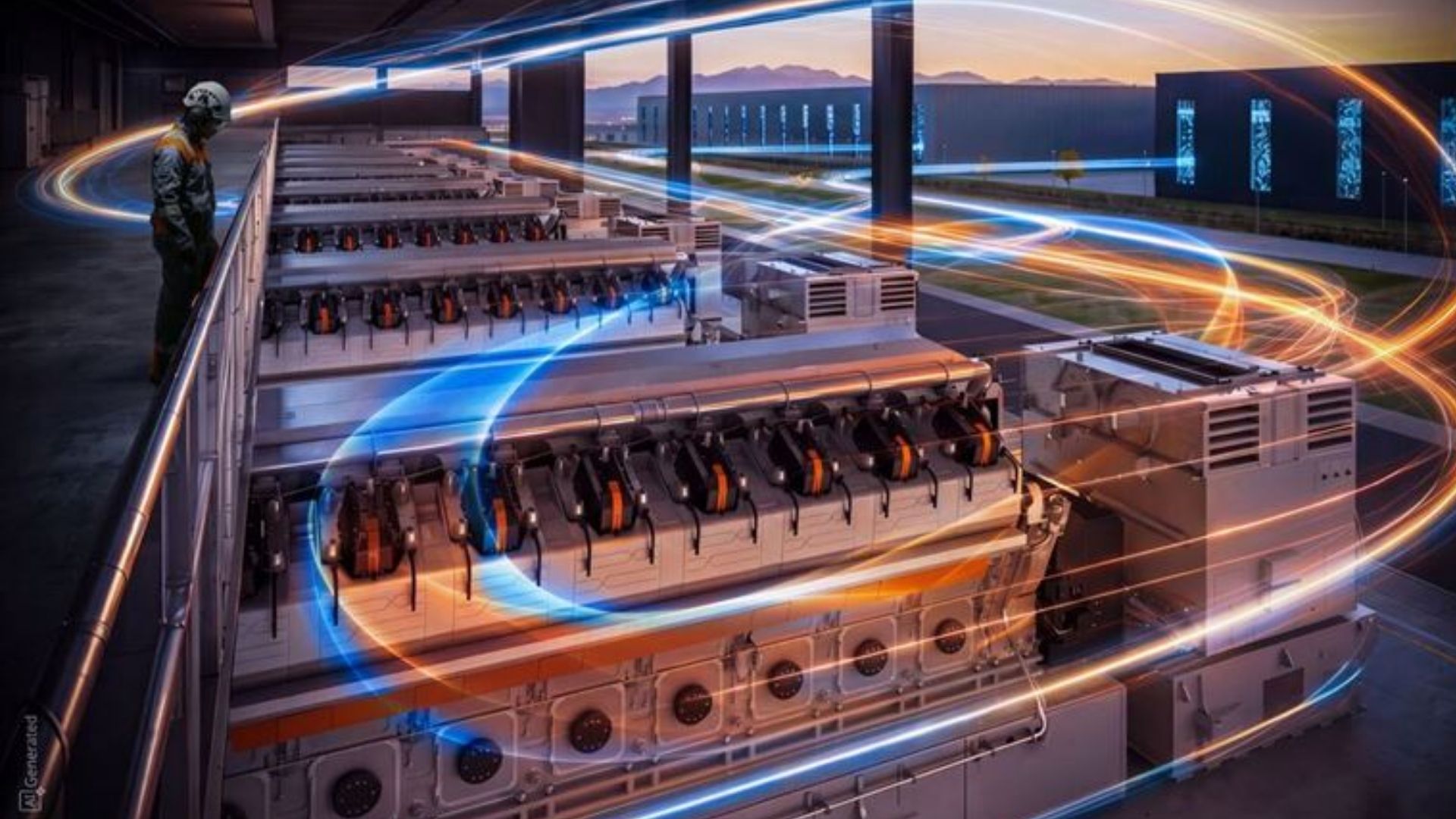
As demand for artificial intelligence and cloud computing drives a rapid data center expansion, energy infrastructure is becoming one of the industry’s biggest challenges. Finnish technology company Wärtsilä believes flexible engine-based power plants could help meet that demand while reducing costs, water consumption and land use. In a new study, the company estimates that powering 55 gigawatts (GW) of off-grid data center capacity with flexible engines instead of combined-cycle gas turbines (CCGTs) could save €196 billion ($ 220 billion) over 20 years. The scenario assumes global off-grid data center capacity reaches 55 GW by 2035, drawing on third-party forecasts and an assessment of announced projects. The findings come as data center developers increasingly consider generating electricity on-site rather than waiting for grid connections. In many regions, electricity infrastructure is struggling to keep pace with new facilities, making independent power generation an increasingly attractive option. Why Wärtsilä is backing engine-based power Combined-cycle gas turbine plants generate electricity using gas turbines, then capture their exhaust heat to produce steam that drives a second turbine. This improves fuel efficiency compared with a simple-cycle gas turbine, making CCGT plants a common option for large-scale electricity generation. Wärtsilä is proposing a different approach. Power plants are built around flexible reciprocating engines. These engines can start, stop, and adjust their output relatively quickly, allowing operators to respond to changing electricity demand. That flexibility is particularly relevant to data centers, which require a continuous and reliable power supply. Engine-based plants can be configured alongside energy storage systems to meet demand and provide backup capacity. Wärtsilä argues that this combination can deliver the required power with less generating equipment and a smaller overall infrastructure footprint than the modeled CCGT alternative. The company’s study estimates that the engine-based approach could use 99.97% less water and occupy land equivalent to approximately 2,200 fewer football pitches. These figures are based on the company’s modeled comparison, rather than measurements from operating data centers. Data centers could become part of the power grid The proposal extends beyond keeping data centers running independently. Wärtsilä argues that flexible engines could eventually help stabilize electricity grids once facilities receive permanent grid connections. Wind and solar generation fluctuate with weather conditions and time of day. Power systems therefore need resources that can quickly adjust electricity supply when renewable output changes. Flexible engines, supported by energy storage, could provide some of that balancing capacity. This could create a different role for data center infrastructure. Instead of functioning only as large electricity consumers, facilities with suitable on-site generation could potentially support the wider power system when connected to the grid. Wärtsilä estimates that using these technologies alongside renewable generation could help avoid up to €200 billion in additional balancing-capacity costs over 20 years. However, the company says this depends on suitable electricity market and grid arrangements that reward the flexibility these facilities can provide. Recovering waste heat could add another benefit There is also an opportunity to reuse heat produced by data center operations. Servers generate substantial amounts of heat, which is typically removed through cooling systems. Rather than simply releasing it into the environment, some facilities can recover this heat and supply it to nearby homes and businesses through district heating networks. Wärtsilä’s study cites an International Energy Agency estimate that recovered data center heat could meet around 10% of European space-heating demand, potentially creating €180 billion in net economic value over 20 years. The bigger argument is that data center expansion does not have to add pressure to electricity grids and local resources without providing wider benefits. With appropriate infrastructure and market incentives, on-site generation, energy storage, and heat recovery could help make these facilities more integrated into future energy systems. However, the projected savings remain dependent on the assumptions behind Wärtsilä’s scenario, including the scale of off-grid data center development and the economics of competing power technologies. The study presents a potential pathway, rather than evidence that engine-powered data centers will necessarily deliver these benefits at scale. Get the latest in engineering, tech, space & science - delivered daily to your inbox.Kaif Shaikh is a journalist and writer passionate about turning complex information into clear, impactful stories. His writing covers technology, sustainability, geopolitics, and occasionally fiction. A graduate in Journalism and Mass Communication, his work has appeared in the Times of India and beyond. After a near-fatal experience, Kaif began seeing both stories and silences differently. Outside work, he juggles far too many projects and passions, but always makes time to read, reflect, and hold onto the thread of wonder.
Engine-powered data centers challenge combined-cycle turbines with 99% water savings
Full Article
Original Source
Read the full article at Interestingengineering →KhanList aggregates and links to publicly available news content. We do not host full articles from third-party sources. Always verify important information with original sources.