
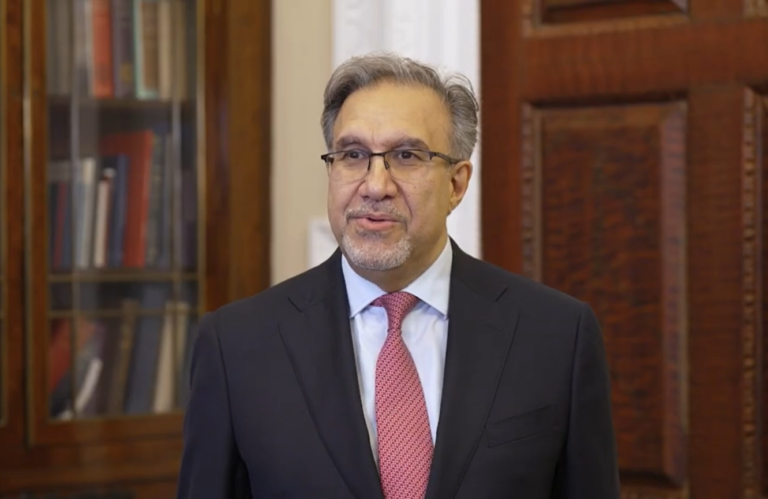
Abu Dhabi (IraqiNews.com) — Possessing vast hydrocarbon endowments and installed power capacity does not insulate an economy from acute vulnerability without institutional coordination, rapid crisis restoration, and contingency planning, former Iraqi Minister of Electricity Dr. Luay al-Khatteeb warned during the Hili Forum 2026 in Abu Dhabi. Addressing a high-level panel titled “Gulf Economic Resilience: Energy, Infrastructure, and Influence”—hosted jointly by the Anwar Gargash Diplomatic Academy (AGDA) and the Trends/ECSSR research complex—Al-Khatteeb highlighted the structural lessons drawn from Iraq’s ongoing grid challenges and wider regional supply disruptions. Core Tenets of Energy Resilience vs. Resource Abundance Divergence of Resources and Resilience: Al-Khatteeb underscored that abundant crude reserves, natural gas deposits, and nominal nameplate power-generation capacity do not automatically yield economic resilience. Institutional Coordination Gaps: Hydrocarbon-rich states remain exposed to macroeconomic shocks and infrastructure paralysis if administrative bodies fail to coordinate cross-sectoral supply chains, anticipate supply interruptions, and restore essential baseload power swiftly. Stress-Test Benchmark for Systems: The definitive measure of an energy framework’s resilience lies not in standard baseline efficiency on normal operating days, but in its capacity to preserve core economic activity and critical infrastructure under worst-case disruption scenarios. Panel Profile: “Gulf Economic Resilience: Energy, Infrastructure, and Influence” ParticipantTitle / AffiliationCore DomainDr. Luay al-KhatteebFormer Minister of Electricity; Member of Iraq’s Federal Energy CouncilEnergy transition, grid governance and Iraqi infrastructureHussein ShoukryPresident, Middle East and Africa, Siemens Energy (UAE)Power generation technology, EPC execution and turbine systemsDr. Karen YoungSenior Research Scholar, Center on Global Energy Policy, Columbia SIPA (USA)Gulf political economy, energy finance & regional statecraftDr. Abdulla Isa AlabbasiDirector of Energy and Environmental Studies, Derasat (Bahrain)Regional environmental policy, grid interconnectivity and strategyDr. Mohamed Al Zarouni (Moderator)Lecturer, Anwar Gargash Diplomatic Academy (AGDA)Strategic diplomacy and infrastructure security Al-Khatteeb’s intervention touches directly upon Iraq’s persistent structural dilemma: despite producing over 4.4 million barrels of oil per day and spending billions on generation units over the past decade, chronic gas feedstock shortfalls, distribution grid bottlenecks, and reliance on imported fuels leave the power sector vulnerable during seasonal peaks. Building durable energy resilience, the panel emphasized, requires moving beyond raw generation figures toward decentralized grid architecture, commercial capture of associated flared gas, upgraded transmission grids, and institutional agility capable of withstanding external geopolitical and financial shocks.
Energy resources do not guarantee resilience: Ex-Minister Luay Al-Khatteeb
Full Article
Original Source
Read the full article at Iraqinews →KhanList aggregates and links to publicly available news content. We do not host full articles from third-party sources. Always verify important information with original sources.