
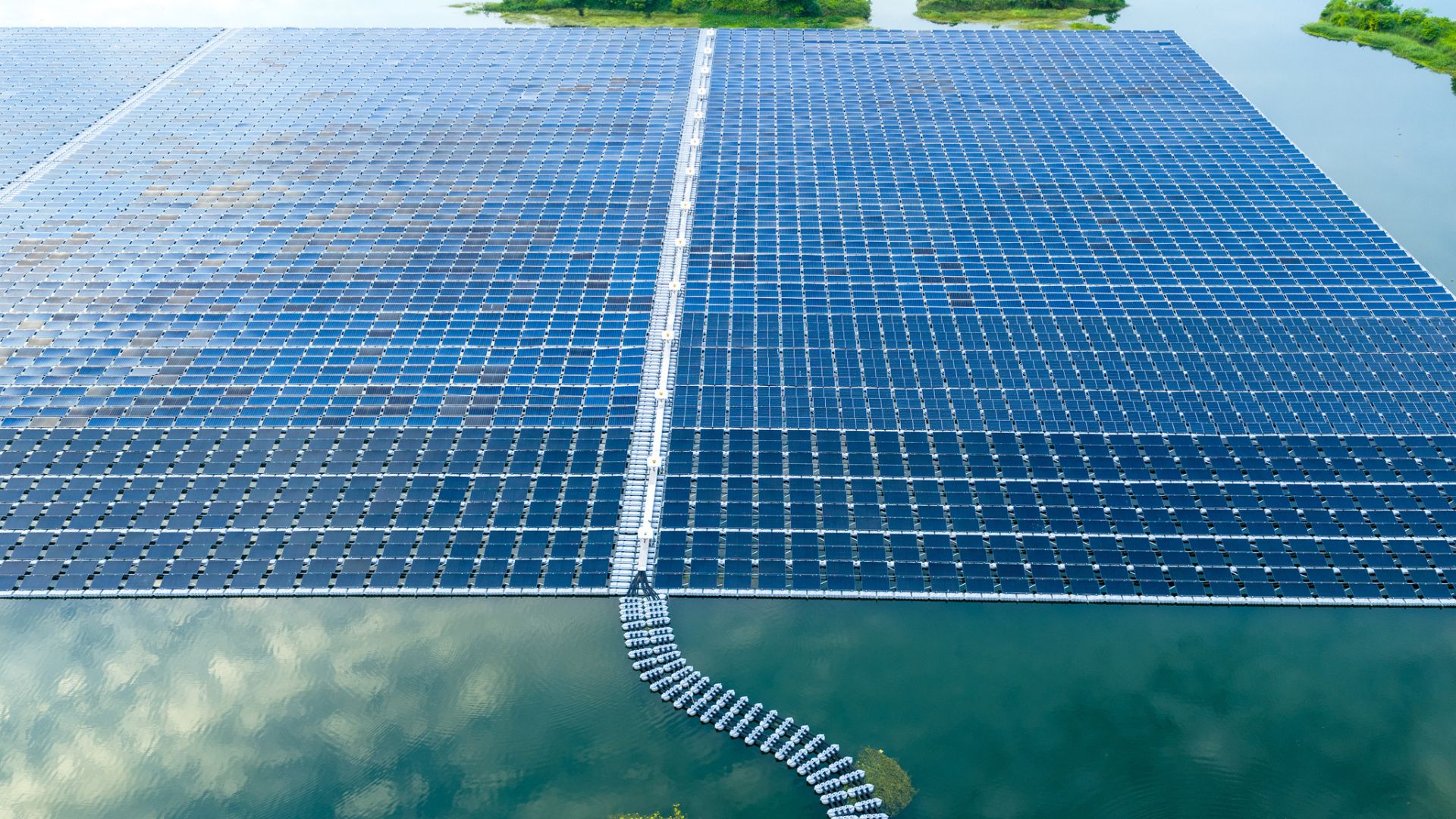
South Korea’s three state-owned energy companies have applied to build six floating solar power plants that will have a combined capacity of 1,324 megawatts, according to some media reports. If completed, the combined generation capacity will almost match that of an APR1400 nuclear reactor, which produces 1,400 megawatts. The state-run Korea Rural Community Corporation manages the reservoir sites and aims to deploy 3,000 megawatts of water-based solar capacity across 28 districts by 2030. Officials received the initial proposals late last year and are reviewing candidate sites at Sapgyo Lake, Yedang Lake, Namyang Lake, and Daeho Lake. Meanwhile, two other proposed sites at Cheongcheon Lake and Ganwol Lake have cleared initial review and will move to open competitive bidding. Agency representatives stated that local government consultations will conclude before the final developers are chosen. Shift toward utility-scale plants The current submissions represent a shift toward utility-scale plants exceeding 100 megawatts on single bodies of water. Previously, one of the largest comparable facilities on an agricultural reservoir was the 98-megawatt installation at Daeho Lake. Under the new plans, Korea Western Power intends to build 698 megawatts across two sites, including a 500-megawatt plant on Ganwol Lake and 198 megawatts on Namyang Lake, as reported by Pulse. Korea Midland Power has proposed 506 megawatts across three locations: 375 megawatts at Sapgyo Lake, 105 megawatts at Yedang Lake, and 26 megawatts at Cheongcheon Lake. Korea East-West Power plans to construct a 120-megawatt second phase at Daeho Lake. Involves engineering hurdles Building solar farms on open water involves far more engineering hurdles than bolting panels onto dry land. Instead of static metal racks, these systems rest on interlocking pontoons made from heavy-duty, UV-resistant plastics. The entire platform must absorb constant wave motion and withstand high winds sweeping across the lake surface. To keep the arrays from catching the wind like sails, engineers mount the solar panels at much flatter tilt angles than those used in typical ground installations. Holding thousands of floating panels in place is another challenge, especially in reservoirs where water depths rise and fall between dry periods and heavy monsoon rains. Notably, such facilities depend on weighted anchors resting on the lakebed, paired with tensioned mooring lines or shoreline tethers. This setup gives the platforms enough vertical slack to ride the changing waterline while keeping them stable enough to prevent lateral drift and structural strain across the joints. Marine-grade protection The electrical hardware demands similar marine-grade protection. There is a strong requirement of waterproofing for submerged direct-current cables, connectors, and junction boxes. However, developing specialized buoyant materials, underwater conduits, and anti-corrosive gear come with a premium price tag. That said, the biggest hurdle is presented on dry land. Developers must secure approvals from grid operators, who need to verify that regional transmission lines can absorb hundreds of megawatts of variable solar energy before regulators will grant final operating permits. Get the latest in engineering, tech, space & science - delivered daily to your inbox.An active and versatile journalist and news editor. He has covered regular and breaking news for several leading publications and news media, including The Hindu, Economic Times, Tomorrow Makers, and many more. Aman holds expertise in politics, travel, and tech news, especially in AI, advanced algorithms, and blockchain, with a strong curiosity about all things that fall under science and tech.
Energy giants tackle the challenges of building 1.3 GW floating solar power plants
Full Article
Original Source
Read the full article at Interestingengineering →KhanList aggregates and links to publicly available news content. We do not host full articles from third-party sources. Always verify important information with original sources.