
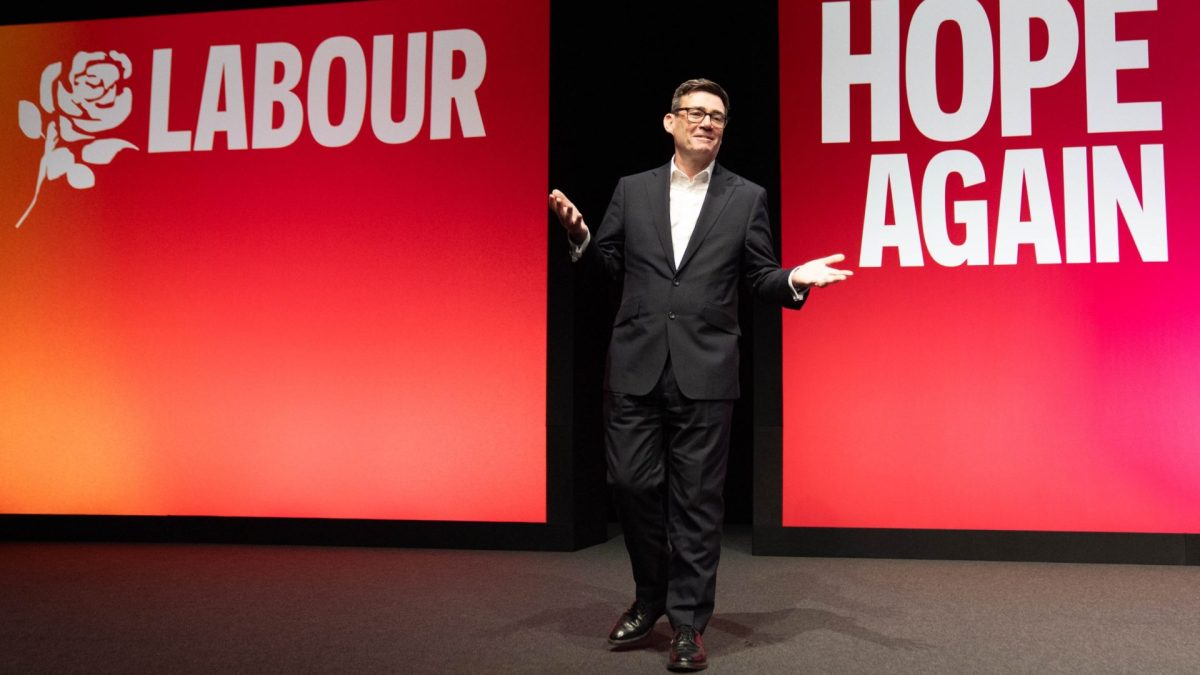
Andy Burnham’s drive to “buy British” when upgrading the power network that supplies every home could push up household energy bills, ministers have admitted. UK businesses are set to be prioritised for work on the multi-million pound upgrade under guidance laid before Parliament this month. “The Government recognises that this may come with a short-term cost trade-off,” the policy document concedes. Shorts Ofgem, the energy regulator, has also been told to give more weight to UK jobs and manufacturing “rather than prioritising only near-term lowest cost considerations”. The revelation comes ahead of a speech in which Burnham will announce plans to bring down energy costs by introducing greater public control in the system. A new publicly owned body within Great British Energy – Great British Grid (GB Grid) – will be launched with the aim of speeding up grid connections for businesses and reducing the cost of bills. It is described as the “first publicly owned player in electricity networks since privatisation”. Burnham will say: “Within 10 years, I want our energy costs to be in line with other nations in Europe – that means we must reform a broken energy market so it serves the public interest. “Great British Grid will increase competition to drive down costs and speed up delivery so businesses can connect faster and grow quicker. This is what more public control can do.” Household energy costs are expected to climb to a three-year high this winter as the impact of the Middle East war wipes out Burnham’s tax cut on electricity bills. The Ofgem cap on energy prices is already set to rise by four per cent from next month, adding £60 to the typical annual bill and taking it to £1,723. New ‘Buy British’ guidance The power grid, which is privately owned but regulated by Ofgem, is undergoing its biggest expansion in decades as demand for renewables and electricity grow. The regulator can set how much network companies can spend and recover through charges on energy bills – which means upgrades are effectively paid for by households. Before the “buy British” pledge, Ofgem approved £28bn of investment in the UK’s electricity networks last December, part of a wider grid upgrade programme estimated to cost £90bn by 2031. The regulator said at the time that £108 would be added to bills by 2031 – £48 for gas and £60 for electricity – offset by about £80 in savings from a bigger grid, leaving a net increase of “around £30 or less than £3 per month”. Ofgem has been asked to encourage network companies to consider the “social value” – including British jobs and skills – that a bidder offers when choosing contractors for the work, rather than looking at price and quality alone. It means a more expensive bid could win if it scores well on British jobs. Ministers have not calculated what the policy could cost bill-payers. The memorandum confirms that no full impact assessment was carried out. The guidance was published less than two weeks after the Prime Minister told MPs that household energy bills in Britain were “the highest in Europe” and that “life is too expensive and too hard for too many”. Although the “buy British” policy is expected to push up bills in the short term, there is no getting away from the need to upgrade the power grid as demand for renewables grows, and Burnham clearly spies an opportunity to boost UK jobs and skills. Ofgem has pushed back against the guidance, saying it sees no need for new rules. Shadow Energy Secretary Andrew Bowie said Labour’s drive for clean power by 2030, and net zero by 2050, was being pursued “without a plan” and showed a “lack of planning”. He argued that ministers had failed to grasp the scale of the cost of living pressures facing households and businesses. Bowie claimed consumers were being asked to pay for “an ideological project” that would deliver little benefit for decades, and said the cost of reaching net zero should not be placed on “already struggling bill-payers up and down the UK”. In a response to the energy department’s own consultation, one of the points most frequently raised was the “risk that the use of social value considerations would feed through to higher costs for consumer bills; or that Ofgem’s consumer protection obligations would be eroded or removed.” An Ofgem spokesperson told The i Paper: “Protecting the interests of existing and future consumers remains Ofgem’s principal objective. We assess proposals and decisions against our statutory duties, including ensuring consumers pay no more than necessary while supporting a secure and resilient energy system.” In its consultation response, the Department for Energy Security and Net Zero (DESNZ) said the guidance “does not require Ofgem to prioritise growth or social value over consumer protection or overall value for money” and that “Ofgem’s statutory duties, including on affordability, remain fully in place”. It argued that a more resilient supply chain would lower costs by reducing delays, equipment shortages and exposure to global market shocks. The guidance takes effect on 17 November unless either House of Parliament votes against it within 40 days. A DESNZ spokesperson said: “We know families are worried about the cost of energy, which is why we’re reversing decades of underinvestment in our grid to help reduce our reliance on volatile fossil fuels and bring down bills for good. “Ofgem already oversees all network investment to ensure consumers are protected, while also promoting economic growth. Our draft guidance builds on this.”
Energy bills set to rise under ‘buy British’ electricity plan
Full Article
Original Source
Read the full article at Inews →KhanList aggregates and links to publicly available news content. We do not host full articles from third-party sources. Always verify important information with original sources.