
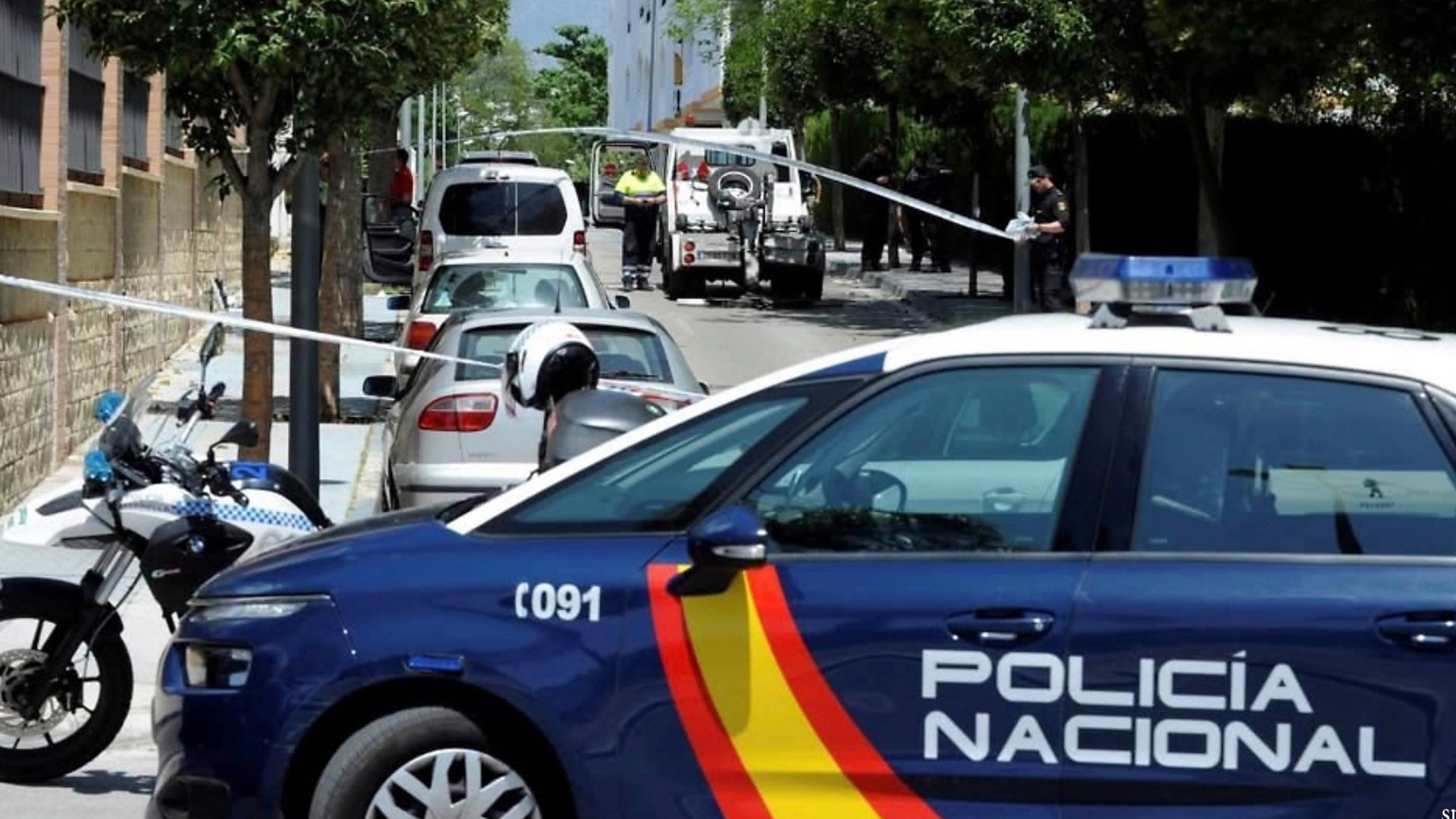
SUN, sea and shootings: Brits have flocked to this charming coastline for decades to get their tan on – but a spate of broad daylight killings in one region has shattered its picture-postcard image. Panic has long gripped the sunny holiday hotspot, terrorised by gangs carrying out brutal score-settling murders and kidnappings – but experts warn the latest shootings mark a new wave of bloody slaughter. A spate of broad daylight killings in one region has shattered its picture-postcard image Credit: Getty The coastline’s proximity to Morocco allows smugglers to ship drugs into Europe Credit: Spanish National Police A man was shot dead in Málaga on Monday Credit: Solarpix Cops fear the shooting was a settling of scores between rival gangs Credit: Solarpix Three brutal shootings have rocked the Spanish coast in recent weeks. The most recent struck on Monday afternoon, when a man was shot dead in the quiet hamlet of Zalea, on the outskirts of Malaga. Further along the Costa del Sol, in Marbella, two shootings rocked the holiday town in just two weeks. A man was blasted in the leg near a ritzy hotel in broad daylight, sparking a dramatic police chase along the resort’s famous Golden Mile. Just two weeks earlier, a man was shot dead in the street before his killers sped off from the scene. Recent outbreaks of gangland violence in the Costa del Sol expose how a huge network of international organised crime groups operate out of the area’s picturesque towns. In August alone Málaga recorded as many as five shootings – but the incidents are far from the region’s first taste of gory gang-linked violence. In 2019, a man was found alive but in excruciating pain after a rival had drilled holes through his toes. Hitmen have been shipped in from abroad to carry out targeted assassinations, bombs have been planted in Benahavís and kidnappings carried out as conflicting clans battle it out. Gangsters have been attracted to the Costa del Sol since the 70s after the death of the Fascist dictator General Franco. As cheaper commercial air travel saw Spain welcome increasing numbers of British tourists with the popularity of package holidays, the UK also exported many of its criminals. An extradition treaty with the UK expired in 1978, meaning British criminals could hole up in the holiday hotspot without fear of being shipped back home to face justice. The Costa del Sol has seen in an explosion of violence after disputes among its criminal underworld exploded onto the streets Credit: Getty Drug dealers have even unloaded shipments in plain sight of terrified tourists Credit: instagram By the time the legal loophole had been fixed, the crime bosses had already flooded in, capitalising on the coast’s burgeoning tourism industry. The idyllic coastline soon gained notoriety as a gangster’s paradise, where criminal kingpins could hide out unbothered by the pesky arms of the law. So many wanted crime bosses line its shores that the area gained a chilling new nickname: the Costa del Crime. At first, authorities turned a blind eye to the criminal class filling up the country’s southern resort towns – so long as they didn’t commit crimes there – for one key reason. They brought cash to splash, and a lot of it. With plenty of money flowing in from ordinary holidaymakers as well as retired gangsters, the country’s tourist industry boomed and luxury resorts developed. It was a great opportunity to hide in plain sight and for criminals to launder their cash. Professor Michele Riccardi is the Deputy Director of Transcrime, Università Cattolica del Sacro Cuore and an expert in how organised crime groups launder their ill-gotten gains. He told The Sun: “Spain, and especially the Costa del Sol has been a place where a good number of the most wanted criminals went for both operational reasons, mostly related to cocaine trafficking coming from Latin America, but also for money laundering. “There was on the one side, a good opportunity to invest like in real estate, in tourism. So they could exploit that demand for tourism, but also hide in the midst of normal tourists.” The operational appeal of the coastline was simple. Spain had become the gateway to Europe for the international drug trade, with cocaine shipped from South America and hashish from the North of Africa. Critically, Morocco is just 10 miles across the sea from the Costa del Sol. And so the Costa del Sol, stretching 55 miles from Málaga to Estepona, was propelled into infamy. One town in particular became the hottest destination for the global criminal elite: Marbella. Chris Dalby, an organised crime researcher and Head of Intelligence at Dyami, a security firm, told The Sun: “Marbella has almost everything an international criminal could want. “You have extraordinary wealth, a huge transient international population and luxury developments where somebody spending enormous amounts of money doesn’t necessarily stand out. Brazen drug dealers dance aboard a boat stuffed full of smuggled narcotics Credit: instagram 36 firearms seized as part of joint Spanish National Police and National Crime Agency (NCA) crackdown on the coastline Credit: National Crime Agency “At the same time, you are sitting beside some of Europe’s most important drug-trafficking routes: Morocco is across the Strait, Algeciras is a major container port and Gibraltar is nearby. “The proliferation of criminals became a self-fulfilling prophecy. The more there were, the more expertise could be found, the more deals could be made.” “Spanish authorities have identified more than 100 organised-crime groups across dozens of nationalities on the Costa del Sol. “It became a place where a British trafficker could meet a Dutch-Moroccan broker, an Albanian cocaine supplier and a Spanish logistics crew.” Professor Riccardi said: “Marbella is quite a strategic place, it’s quite close to Gibraltar, is quite close to Algeciras, which is an important port for drug trafficking in Europe.” Its luxury meant that the flash cars of mobsters didn’t look out of place and crime bosses felt safe – until they weren’t. As Spanish authorities began to catch wind of the criminals filling up its sunbeds, running operations from Marbella and Málaga became riskier. Criminals started searching for boltholes in countries outside the EU, but also countries whose governments were less cooperative in targeting international crime, Professor Riccardi said. They were looking for destinations “where it was more difficult to have good international cooperation on both criminal things like extradition, but also money laundering cooperation”. He explained: “Among these places, the UAE started to emerge. In the 2010s they began to settle in Dubai, but also in the Emirates in general, because at that stage, their governments were not so great in terms of extradition and international cooperation.” “Dubai has become a strategic place for driving and coordinating drug trafficking businesses and other criminal businesses, but also for money laundering, for example, in luxury, in real estate.” But not all criminals moved – some people still need to be by the sea to traffic drugs and other goods to Europe. Huge amounts of ammo were seized in one bust Credit: National Crime Agency Higher levels of criminals have moved to Dubai, commanding lower-ranked lackeys who remain closer to the action in Marbella and Malaga Credit: Getty Analysts suspect that the top tier of criminals may have scarpered to the UAE but left their lower ranking lackeys to keep doing their dirty work on the Costa del Sol. It means the Spanish holiday coast may see an increase in lower-level turf war killings and violence. Professor Riccardi said: “What was observed, although this is a kind of plausible speculation, is that Spain and in particular Marbella area remain more on very operational, with lower-rank players, lower-rank criminals while the Emirates became for higher-rank criminals. “And therefore – and this is a hypothesis – Marbella began hosting not just higher-rank criminals.“It may see what happens when lower-rank multiple criminal groups are involved, like market fights, violence, killings, kidnapping, and so on.” It’s not just British gangs with gangsters charging about the Costa del Sol. Italian mafia, Dutch criminal networks and feared “soldiers” from Marseille clans in France. The violence that explodes onto the streets can mean these groups are contesting territory, or failing to find a balance between their crime empires, Professor Riccardi said. He added: “We have multiple criminal groups, criminal actors involved, which have not found an agreement and therefore fight for the same market. “And the second reason may be that this place has become the place for lower rank members of criminal organisation, while the bosses, the coordinators are elsewhere. “The Emirates may be an option, but also other countries, which are increasingly important, such as Turkey. “Shootings, and killings especially, are just a last resort measure. “When you have visible killings and violence, this can be the signal of the fact that an agreement and equilibrium has not been found, first of all, or that other type of criminal actors maybe more violent ones, have entered the market.” Analyst Dalby said: “Marbella acquired something much harder to replicate: the people you need to commit crimes at scale. “If you needed a money launderer, a trafficker, somebody who could move drugs through a port, somebody who could sell them elsewhere in Europe, or somebody who could provide violence, those connections were increasingly available on the Costa del Sol. “Over time, that produced this extraordinary concentration of criminal groups from across Europe and beyond. “They formed a constantly shifting patchwork of alliances, business relationships and betrayals. Groups might cooperate on one shipment and then fall out over missing drugs, unpaid debts or stolen money. “That accumulation of relationships is part of what has ultimately taken Marbella down the increasingly violent path we see today.” Marbella is reckoning with the crime gangsters have brought to its shores, with huge crackdowns and specialised police operations. Police arrested three suspected gang members after the September 8 shooting outside a hotel. Former Marbella mayor Pepe Bernal said that a plan to combat gang crime in the city launched in 2024 was “a recognition by law enforcement that there is a problem here”. He said the mob bosses used to be known, but tolerated: “Before, these people came to just to spend their money or to enjoy it. “Now they are not in the limelight, they are not known, but they are here with their organisations. And that’s dangerous.” Dalby said that criminals are “rational about risk”, but that because of the huge networks built up over the years in Marbella, the city is difficult to replicate. He said: “The Costa Blanca around Alicante, and the wider Spanish Mediterranean coast through Murcia, Valencia and Ibiza, are probably the most obvious candidates for some displacement.” “We are already seeing substantial criminal infrastructure there. A major operation this summer found a network with operational bases in Alicante, Murcia, Cartagena, Almería and Ibiza, providing boats, storage, transport, safe houses, communications and financial services to other criminal groups. “Outside Spain, the French Riviera has some of the same luxury and financial characteristics. “There is recent evidence of senior international traffickers and money-laundering networks establishing themselves there: Europol dismantled one such network this year and seized more than €5 million in high-end property on the Riviera.”
Enemies ‘drilled’ & daylight killings – how top holiday coast became a mob boss hotspot… & why it’s getting MORE violent
Full Article
Original Source
Read the full article at Thesun →KhanList aggregates and links to publicly available news content. We do not host full articles from third-party sources. Always verify important information with original sources.