
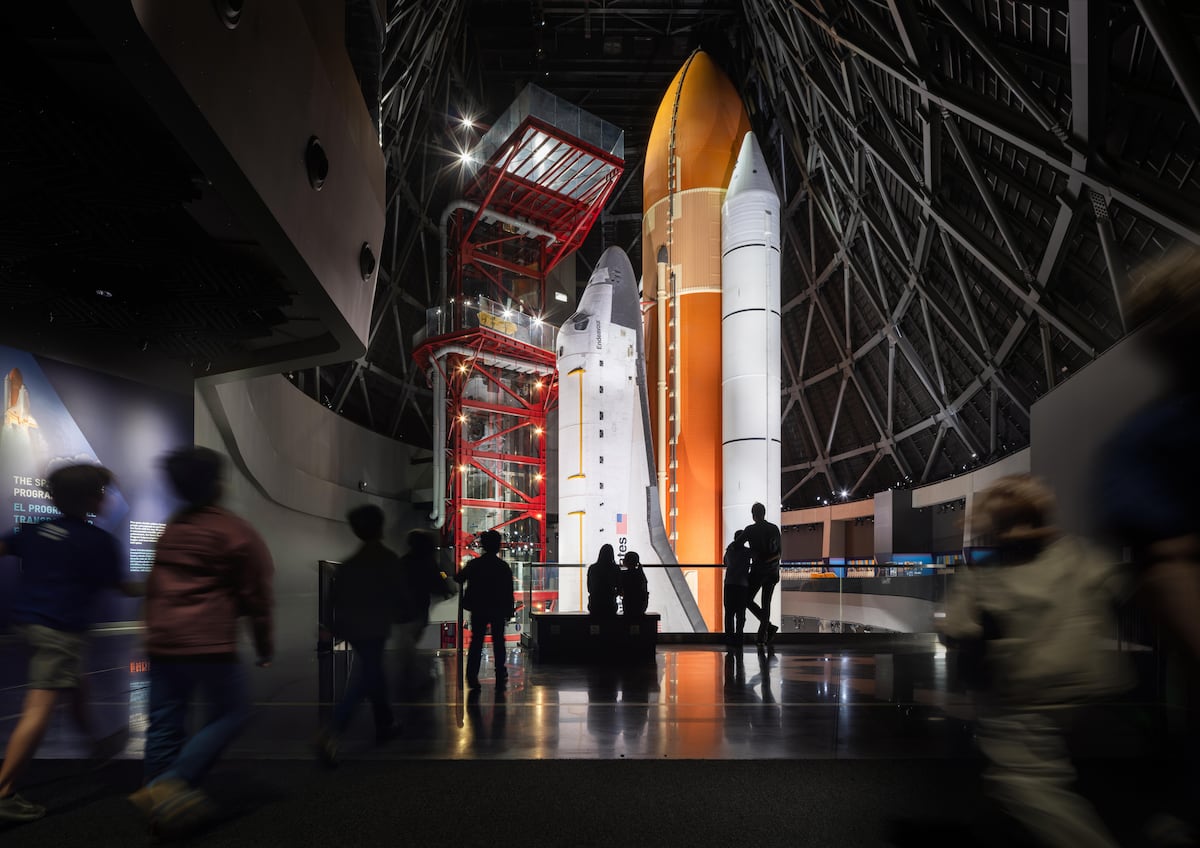
Fifteen years have passed since the Endeavour last watched sunrises from space. After 25 missions over 19 years, it was in May 2011 that the famed space shuttle began its final flight and separated from its longtime companion, the International Space Station. It was its final major flight, but not its last. After landing in Florida, the shuttle was, curiously, flown by airplane to Los Angeles, California. It has spent the intervening years under wraps. Now, at last, it will be exhibited to the public.The California Science Center (CSC) is showing the Endeavour in all its glory. It is a milestone for Los Angeles and notable because the CSC becomes the first museum in the world where a space shuttle can be viewed. After arriving in October 2012 and being moved from the airport along barely two miles of streets in a complex operation lasting several hours, 14 years later the Endeavour is finally on public display. On November 13, the ribbon will be cut to give a second life to the ship that succeeded the Challenger.A couple of weeks earlier, museum officials and state authorities came to view the shuttle, already in place, and to present it to the press. Among them was then–California governor Gavin Newsom, in one of his last public acts before finishing his double term, shortly before being succeeded by fellow Democrat Xavier Becerra. Newsom said he was amazed by the Endeavour, and he congratulated and posed for photos with technicians, museum officials, and Lynda Oschin, the widow of Samuel Oschin — the businessman and philanthropist who gives his name to the CSC’s new wing, built for the occasion — and president of the family foundation. The Oschin family have been the $450 million-project’s main donors.Entering that new area, visitors find themselves at mid-height beside the imposing, fully restored orbiter. To reach it they can take stairs (regular or escalator), an elevator… or a tubular slide built through the core of the museum that is the fastest route. Having descended, they can see its engines, its turbines, the base of the whole structure, and separately the cockpit interior. Then they take an elevator that rises to a height equivalent to a 20-storey building in a matter of seconds to view the top of the Endeavour. It is unsuitable for those who suffer from vertigo — it is fast and transparent.Beside the orbiter sits an immense orange tank, known as the ET (for external tank), which has been repaired for the exhibition, as Rosemary Garista, the center’s community programs manager, explains. “It contained the liquid fuel and the boosters, but it is empty now. It was missing some pieces, so we fully restored it,” she told EL PAÍS. The tank is the last ET-94 built to propel these ships into space.Garista and the rest of the more than 300 staff members (some state employees, some museum employees) were excited to finally be able to show the craft to the world. They were also pleased that it would become a tourist draw that would encourage visitors to the museum’s other two wings, which display some of the machines that helped build those spacecraft, as well as various aircraft, including a Boeing with a simulated flight from Los Angeles to Seoul. Guides expect a flood of visitors and insist tickets be reserved in advance.The entire new wing — which is dark and austere on the inside, with the Endeavour taking center stage — took over a decade to build. Those in charge say that while transporting the spacecraft from Houston, Texas, to this location was a major challenge, constructing the building (with grants and funding; in fact, $35 million remains to be paid, for which they are seeking donations) was no less so. Now, it can be seen from the rest of the city as a sort of wide metal chimney gleaming in an elevated area. The museum shares space with the newly opened Lucas Museum of Narrative Art, which opened in late September, and the century-old Memorial Coliseum — currently undergoing renovations — which will host the opening ceremony of the Los Angeles Olympic Games in the summer of 2028.During his visit to the museum, Newsom expressed pride that the ship had been built in California and that it had returned there as a final destination to be seen by millions of people. “California has never been a state that waits for the future. We build it. We’re a state of dreamers and doers, where world-class engineers and scientists are leading the way in aerospace innovation. That’s the California spirit — investing in what’s next, pushing the limits of what’s possible, and proving once again that the future happens here first,” he said.Never one to shy from the spotlight, Newsom rode the slide down to the base of the new wing, which has been named the Samuel Oschin Air and Space Center. It covers up to 200,000 square feet, doubling the museum’s exhibition space, its president Jeffrey N. Rudolph said in presenting it, while explaining it will feature 100 new artifacts and another 100 interactive experiences. “Today, that 1992 dream is now reality,” he said.Ken Phillips, the museum’s exhibitions director, told the audience emotionally that he had worked at the museum for 37 years and after all the waiting could not believe the day had finally come for the world to see the Endeavour and its new home: “It’s inspiring; I hope it will be transformative, but above all, it’s an invitation — because we hope that people who haven’t had this experience will be convinced and surprised to discover that there’s a place for them in this technologically advanced society we’re moving toward.”Sign up for our weekly newsletter to get more English-language news coverage from EL PAÍS USA Edition
‘Endeavour,’ the first space shuttle to be seen in a museum, finds permanent home in Los Angeles
Full Article
Original Source
Read the full article at English →KhanList aggregates and links to publicly available news content. We do not host full articles from third-party sources. Always verify important information with original sources.