
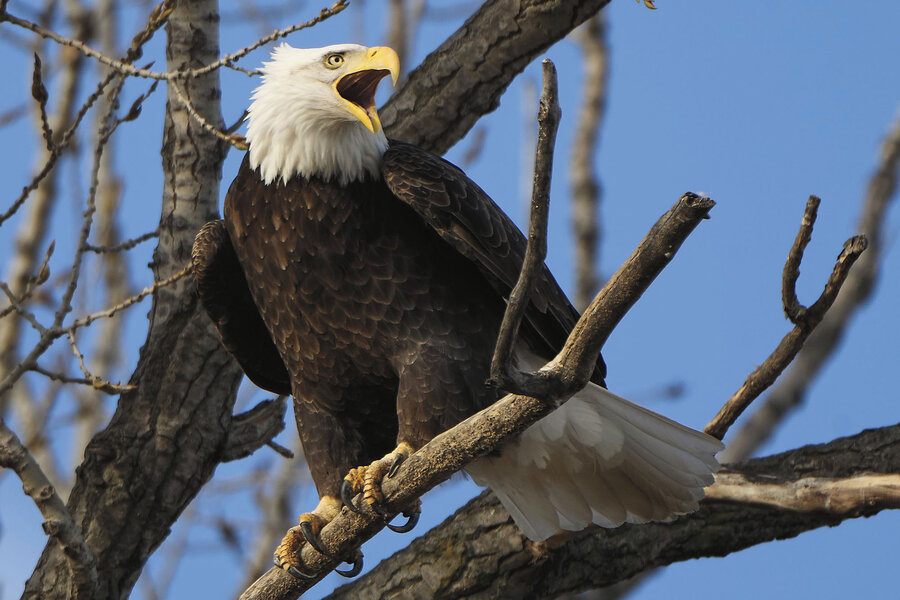
The Trump administration has changed the protections given to vulnerable plant and animal species and their habitats under the Endangered Species Act, and has altered how the safeguards for these species are prioritized.From mighty Rice’s whales to the humble rusty patched bumblebee, the 1973 act protects more than 1,600 listed endangered and threatened species and their habitats. When the law passed on a sweeping bipartisan vote, species such as American alligators, gray wolves, and even the United States’ national symbol, the bald eagle, were on the brink of extinction. These populations, along with 54 other species, have recovered to the point where they are no longer considered endangered or threatened.Without the law, hundreds of species in the U.S. would now be extinct, according to a study by the Center for Biological Diversity. Why We Wrote This The Endangered Species Act passed more than 50 years ago with almost unanimous support in Congress, but has consistently been the subject of political debate. The Trump administration is changing a key definition in the law, putting focus on what that means for the species the act protects. Despite its successes and high support from the public, the Endangered Species Act has been the subject of divisive political debate. The recent modifications have put it back in the spotlight.What changes did the Trump administration make?In July, the U.S. Fish and Wildlife Service and the National Marine Fisheries Service rescinded the regulatory definition of “harm” under the Endangered Species Act (ESA), even though the word remains in the law. The administration argues that both agencies improperly expanded the definition of harm to include habitat modification, exceeding the law’s original intent and creating unnecessary land-use restrictions for businesses and landowners. The administration also changed how the two agencies decide to exempt a particular area from being designated as a critical habitat. Critical habitats are those deemed important for endangered or threatened species’ survival and recovery, and once designated, it becomes more complicated to carry out projects there.Critical habitats often overlap with places of economic, infrastructure, and national security importance. For example, the Gulf of Mexico, where the Trump administration has said it plans to expand oil production, is home to endangered sea turtle species. To manage trade-offs between competing development priorities and habitat protection, the ESA has long allowed agencies to grant exemptions if an area’s economic or national security potential outweighs the value of protecting it, and if it would not drive the species to extinction.Lastly, the Trump administration ended the Fish and Wildlife Service’s long-standing practice of automatically awarding newly listed threatened species the stronger protections given to endangered species. Endangered species are those currently at risk of extinction, while threatened species are those likely to become endangered in the foreseeable future. A gray wolf at the Wildlife Science Center in Forest Lake, Minnesota, 2004. The Fish and Wildlife Service now must develop individual protections for newly listed threatened species, a lengthier process.Why is the administration making the changes?Officials say that federal agencies had, over time, interpreted the Endangered Species Act more broadly than Congress intended when it passed the law. “We’re returning the ESA to its foundational purpose to ensure legitimate conservation goals are met without sacrificing economic growth and American prosperity,” Commerce Secretary Howard Lutnick said in a statement announcing the changes.Ryan Shannon, a senior attorney at Defenders of Wildlife, a conservation nonprofit, disagrees. “Every single action they’re taking is to weaken protections for endangered species,” he says. “None of these are aimed at furthering the purpose of the Endangered Species Act.”The administration also says that previous ESA regulations created unnecessary costs, as well as uncertainty for landowners, businesses, and infrastructure projects, impacting economic activity. “For years, federal agencies abused the ESA to obstruct lawful land use and burden American families and businesses,” Interior Secretary Doug Burgum said in July. He added that this “approach turned routine activity into a “regulatory trap.” Some conservationists support the move. “If we ignore costs [to landowners], we harm species in the process because we create perverse incentives, and species do worse,” says Jonathan Wood, vice president of law and policy at the Property and Environment Research Center, which promotes market-based conservation policies.Finally, the Trump administration says previous regulations were not effective in recovering listed species. It notes that only 3% of species populations have recovered from being threatened or endangered since 1973. “Success should be measured by species recovery and delisting, not by adding more species to the list,” according to a news release by the Interior Department announcing two of the changes to ESA regulations.Mr. Shannon disagrees, noting that the law has prevented the extinction of 99% of the species it protects.He says the administration overlooks the complexity of bringing back endangered species, adding that species are listed only after decades of decline and “face significant systemic threats to their existence.” The 50-plus years since the act is very little time on an ecological scale, so it is unrealistic to expect many species to have fully recovered already, he adds.What effect could the changes have?Conservation groups worry that the changes could accelerate habitat loss, which is widely considered to be the leading cause of species extinction. They argue that the changes significantly weaken the Endangered Species Act.“Globally, there’s just simply no way to save species from extinction without protecting the places that they live,” says Noah Greenwald, co-director for endangered species at the Center for Biological Diversity.Agriculture, urban development, dam construction and water diversion, pollution, and climate change are the biggest causes of habitat loss, according to the National Wildlife Federation.The lack of a regulatory definition of harm creates ambiguity over when habitat destruction would qualify as illegally harming a protected species, Mr. Shannon says. A coalition of environmental groups and Native American tribes has sued to reverse it.He also worries that the revised rules on critical habitat will make it easier to exempt important habitats from protection, in favor of commercial development and other land use. Proponents say the changes will require regulators to better assess the economic costs and benefits of protecting particular areas. Mr. Wood, at the Property and Environment Research Center, says this could encourage voluntary conservation. Landowners would not feel incentivized to destroy habitats to keep protected species from settling on their property, he says.Administration officials say that by not automatically applying protections for endangered species to threatened species, the Fish and Wildlife Service will tailor protection measures to individual species rather than relying on a one-size-fits-all approach, resulting in more effective conservation. But Mr. Greenwald says the changes will delay protecting species. Species already face yearslong delays in getting protection. The Fish and Wildlife Service, which conservation groups say has been chronically underfunded, lost about 1,800 staff members as the Trump administration downsized the federal workforce. It also faces a potential budget cut next year. Requiring individual protections for each species will worsen the backlog, Mr. Greenwald says.
Endangered Species Act gets revamped rules. What effect could they have?
Full Article
Original Source
Read the full article at Csmonitor →KhanList aggregates and links to publicly available news content. We do not host full articles from third-party sources. Always verify important information with original sources.