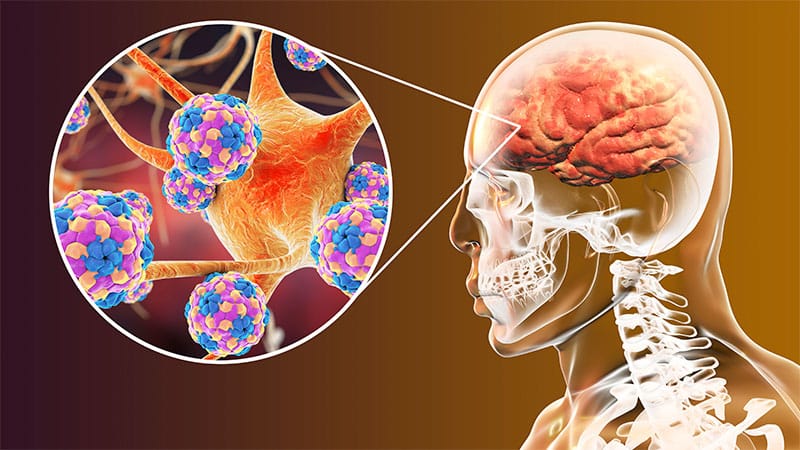
TOPLINEPatients who survived encephalitis had an increased risk of developing dementia and related diagnoses compared with matched control individuals, with the association persisting across all age groups and varying by encephalitis subtype. Older adults (>60 years) showed elevated risk across all dementia categories, while younger cohorts (60 years.Each encephalitis cohort was compared with age-stratified control cohorts (patients presenting for general health examination without encephalitis diagnosis) using 1:1 propensity score matching based on demographics and comorbidities including diabetes mellitus, hypertensive diseases, heart diseases, chronic kidney disease, and cerebral infarction.The primary outcome was dementia and related diagnoses, defined as a composite of Alzheimer disease, other degenerative diseases of nervous system, vascular dementia, dementia in other diseases classified elsewhere, or unspecified dementia, assessed within a 10-year follow-up period.Secondary outcomes included epilepsy and recurrent seizures and all-cause mortality; subgroup analyses examined five encephalitis subtypes: non-infectious/post-infectious inflammatory, viral, bacterial, fungal/parasitic, and unspecified encephalitis.TAKEAWAYAcross all age groups, patients with encephalitis had significantly higher risk for dementia and related diagnoses compared with controls: age >60 years (risk ratio [RR], 2.125), age 40-60 years (RR, 2.464), age 20-40 years (RR, 2.653), and age 60 years) showed significantly elevated risk across all dementia subtypes, including Alzheimer disease, other degenerative diseases of nervous system, vascular dementia, dementia in other diseases, and unspecified dementia (all P <.0001).Non-infectious/post-infectious inflammatory encephalitis and viral encephalitis subtypes showed the highest dementia risk compared with matched controls (RR, 3.928 and 1.99, respectively; both P <.0001), while bacterial encephalitis showed no significant association with dementia outcomes.Patients with encephalitis had significantly higher risk for epilepsy and recurrent seizures across all age groups (RR ranging from 10.086 to 14.786; all P <.0001) and higher all-cause mortality (RR ranging from 2.73 to 7.25; all P <.0001).IN PRACTICE"These findings highlight the importance of long-term cognitive monitoring for encephalitis survivors across all age groups and support the use of encephalitis as a model to study acute brain inflammation driven neurodegeneration," the authors of the study wrote.SOURCEThe study was led by Parimal Samir, The University of Texas Medical Branch in Galveston, Texas. It was published online on August 5 in Journal of Neurology.LIMITATIONSThe study relied on electronic health records and diagnostic codes, which may be subject to coding errors or incomplete documentation. Radiological or laboratory data such as MRI or cerebrospinal fluid analyses were not incorporated. The study was limited by potential surveillance bias.DISCLOSURESThe study was supported by startup funding from The University of Texas Medical Branch and pilot grants from the Institute for Human Infections and Immunity and The Moody Brain Health Institute. Additional support was provided by the UTMB Institute for Translational Sciences through a Clinical and Translational Science Award from the National Center for Advancing Translational Sciences. One author received funding from the Eunice Kennedy Shriver National Institute of Child Health & Human Development. The authors reported no relevant conflicts of interest.This article was created using several editorial tools, including AI, as part of the process. Human editors reviewed this content before publication.
Encephalitis Linked to Long-Term Dementia Risk
Full Article
Original Source
Read the full article at Medscape →KhanList aggregates and links to publicly available news content. We do not host full articles from third-party sources. Always verify important information with original sources.