
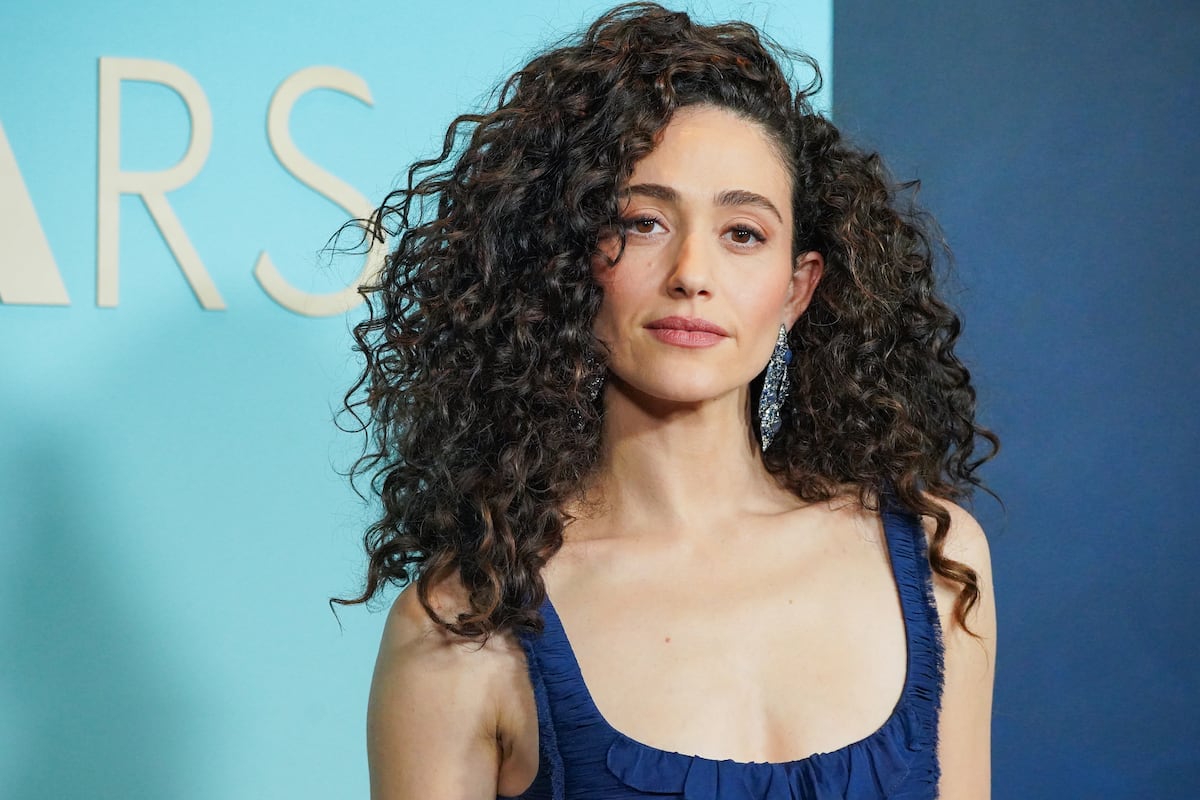
Far from diminishing it, three decades of acting have only deepened Emmy Rossum’s passion for her craft. The 40-year-old New York actress, who began her career at the age of seven, still possesses the drive that has made her not only an actress and singer, but also a creator and producer of the kind of stories she loves, wants to watch, and wants to perform in. That is exactly what she has done with Furious, the Disney+ series that premiered in July and has become one of the season’s breakout hits.In the series, Rossum plays Alice, a former police officer turned FBI agent who is hunting a young killer (played by Lola Petticrew) across New York. On the surface, the premise is not especially original. But Alice has also just ended a long-term relationship with Marshall, an abusive police officer (played by Jake Lacy) who refuses to let go after the breakup. She arrives as an outsider in a department that largely despises her, where the only person willing to trust her, albeit cautiously, is Nora (played by Quincy Tyler Bernstine), a functional alcoholic supervisor who has been relegated to the basement and spends her days trying to track down pedophiles.The series was created and written by Elizabeth Meriwether, but Rossum’s influence can be felt throughout. “I would say Liz is the brain behind the project and I am the caffeine,” the actress laughs during an interview with EL PAÍS.As the story unfolds from episode to episode, the relationship between the supervisor, the FBI agent, and the killer grows increasingly complex, resulting in a nuanced and unusual portrait of working women from three generations. The series has been so well received that its stars have already announced a second season.Rossum had been eager to find a story like this. After ending her nearly decade-long run as Fiona Gallagher on Shameless in 2021, and taking some time to start a family, she began looking for a project with “more depth,” one that excited her. “When I get my wit into something, I really don’t let it go. I become a little bit, like the character, a little obsessed,” she says.She started revisiting older titles and eventually found something that sparked an idea. “I wanted a long-form series where I could excavate contemporary womanhood, women’s experience in the world, in society,” she says. “I found a movie called Black Widow starring Deborah Winger and Theresa Russell.” Its premise was similar to Furious: an FBI agent hunting a serial killer. But Rossum saw something more in it.Although it was a “cat-and-mouse thriller,” she found a portrait of two women who should have been enemies but instead developed an unexpected connection. “I love shows about women that get into power dynamics and relationships between women,” she says. “And I thought, what an interesting way into a kind of cop procedural show that’s different than something we’ve seen before.” She approached Meriwether with the idea, and together they pitched it to Hulu, which bought the project.To develop the series with credibility, the team worked closely with people “within the justice system and those who are looking for justice. And we worked with a lot of psychologists, FBI agents, consultants, survivors of trafficking, and many people to kind of flesh out the story and deepen the character portrayal,” she says.Rossum, who is also an executive producer of Furious, did not work directly with trafficking survivors herself. Instead, the survivors spoke with the writers, and the actors were given transcripts of those conversations as research for their roles.“I know women who have been in relationships where there was violence,” she says. “So getting to understand the depth of that from a psychological perspective, but also from a human perspective of knowing the people, it becomes very personal and it feels very tender.”“I think art, when it is both entertaining, meaningful and truthful, can shape conversation in society and make us feel less alone,” she continues. “And when we feel less alone and less shame about the violence that has been done to us in our lives, we have opportunity to find that fuel to make change.”An actress since childhood and a familiar face since starring in The Phantom of the Opera at just 18, Rossum says people recognize her, but are never afraid to approach her in the street or at events and share their stories, something she welcomes and says has only increased since the release of the series.“It is very meaningful to have made something that is touching people who have been survivors of assault or victims of domestic violence,” she says. “It is just very meaningful to make those connections and also for them to feel that there is a certain cathartic nature to showing women who have been wronged, who have become violent because of it,” she adds, praising the way the show’s creator handled the subject.“I think that it’s very interesting of Liz, who is such a brilliant writer, to not show the violence against women, but to show the aftermath of the violence against women — the rage it awakens. Especially with Alice [my character], having to navigate her way through society. Having to come and show up in a workplace that she cares deeply about, but holding all of this rage. And we’re holding that too in the character of Nora and also in the killer Catherine. It is a very dynamic story that is filled with so much of what society is filled with itself right now.”For her role, Rossum says she also underwent extensive physical training and was adamant that her appearance feel realistic. Alice is unkempt, exhausted, sleep-deprived, and often looks as though she has not showered in days.“You show up as the best way to most authentically tell the story. When I asked Liz how she wanted my hair, she said: ‘Nothing, just your hair.’ And then there are more glamorous days, like today,” she laughs, referring to her styled hair and the makeup she is wearing for the interview.For Rossum, it was important that Alice’s inner turmoil be visible in her appearance. “She doesn’t sleep, doesn’t have proper nutrition; we never see her eating except a bag of chips and a coffee once every three days. And it’s important that she looks like that, that there isn’t a patina concealing it,” she says, pleased that her ideas were heard and that the crew helped translate them to the screen. “They put a little red in your eyes or a glaze, tell you not to moisturize or use an eye mask so that the camera can see the texture. There are all these ways in which the artisans around you help build that character.” The same approach informed Alice’s wardrobe — simple and buttoned up to the throat, “showing this is somebody who doesn’t want anyone to come close.”That commitment to authenticity was especially important to Rossum, “even more so when we are showing women in their wholeness,” the actress reflects. “Their wholeness of their emotional life, their fullness of their history, their wholeness of their faces without Botox and filler and makeup, with no CGI to make them look younger or better. Showing the wholeness of who we are is very impactful, especially when we are being constantly saturated by these images of women that are so simulated and so perfected,” she says. “When we look in the mirror, it doesn’t look like that. So are we acceptable? Are we whole? Are we good enough? Can we show up in society as we are? And so I think it is equally important when you’re telling a story about people and not superheroes that people look like people.”It was also important to both Rossum and Meriwether to portray another kind of imperfection: the shortcomings of the justice system. The series features serious crimes that have gone unsolved for years, fueling the cycle of violence at its center. The cast trained with police officers and FBI agents and drew on those experiences in shaping the show.“Getting justice is really a long process, and sometimes we don’t get it,” says Rossum. “There are a lot of ways in which the system is working, and there are a lot of ways that people don’t feel like it is. For women, for people of color. And so I think those feelings that we are having as a society are very real and reflected in the show. Also, the agents and the detectives who are working within the system also believe in the system, but are equally frustrated.”It’s clear Rossum is passionate about her work. “I like to learn things. I like learning things that I never would have gotten the chance to think so deeply about or to understand,” she says with a smile, explaining, “I’ve been telling stories for all of my life.”“When you make a decision to be an artist or a performer at seven, you’re entering into something that you don’t understand the consequences of,” admits Rossum, an only child, whose mother is also an artist. “She’s 80 and still taking photographs and making her art,” she says with a smile.“What I’ve always known is that women are creators. We are powerful,” she says. “People with ideas, people who can make things in the physical world, who can create other human beings in their body. There’s nothing more powerful than being a woman,” she adds. “For me, the idea of having a production company, of making shows, of making things, it’s just an extension of how I understand our power.”Sign up for our weekly newsletter to get more English-language news coverage from EL PAÍS USA Edition
Emmy Rossum, actress: ‘When art is entertaining and meaningful, it can shape conversation in society and make us feel less alone’
Full Article
Original Source
Read the full article at English →KhanList aggregates and links to publicly available news content. We do not host full articles from third-party sources. Always verify important information with original sources.