
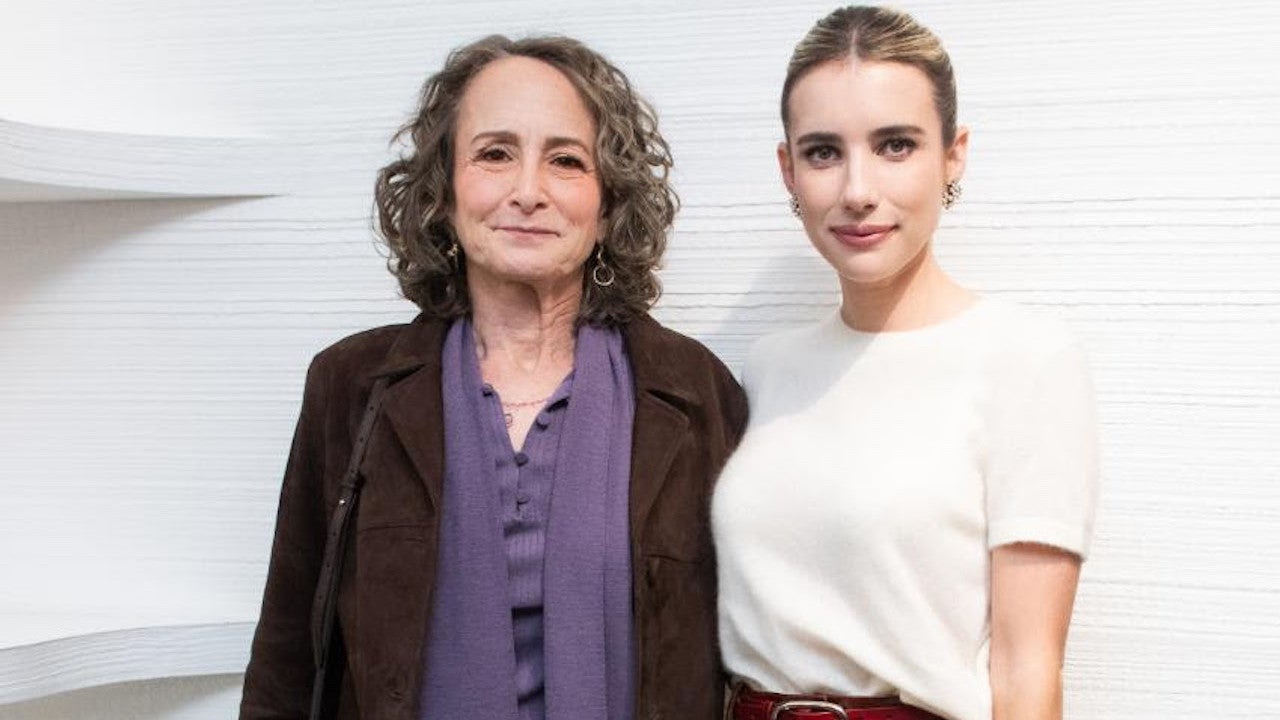
Emma Roberts and Nina Jacobson brought together fashion, film and books at Tory Burch’s Rodeo Drive boutique. At LACMA, a major exhibition celebrates Paul R. Williams, the trailblazing architect who helped shape Los Angeles’ midcentury glamour. Miley Cyrus’ bridal style is another reminder that the wedding aisle has become fashion’s newest red carpet. Meanwhile, Sergio Hudson and Fashion Trust U.S. hosted a rooftop dinner in West Hollywood that turned into a late-night dance party. Nina Jacobson and Emma Roberts, both wearing Tory Burch, celebrate The Hunger Games: Sunrise of the Reaping at Tory Burch Rodeo Drive. Source: Tory Burch/BFA Emma Roberts and Nina Jacobson Talk Fashion, Film and the Art of Building Character at Tory Burch Fashion, film and literature converged at the Tory Burch boutique on Rodeo Drive last week, when actress Emma Roberts and producer Nina Jacobson joined writer and producer Karah Preiss for a conversation about the art of book-to-screen adaptations, the power of costume and what it takes to bring beloved literary characters to life. Co-hosted by Belletrist, the book club and reading community founded by Roberts and Preiss, and Lionsgate, the event celebrated the release of “The Hunger Games: Sunrise on the Reaping.” Before the conversation, guests mingled over brunch bites, browsing and shopping Tory Burch’s Fall 2026 collection. Naturally, the three women were dressed for the occasion in Tory Burch. Roberts wore a patent leather skirt and cashmere-silk T-shirt with D’Orsay pumps, while Jacobson opted for a suede jacket, pants and purple ribbed tie-neck top. Preiss wore a wool sweater layered over a poplin shirt with a rounded collar, paired with tailored trousers. For Jacobson, who has shepherded Suzanne Collins’ entire “Hunger Games” series from page to screen, the secret to a successful adaptation has been knowing what to leave out. Quoting Billy Ray, the screenwriter of “Sunrise on the Reaping,” she compared the process to sculpting an elephant from stone: Start with a large block and carve away everything that isn’t the elephant. The challenge with the “Hunger Games” films was preserving the emotional power and character relationships while translating internal thoughts into action. “When you’re making a movie, it’s often about subtraction,” she said, noting that the shift from film to television for “Crazy Rich Asians,” which is due to start production next year, offers the opposite opportunity: to expand the world and explore more characters’ lives. Karah Pleiss, Nina Jacobson and Emma Roberts in conversation at Tory Burch Rodeo Drive. Source: Tory Burch/BFA Fashion is an important form of storytelling, particularly in the dystopian world of “The Hunger Games,” where it communicates class, wealth and power before a word of dialogue is uttered. Jacobson said the new film’s visual language takes inspiration from the late 1970s, although the costume department was discouraged from relying on period clichés. In the impoverished District 12, clothing is worn, handed down and repurposed, while the Capitol’s extravagant fashions reflect its excess and privilege. Glenn Close, who plays Drusilla Sickle, was deeply involved in creating her character’s look, collaborating with director Francis Lawrence on the military touches and elaborate wigs. She even used tape to pull back her face for a snatched, surgically enhanced effect rather than relying on prosthetics. “It really ought to be a manifestation of a character from the inside out,” Jacobson said of great costume design. Roberts shared that her two favorite ways of preparing for a role are imagining her character’s wardrobe and building a bookshelf for her. During particularly dark scenes on “American Horror Story,” she realized that reading Chelsea Handler’s “My Horizontal Life” between takes wasn’t exactly helping her stay in character, so she switched to Stephen King. Costume fittings can also be transformative. “I’ll think I have something all figured out, and how I’m going to walk and look and then I go into a fitting, and it gives me so many more ideas,” she said. As a viewer, she also sees how costumes can make or break a story. “When you watch a show or a movie and you’re like, ‘I could be this for Halloween or implement this in my daily life,’ that’s the sweet spot.” Costumes can be just as nostalgic for an actor as they are for viewers, Roberts said, recalling how she finally took home the black Prada boots worn by her character Madison Montgomery in “American Horror Story: Coven,” 13 years after filming, only to find her original socks still stuffed inside. Roberts tries to collect something from each project, such as charms that bring back memories. The conversation also turned to “Love Story,” Ryan Murphy’s series about John F. Kennedy Jr. and Carolyn Bessette, whose minimalist 1990s wardrobe has become a fashion obsession. Jacobson addressed the backlash after Murphy shared early photos from the series, revealing just how fiercely audiences felt ownership over Bessette’s style. “We were really hideously dragged at the time, and we were really lucky we were hideously dragged,” she said of the opportunity to course-correct the costumes, hiring Rudy Mance to take over. “But it wasn’t fun at the time and it wasn’t fun for poor Sarah Pidgeon who all of a sudden was having this real life parallel to Carolyn.” Roberts, for her part, said she was so taken with the show’s wardrobe that she went home and questioned everything in her closet. With “Sunrise on the Reaping” inspiring its own fashion moment, Roberts predicted that audiences would dress up to see it, much as they did for “Barbie.” “I feel like going to a movie should be an event,” she said. After all, why leave the costumes onscreen? Julius Shulman portrait of Paul R. Williams, 1952. Source: Getty Research Institute, J. Paul Getty Trust Paul R. Williams, an Architect of L.A. Glamour, Gets His Due at LACMA The glamour of midcentury Los Angeles owes much to architect Paul R. Williams. Just look at the Beverly Hills Hotel, where his signature pink-and-green palette and iconic script logo helped create the look of Hollywood leisure. Known as the “architect to the stars,” Williams designed homes for Frank Sinatra, Lucille Ball and Desi Arnaz, and Barbara Stanwyck. His work helped popularize the elegant indoor-outdoor living that became synonymous with Southern California. He also left his mark on legendary Hollywood gathering places, including the Beverly Hills Hotel’s Polo Lounge and Chasen’s restaurant, with its plush red leather booths. Paul R. Williams, El Mirador Hotel alterations and additions, Palm Springs, 1952, jointly owned by the Getty Research Institute and the University of Southern California School of Architecture. Source: Della M. Williams Trust But there was much more to Williams, as a fantastic new exhibition at the Los Angeles County Museum of Art makes clear. “Paul R. Williams: Architect for Living,” on view through May 31, 2027, explores the extraordinary breadth of his career, from glamorous homes and hotels to churches, schools, hospitals, public housing and commercial buildings, many of which served Black communities in Los Angeles. Paul R. Williams, Beverly Hills Hotel, Crescent Wing, 1949, photo by Julius Shulman, 1949. Source: Getty Research Institute, J. Paul Getty Trust Born in Los Angeles in 1894, Williams became the first Black member of the American Institute of Architects in 1923, overcoming racial barriers to build one of the most prolific architectural practices of his generation, with thousands of projects to his credit. He famously learned to draw upside down so white clients who might have been uncomfortable sitting next to him could view his plans from across a desk. He also made a habit of touring construction sites with his hands in his pockets to spare clients the discomfort of deciding whether to shake hands with a Black man, as his granddaughter Karen Elyse Hudson recalls in a short film featured in the exhibition. He designed homes in exclusive neighborhoods where segregation rules prevented him from living. Gallery view of Paul R. Williams: Architect for Living. Source: Museum Associates/LACMA/Jonathan J. Urban Curated by Staci Steinberger, the exhibition includes archival drawings, photos and personal effects, including a customized green piano from the modernist home Williams designed for himself and his wife, Stella, in the early 1950s. The color recalls the signature palette of the Beverly Hills Hotel, while the home’s sweeping staircase has the same flair that distinguished his celebrity commissions. (Museum visitors can watch an amusing clip of Frank Sinatra giving a tour of his Williams-designed Beverly Hills bachelor pad on Edward R. Murrow’s “Person to Person” TV show in 1956.) Another section showcases his work on the Beverly Hills Hotel and the Ambassador Hotel in Los Angeles, the El Mirador in Palm Springs and the futuristic La Concha Motel in Las Vegas, with its dramatic concrete shell. Williams’ work in Las Vegas also included efforts to develop an integrated casino in the then-segregated city, a project that was never realized. Paul R. Williams residence of Frank Sinatra, Beverly Hills (dining room), 1955–56, jointly owned by the Getty Research Institute and the University of Southern California School of Architecture. Source: Della M. Williams Trust The exhibition is equally devoted to Williams’ commitment to Black Los Angeles. Early commissions such as the Second Baptist Church and the 28th Street YMCA helped establish his practice, while his monumental headquarters for Golden State Mutual Life Insurance became a symbol of Black economic achievement. His residential work ranged from lavish estates to modest homes and public housing, underscoring his belief that good design should serve people across social and economic lines. “You could be born in a Williams-designed hospital, attend a Williams-designed school, get married in a Williams-designed church,” Steinberger explained during the exhibition’s press preview. She emphasized how the architect shaped everyday life in Los Angeles through his conservative modern style, axial layouts and complex curves that guided movement through spaces. His influence extended to the city’s shopping culture, too. At Saks Fifth Avenue in Beverly Hills, he created several intimate, residential-style salons, including the Pompeian Room, a swimwear department decorated in cool green with classical detailing. Paul R. Williams, Saks Fifth Avenue, Beverly Hills (Pompeian Room), 1937–40. Source: Maynard Parker, 1940, Maynard Parker Collection, The Huntington Among those attending the preview was Williams’ granddaughter and biographer Karen Elyse Hudson, who has spent decades researching, documenting and preserving his legacy, helping make this exhibition and others possible. The LACMA show is part of a larger exploration of Williams’ legacy, with concurrent exhibitions at the USC Fisher Museum of Art and the Getty Research Institute. Together, they offer a more complete portrait of an architect whose influence extended far beyond Hollywood’s most glamorous addresses. Paul R. Williams: Architect for Living, on view through May 31, 2027, at the Los Angeles County Museum of Art, 5905 Wilshire Blvd., Los Angeles. lacma.org. Paul R. Williams, First African Methodist Episcopal (AME) Church of Los Angeles, West Adams, Los Angeles (sanctuary), 1960–69, jointly owned by the Getty Research Institute and the University of Southern California School of Architecture. Source: Della M. Williams Trust Miley Cyrus and Maxx Morando wear Saint Laurent at their wedding. Source: Saint Laurent Miley Cyrus’ Wedding a Fashion Windfall for Saint Laurent The wedding aisle continues to rival the red carpet as a powerful showcase for luxury fashion houses, with Miley Cyrus and Maxx Morando’s nuptials delivering a windfall for Saint Laurent. Morando, the drummer for L.A. rock band Liily and a songwriter and producer who has collaborated with Cyrus on several albums, has been her partner since 2021. Cyrus, a longtime devotee of the French fashion house, wore an elegant, long-sleeved ivory silk gown with a dramatic plunging back, designed by Anthony Vaccarello, who departed Saint Laurent in October after a decade as creative director. Her look was classic, with just enough sex appeal, and accessorized with matching pointed silk heels. Morando also committed to the label, wearing a single-breasted tuxedo jacket and trousers in grain de poudre wool, a cotton poplin shirt, silk satin tie, grained leather Lewis sneakers and SL 970 sunglasses. From her pumps to his shoppable-now sneakers and shades, the couple’s wedding at Frank Sinatra’s former Palm Springs estate really was a head-to-toe Saint Laurent moment. As I’ve written before, luxury brands have zeroed in on Hollywood brides, using their weddings to make fashion statements that can generate as much attention as an awards-season placement, if not more. It’s a golden opportunity because while red carpets can feel like an endless merry-go-round of designer looks, a wedding dress carries more emotional weight, and the photos have a much longer shelf life. It’s also notable that the Cyrus-Morando photos were distributed by Saint Laurent and that she tagged the brand on Instagram several times. Which raises the question: Will we ever see those Taylor Swift Dior wedding looks? Miley Cyrus and Maxx Morando wear Saint Laurent at their wedding. Source: Saint Laurent Inga Beckham, Sergio Hudson and Sheryl Lee Ralph attend the Fashion Trust U.S. x Sergio Hudson Dinner at PUBLIC West Hollywood, Nov. 20, 2026. Source: Getty Sergio Hudson and Fashion Trust U.S. Turn Up the Heat in West Hollywood It was a chilly night on the verdant, park-like rooftop of the new PUBLIC hotel in West Hollywood, but the LALO Tequila was flowing, helping keep the starry crowd warm as designer Sergio Hudson and Fashion Trust U.S. hosted a dinner celebrating his Fall 2026 collection. Brandy, Sheryl Lee Ralph, Jeannie Mai, Michaela Jaé Rodriguez, Karen Pittman and Cookie Johnson were among the guests who dressed up and stepped out for Friday night’s event, which continued well into the night. Celebrity makeup artist Sir John took a turn as DJ, and the dancing eventually moved downstairs to the bar. Also in the mix were stylist and “The Look of Michelle Obama” author Meredith Koop, dancer Ezra Sosa and “Million Dollar Listing” cast member Tracy Tutor. Brandy Norwood and Sergio Hudson. Source: Getty Hudson, whose sharp tailoring and unapologetic glamour have made him a favorite of Michelle Obama, Beyoncé and Kamala Harris, among others, has been busy expanding his reach beyond the red carpet. His latest venture is an adorable collaboration with OshKosh B’gosh, developed in partnership with Harlem’s Fashion Row. The collection marks his first foray into children’s wear, bringing his signature bold color and sophistication to the brand’s pint-sized denim and overalls. Sergio Hudson, Meredith Koop and Sarween Salih. Source: Getty The dinner also celebrated the mission of Fashion Trust U.S., founded by Tania Fares to support emerging American designers through grants, mentorship and industry access. Applications for the next round of awards are open through Dec. 1. Sir John and Karen Pittman. Source: Getty Forwarded this newsletter? Subscribe here to get WrapStyle directly every week! Have a news story for our readers? Please email booth.moore@thewrap.com Interested in partnership opportunities? Please email Alex.vonBargen@thewrap.com
Emma Roberts and Nina Jacobson Talk Fashion, Film and the Art of Building Character at Tory Burch
Full Article
Original Source
Read the full article at Thewrap →KhanList aggregates and links to publicly available news content. We do not host full articles from third-party sources. Always verify important information with original sources.