
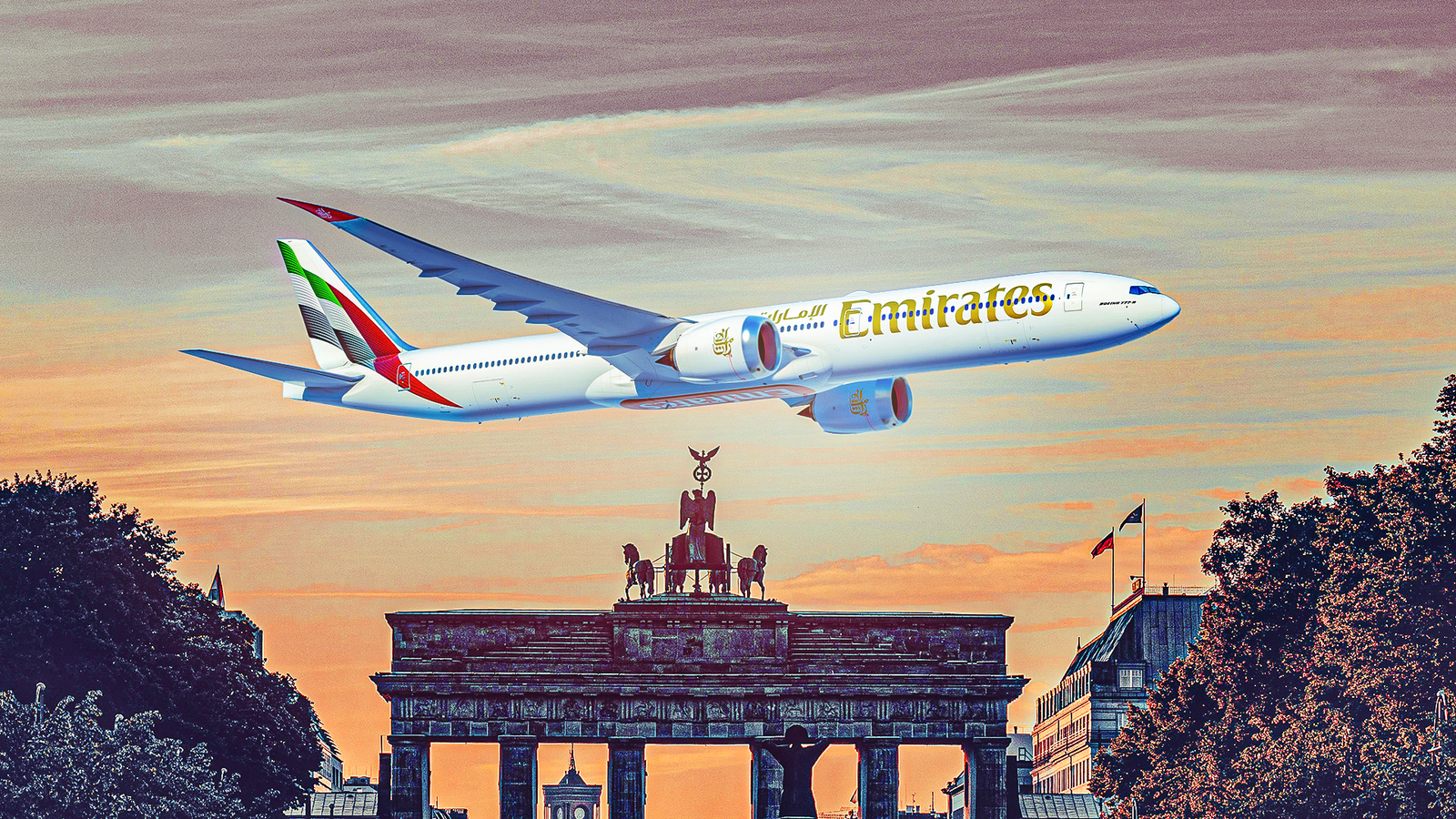
Published Oct 25, 2026, 1:00 PM EDT Experienced ICAO English Language Proficiency Instructor for pilots and ATCOs and conference interpreter who is passionate about facilitating effective communication within aviation-related businesses. Possess a deep understanding of the aviation industry, including aviation regulations, terminology, and industry-specific communication protocols. Has been working at numerous airshows across Europe since 2014. Being an ultralight pilot in her free time, she also promotes safety and efficiency in aviation operations. Based in Italy and Malta Emirates has finally secured permission to fly to Berlin after decades of lobbying, but its long-awaited fleet renewal remains stuck in a separate battle with Boeing. Germany has approved daily services between Dubai International Airport (DXB) and Berlin Brandenburg Airport (BER), giving the airline access to its fifth German destination. Yet the aircraft expected to transform its long-haul operations, the Boeing 777X, is still delayed, and Emirates plans to reject its first ten to 11 aircraft. The contrast highlights a central challenge for the Dubai-based carrier: securing new markets is only half the battle when the aircraft needed to support future growth are late. With 270 Boeing 777X aircraft on order and deliveries now expected in the second quarter of 2027, Emirates must expand using its existing fleet while waiting for the new Boeing. How did the airline finally win access to Berlin, and why does its aircraft strategy remain so complicated? Why Emirates Was Kept Out Of Berlin For Decades Credit: aviationisa | Shutterstock Emirates has served the cities of Frankfurt, Munich, Düsseldorf, and Hamburg for years, but Berlin remained off-limits because restrictions on air services between Germany and the UAE kept it out. The existing framework limited the number of German destinations available to Emirati airlines, preventing Emirates from adding the capital without a regulatory agreement. The airline pursued additional access for approximately 22 to 30 years, depending on how its lobbying campaign is counted, as the RBB24 news outlet reported on Germany's decision. The dispute reflected wider competition between European airlines and Gulf carriers. Lufthansa and the German airline association opposed expanded access, while Emirates argued that Berlin needed better long-haul connections. A direct Dubai service would offer passengers access to destinations across Asia, Africa and Australasia through Emirates' hub, without requiring the airline to operate nonstop flights to every market. According to DW, the breakthrough came during UAE President Sheikh Mohamed bin Zayed Al Nahyan's state visit to Germany in September 2026, amid a reported €40 billion UAE investment commitment covering sectors including energy, artificial intelligence and digital infrastructure. Although the investment and aviation agreement were announced in the same diplomatic context, that does not establish a direct exchange between them. Nevertheless, the political climate had changed, leaving Emirates with a long-awaited opportunity. The remaining question was how much access Germany would grant. Germany Approves Daily Berlin Flights, But Limits Emirates To Seven Weekly Services Credit: 4kclips | Shutterstock Germany approved Emirates' fifth German destination in September 2026, allowing the airline to operate daily flights between DXB and BER. The decision was welcomed by Berlin's leadership, which argued that the connection would strengthen the capital's international links. Emirates had previously said it was prepared to invest more than €100 million annually in operating expenses, staffing, airport charges, fuel and other costs for each proposed daily service, as outlined in its June investment plans. However, the approval comes with two important restrictions. Emirates is limited to seven weekly flights and has not received fifth-freedom rights, which would allow it to carry passengers between Berlin and a third country as part of a wider service. Instead, the route will connect Berlin directly with Dubai, where passengers can transfer onto Emirates' existing network. Lufthansa's objections also show that the decision has not ended the debate over competition between European and Gulf airlines, according to the Tagesspiegel report on the agreement and its restrictions. Berlin service at a glance Feature Approved arrangement Route Dubai (DXB) – Berlin Brandenburg (BER) Maximum frequency 7 flights per week Planned pattern Daily service German destination Emirates' fifth passenger gateway Fifth-freedom rights Not granted Initial aircraft plan Boeing 777-300ER Expected launch window Winter 2026, subject to operational implementation The seven-flight limit makes the initial aircraft choice important: Emirates must establish a commercially viable daily service without relying on additional frequencies or risking sending an empty plane. Its existing fleet offers a practical solution, allowing the airline to launch the route without waiting for a new aircraft program to finish. Why The Boeing 777-300ER Will Serve Berlin First Credit: Vytautas Kielaitis I Shutterstock According to AeroTime, Emirates plans to use the Boeing 777-300ER for its proposed German services until the Boeing 777-9 is ready. The current Triple Seven is the most practical choice because Emirates already operates it in large numbers, with established maintenance arrangements, trained crews, and a familiar cabin configuration. The Airbus A380 may seem like an alternative, given Emirates' extensive experience with the superjumbo, but its larger capacity would add commercial considerations on a route with several limitations. Without evidence of sufficient demand to fill an A380 consistently, deploying the smaller Boeing widebody offers greater flexibility when establishing a new market. Airport infrastructure and operating economics also influence the decision. The A380 requires suitable gates, boarding facilities, ground handling equipment, and other infrastructure designed to accommodate its size. Although Berlin Brandenburg Airport can handle large widebody aircraft, that does not automatically make the A380 the best choice for a new daily service. The Boeing 777-300ER offers substantial passenger and cargo capacity without committing Emirates to the superjumbo's larger footprint. It also allows the airline to adjust capacity more easily as demand develops, reducing the risk of operating more seats than the market can support. The 777-300ER also fits Emirates' hub strategy. Passengers traveling from Berlin will be able to connect in Dubai to destinations across the airline's network, making the route commercially relevant beyond demand between the two cities alone. Emirates ordered another 65 Boeing 777X aircraft in November 2025, but those future aircraft cannot support the Berlin launch while certification and deliveries remain outstanding. The existing 777-300ER fleet provides a bridge between today's network and the next generation of widebodies. Emirates can establish the route, evaluate demand, and reconsider its aircraft allocation later, once the market and the availability of the delayed 777X become clearer. Why Emirates' 270 Boeing 777X Orders Remain Stalled Credit: Simple Flying Emirates has made the Boeing 777X central to its long-term fleet strategy. The 777-9 is designed to offer a larger cabin, new-generation GE9X engines, and an advanced composite wing, positioning it as the successor to the 777-300ER. At the 2025 Dubai Airshow, Emirates ordered additional aircraft, bringing its total 777X order to 270. Boeing confirmed the additional order in its official announcement. The program, however, has suffered years of delays, pushing expected entry into service to the second quarter of 2027. At the Farnborough International Airshow in July 2026, Emirates President Tim Clark expressed frustration with the schedule and warned that prolonged delays risk making new aircraft outdated before they enter service, according to Reuters. The US Federal Aviation Administration (FAA) must still complete the certification process before commercial deliveries can begin. Emirates also intends to reject the first 10 to 11 777-9 aircraft built for it because of their age and the extensive modifications needed to bring them up to current standards. Some early examples were built years before the aircraft's expected commercial introduction, creating a costly rework problem. We previously reported that Boeing was trying to update early-build aircraft to meet the latest FAA standards, underscoring the production challenges. Why Boeing's Earliest 777X Aircraft Have Become A Liability Credit: Gunnar E Eide | Shutterstock Emirates' concerns extend beyond the delivery schedule. The airline rejected the first batch of Boeing 777-9 aircraft built for it because bringing them up to the required standard would require extensive, costly rework. Some of these airframes were assembled between 2019 and 2021, meaning they could be approximately eight years old when deliveries finally begin. For Emirates, accepting aircraft that require substantial modifications would undermine the value of investing in an entirely new generation of widebodies. The problem illustrates how a prolonged certification program can complicate aircraft manufacturing. Early production aircraft may require modifications to reflect changes made during development, while later examples can incorporate improvements directly into the production process. Because of this uncertainty, Boeing even dismantled an early Emirates-destined 777-9 after the cost to bring it up to the required standard reportedly exceeded its value. The case highlights the financial consequences of producing aircraft before a program is ready for commercial entry into service. For Boeing, the challenge is to resolve the dispute without further undermining customer confidence in the 777X. For Emirates, rejecting the earliest aircraft protects its fleet standards, even if it complicates an already delayed delivery schedule. The airline must now balance its immediate expansion plans with the need to renew its fleet, raising a broader question about how long its existing aircraft can support both objectives. What The 777X Delay Means For Emirates' Expansion Credit: Falcons Spotters l Shutterstock The Berlin route demonstrates that Emirates can continue expanding its network while Boeing works through its certification and production challenges. The 777-300ER gives the airline an immediate option for serving Germany's capital, while Dubai's connecting network provides a way to attract passengers traveling beyond the UAE. The seven-weekly-flight limit constrains the initial operation, but it does not prevent Emirates from establishing a presence in a market it has pursued for decades. The longer-term consequences are more complicated. Emirates' 270-aircraft 777X order represents a substantial commitment to Boeing, and replacing that capacity with another aircraft family would require major commercial and operational changes. Meanwhile, the airline must plan for the possibility that early aircraft will need extensive rework and that deliveries could shift again if certification faces further obstacles. The crucial milestone is now the expected second-quarter 2027 delivery window. Berlin can be served with existing aircraft, but Emirates' broader fleet-renewal strategy depends on Boeing delivering aircraft that meet its standards. The airline has won the right to reach a new market; whether the 777X arrives in time to support its next phase of growth remains unresolved.
Emirates Won Berlin With 7 Weekly Flights While Its 270 Boeing 777X Orders Stay Stalled
Full Article
Original Source
Read the full article at Simpleflying →KhanList aggregates and links to publicly available news content. We do not host full articles from third-party sources. Always verify important information with original sources.