
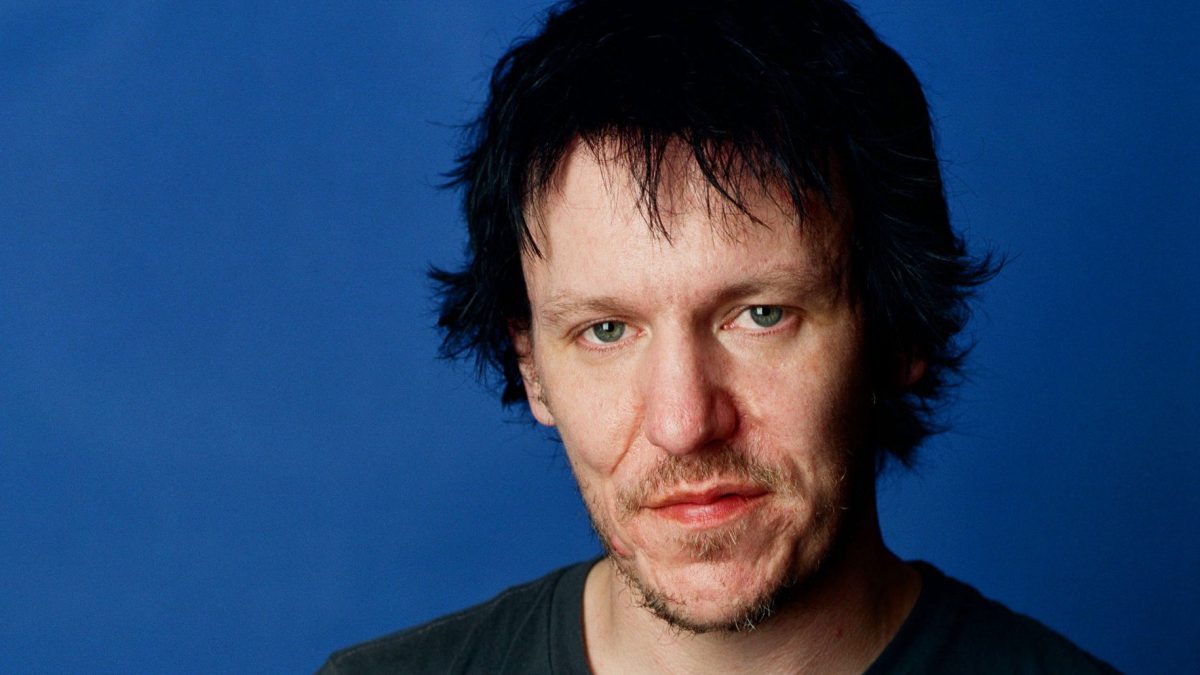
On 23 March, 1998, singer-songwriter Elliott Smith performed “Miss Misery” at the 70th Academy Awards. His had been a surprise nomination, the song heard playing over the closing credits of Good Will Hunting. A reluctant Smith was told that if he didn’t play the song himself at the show, someone else would do it for him. So, he donned a white suit, stood alone on the stage with an acoustic guitar and sang in front of 57 million viewers. It turned out to be the most-watched Oscars broadcast in history. “Something I thought was really sweet was that he wanted to do it for his mom,” Smith’s biographer Jamie Fisher tells me. “So she could read about him in People magazine.” In the Hollywood version of Smith’s life, this was the turning point. A no-name from the Portland punk scene, who joined an indie band, gained some recognition, went solo, flukily performed at the Oscars and skyrocketed to superstardom, with the subsequent fame, pressure and attention leading to his early death just five years later in 2003, at the age of 34. But as with most things in Smith’s life, the reality is far more complicated than that. As Jamie Fisher reveals in her new biography of Smith, Nobody Broke Your Heart, he was an artist both complex and contradictory. He claimed to hate the music business and the trappings of fame, but when he signed to a major label, he contemplated buying a BMW with his advance (he was talked into getting a slightly less showy Volkswagen). After he played at the Oscars in 1998, the major labels zeroed in on Elliott Smith (Photo: Andy Willsher/Redferns/Getty) As an artist, the media represented him as a miserabilist – but when with people he felt close to, or comfortable with, he loved goofy jokes and ridiculous behaviour. He often threatened, or alluded to, causing himself harm or taking his own life, but then bitterly rejected any practical attempts to help him. A friend organised an intervention for Smith during a particularly low period. Smith never spoke to him again. He was born Steven Smith in Omaha, Nebraska, in 1969, the only child of Gary Smith, a medical student, and Bunny Berryman, a school music teacher. His parents divorced when he was six months old, and Smith moved with his mother to the small town of Duncanville, Texas. He grew into a seemingly happy, athletic kid – but tussled with his stepfather, a stern disciplinarian. These battles led to a trauma that he never seemed able to shake off, writing a number of songs about the abuse he felt he suffered. He moved to Portland to live with his biological father as a teenager and soon started a band, Heatmiser, who attracted a following and were courted by Virgin Records, the quality of Smith’s songs being the main attraction. And he rechristened himself Elliott, to distance himself from his old life. Away from the band, Smith began home recording his own sweet, simple, atmospheric songs which came to the attention of the venerable independent Kill Rock Stars label. His low-key albums, especially the third, Either/Or, began to attract critical acclaim and a devoted following started to emerge. Director Gus Van Sant was one such fan, leading to Smith’s music being used on his film Good Will Hunting. After the Oscars, the major labels zeroed in on Smith. He signed to DreamWorks in the hope that an expanded budget would help fulfil his musical ambitions. He set his sights on Abbey Road and sessions with the London Philharmonic. But having achieved some of these ambitions, he seemed to grow increasingly dissatisfied with the musical results, always trying to attain a sound he could never quite grasp. The final few years of Smith’s life possess an unremitting darkness (Photo: Wendy Redfern/Redferns) People loved the intimacy and authenticity of his early work. The new, added elements such as strings and horns and a more baroque sound alienated some fans. The pressures of being on a major label roster, the increased demands on his time for promotional duties and endless touring led to increased drug use, erratic behaviour and flare-ups of paranoia and obsessive compulsive disorder. The final few years of his life possess an unremitting darkness. Through intimate conversations with friends, bandmates and family, Fisher builds up a compelling portrait of a complex man, extremely talented, capable of creating some of the most unforgettable, heart-rending songs ever recorded, who constantly seemed to be wrestling with himself. I had a few brief interactions with Smith during the 90s. I was tasked with taking his photograph while working as the press officer at a Washington DC venue. He made it very clear that he wasn’t enjoying the experience. Fisher has done a remarkable job in speaking to, and equably representing, many of the figures in Smith’s life. Some have never spoken about him before, still shaken by his death. There are many unknowns in his story, especially the final chapter. Smith died from two stab wounds to the heart. Self-infliction seems the most likely cause (he had attempted suicide before), rather than anything more sinister. But the investigation remains open, leading to years of conjecture and conspiracy theories. “Yeah, there are even people reading into my title,” Fisher reveals. “’Nobody broke your heart? Are you saying that he killed himself?’ It’s a lyric from a song. And they know it’s a song lyric. People who are looking for a certain kind of story are going to find it wherever they look.” Fisher can’t tell the full story. No one can. There’s still too much murk and confusion. But she valiantly attempts to represent the musician as plainly and openly as she possibly can, pointing out the contradictions and misconceptions when they appear. One way she attempts to achieve this is by including herself in the narrative. Fisher’s book builds up a compelling portrait of a complex man “I’m there partly because there’s a lot where you can’t say for certain what happened,” she explains to me. “And I thought that the most honest way to do that was just to say in my own voice, ‘Here’s what I’m considering.’ One of the tools I know for giving life to people is showing what it’s like to sit down in a room and showing both sides of a conversation with them.” The restless nature of Smith, who seemed to be constantly on the move, shedding possessions and friendships behind him, added to the difficulties of Fisher’s task. Everyone had their own idea of Elliott Smith. “I think that one of the things I was trying to challenge with the book is the idea that these personalities [of Smith’s] were completely fragmented,” she explains. “You see it in the way that people would write about his childhood in Texas. ‘Oh, he was this dirty blonde, happy kid who played football and then he dyed his hair black, and he became Elliott Smith.’ And it’s like, no, that was all the same person. “So, it’s a book about change. But it’s also about stability and the durability of that core of who a person is. What I found hardest to understand was sort of the person he was in the last years of his life when he was really struggling with addiction. But even then there was still this overlap, where there was this essential core of Elliott being Elliott.” There’s another universe where Elliott continued being Elliott, remaining on Kill Rock Stars, pursuing a low-key career, releasing songs and albums that broke hearts and inspired devotion. But this was never meant to be. Perhaps it never could have been. “I don’t know if he always knew what he wanted,” Fisher reveals. “And he certainly wasn’t really communicating exactly what he needed. I think that’s one of the things that makes the story so sad is that it’s a story without any villains in it.” ‘Nobody Broke Your Heart: An Intimate Biography of Elliott Smith’ by Jamie Fisher is published by Faber on 10 September
Elliott Smith was not the man you thought he was
Full Article
Original Source
Read the full article at Inews →KhanList aggregates and links to publicly available news content. We do not host full articles from third-party sources. Always verify important information with original sources.