
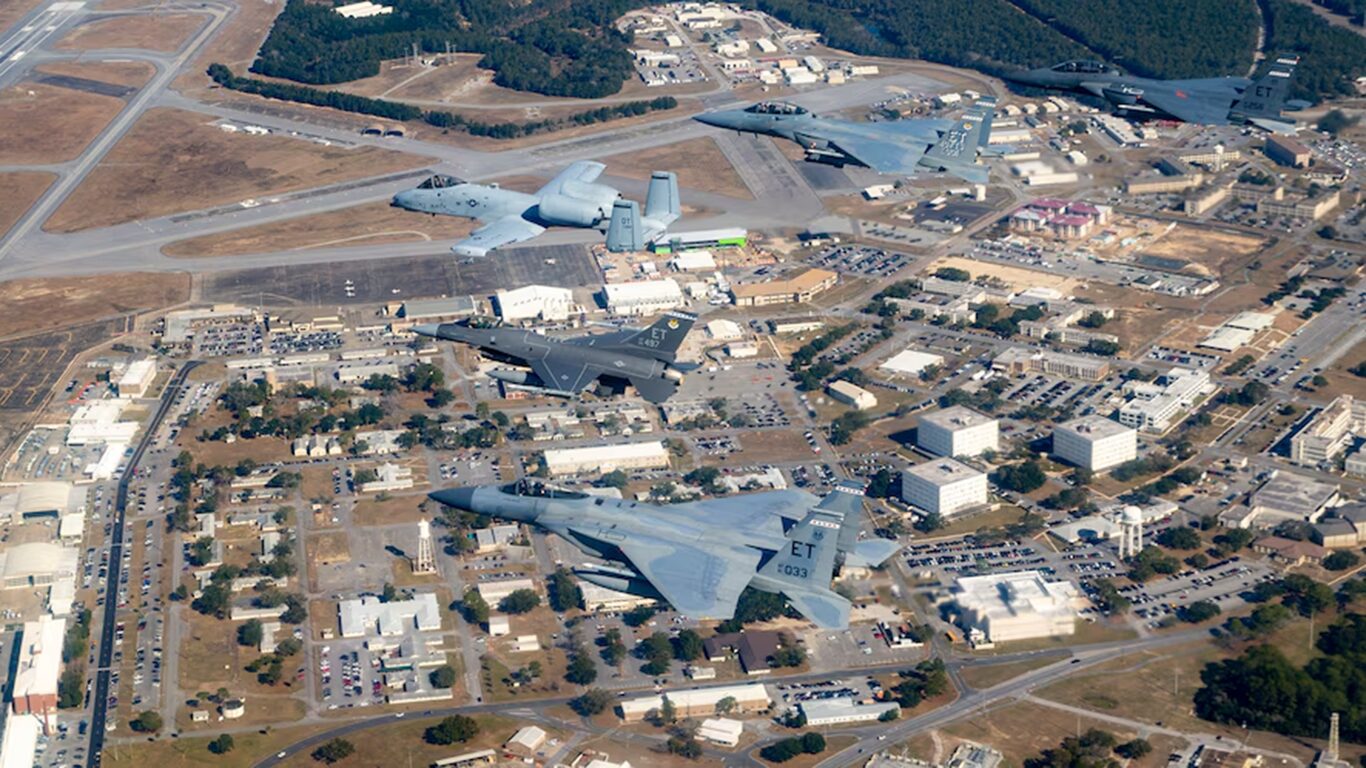
The United States is becoming increasingly electrified to support rising demand from artificial intelligence (AI), supply chain reshoring, and reindustrialization. This rise in electrification has elevated the criticality of power generation, transmission, and distribution as essential enablers of societal resilience. But the commercial grid doesn’t merely serve civilian needs—it is shared with the US military’s domestic installations, meaning this criticality applies directly to the nation’s defense capabilities. The challenge of dual-use electrical generation for civilian and military use has rightly permeated public discourse, but, less so, the idea of prioritization of installation supply and resilience in the face of physical damage or cyberattacks. Attention to prioritization frameworks, however, is increasingly warranted. Recent installation blackouts demonstrate that rising overall demand will force tough choices in the years to come. In addition to prioritizing power restoration for defense facilities, there is also an urgent need for federal and state policymakers, the Pentagon, and utilities to coordinate grid investments that mitigate power outage risks for military installations and the defense communities and industries that they depend upon. A prioritization analysis of specific, sensitive, military loads as a subset of wider base needs is thus imperative. Such an assessment will focus on the most crucial needs that are justified in terms of “competition” for resources with the civilian sector, moving policies forward in an incremental and constructive way. A well-recognized vulnerability The Department of Defense (DOD) has been the country’s largest electricity consumer for decades, consuming close to one percent of electricity nationally. It spends more than $16 billion a year on electricity and fuel, and close to $5 billion of that powers domestic installations. Almost none of that power comes from anything the DOD owns and controls. Alarmingly, no federal statute, regulatory rule, or state utility code requires a utility to restore or maintain power to a military installation ahead of an ordinary residential or commercial customer. In October 2008, the DOD identified the thirty-four installations whose operations would be severely hampered in a blackout, and a 2009 Government Accountability Office (GAO) review found that thirty-one of the thirty-four relied on commercial power grids as their primary electricity source, grids the Defense Science Board had already called increasingly fragile. Sixteen years later, that dependence has deepened as the military adds data-dependent hardware, along with cyber, space, and AI missions that draw more power. Newer weapons systems such as the F-35 Lighting II stealth fighter, for example, also draw more electricity from installations for their tech support, logistics, and maintenance systems than previous platforms. Marine Corps officials have stated that F-35 hangars require 150 percent more electricity than earlier generations of Hornet and Harrier aircraft. US Code requires the Secretary of Defense to bring 100 percent of the energy load supporting critical missions to a minimum of 99.9 percent availability by the end of fiscal year 2030. The most sensitive missions, including those involving radars, missile fields, satellite control facilities, munitions storage, and cyber operations facilities, can be held to standards as high as 99.9999 percent. A newer provision now also requires the secretary to build internal processes for coordinating with the external regulators and grid planners to mitigate risks to defense-critical installations. The one legal mechanism built specifically around military dependence on the grid has not been brought to bear on the problem. Congress amended the Federal Power Act in 2015 to create the category of Defense Critical Electric Infrastructure (DCEI), and the US Department of Energy (DOE) and DOD jointly designated a set of critical defense facilities in 2019. The two departments signed a memorandum of understanding on the arrangement in September 2020. That designation protects information about which lines and substations matter most from public disclosure, but it does not obligate a utility to restore those lines first during a shortage. Most of the federal recommendations for strengthening the program have gone unimplemented, and the DOD and DOE still have not operationalized the partnership the 2020 memorandum promised. Case studies in power prioritization and restoration policies The cost of delay is vulnerability. When Winter Storm Uri forced Texas grid operators into rolling blackouts in February 2021, twelve of the state’s fifteen military installations lost power for several days. Typhoon Mawar struck Guam on May 24, 2023, knocking out power to 98 percent of customers. A week later, Guam Power Authority had restored electricity to only about a quarter of the island, and power restoration at Naval Base Guam was expected to take several weeks. Andersen Air Force Base’s resupply and evacuation missions ran on onsite generators and fuel reserves, not from any claim on the civilian grid. The National Association of Regulatory Utility Commissioners (NARUC) noted in its primer for state commissionersthat there is still no standard, repeatable practice for prioritizing or funding defense energy resilience investments. As an example, Virginia’s Dominion Energy, which serves Naval Station Norfolk and the rest of Hampton Roads, lists hospitals, fire and police stations, and water treatment plants ahead of ordinary customers in its restoration order. It does not name defense facilities at all. To remedy this gap, NARUC recommends direct dialogue between state agencies, utilities, and defense stakeholders to align energy priorities and expectations. NARUC piloted such a dialogue in Florida at Eglin Air Force Base, convening the electric and gas utilities that serve the base to identify priority areas for coordination and investment. There is one long-standing exception to the otherwise low prioritization of defense installations’ energy resilience at the state level. California utilities have exempted government agencies essential to national defense from rotating outages since a 1980 California Public Utilities Commission decision, and that category still appears on investor-owned utilities’ current critical facility lists, alongside hospitals and fire and police stations. Even there, the protection covers voluntary curtailment during a supply shortage rather than restoration order after storm damage. Rolling blackout events in Southern California offer an interesting case study that goes beyond voluntary curtailment. In August 2020, during periods of high heat and wind, San Diego Gas and Electric (SDG&E) requested that Marine Corps Air Station (MCAS) Miramar use its own microgrid to power parts of the installation, thereby lowering demand from the grid. Doing this made enough power available to SDG&E to keep the lights on in about two thousand homes. As of today, MCAS Miramar receives credits from SDG&E when using its microgrid to lower regional utility demand. Progress is incremental, but much more is needed Sophisticated onsite generation at every military installation will take decades and tens of billions of dollars, time and money that is not available. New approaches for aligning grid planning and operations with defense requirements are necessary to complement onsite resilience strategies. In one such approach, the Army launched the Janus Program, which under Executive Order 14299, must have a nuclear microreactor running on a domestic installation by September 30, 2028; the Army has since named nine candidate sites, including Fort Bragg, Fort Campbell, and Redstone Arsenal. The Army’s stated intent is to connect these reactors to their bases through a private wire that bypasses the commercial grid, though the program’s own specifications also require the reactors to be capable of operating on a grid connection. Additional opportunities build on existing authorities to strengthen the grid for defense. The DOD and DOE can focus on DCEI as a centerpiece of engagements with utility partners, and the DOD can work to build the current and forecasted loads of defense installations and industries into grid planning. New policies should also be on the table. Congress should consider adding a defense load priority requirement to the Federal Power Act or making federal grid reliability funding conditional on states adopting a defense critical load category. The DOD could also actively step up to support infrastructure investment that meets defense requirements. The department could act as an “anchor tenant” for grid expansion that would directly benefit defense facilities, communities, and industries, attracting lower-cost financing by providing early, long-term commitments to use grid capacity. The country has spent close to twenty years measuring, defining, and classifying how dependent its military has become on civilian power. To act on this vulnerability, the United States must now expeditiously change the rules. Chuck “Chim Chim” Dockery is a 2025-2026 Veterans Advanced Energy fellow with the Atlantic Council’s Global Energy Center and leads Schneider Electric Federal’s Department of the Navy global account portfolio. Wilson Rickerson is president and co-founder of Converge Strategies. Morgan D. Bazilian is a nonresident senior fellow with the Atlantic Council Global Energy Center and the director of the Payne Institute for Public Policy and professor at the Colorado School of Mines. Previously, he was lead energy specialist at the World Bank and has over two decades of experience in energy security, natural resources, national security, energy poverty, and international affairs. stay connected Sign up for PowerPlay, the Atlantic Council’s bimonthly newsletter keeping you up to date on all facets of the energy transition related work our work The Global Energy Center develops and promotes pragmatic and nonpartisan policy solutions designed to advance global energy security, drive economic opportunity, and foster a sustainable energy future. Image: U.S. Air Force photo by Tech. Sgt. John Raven
Electricity demand is rising. How can the US secure energy for its dual military and civilian needs?
Full Article
Original Source
Read the full article at Atlanticcouncil →KhanList aggregates and links to publicly available news content. We do not host full articles from third-party sources. Always verify important information with original sources.