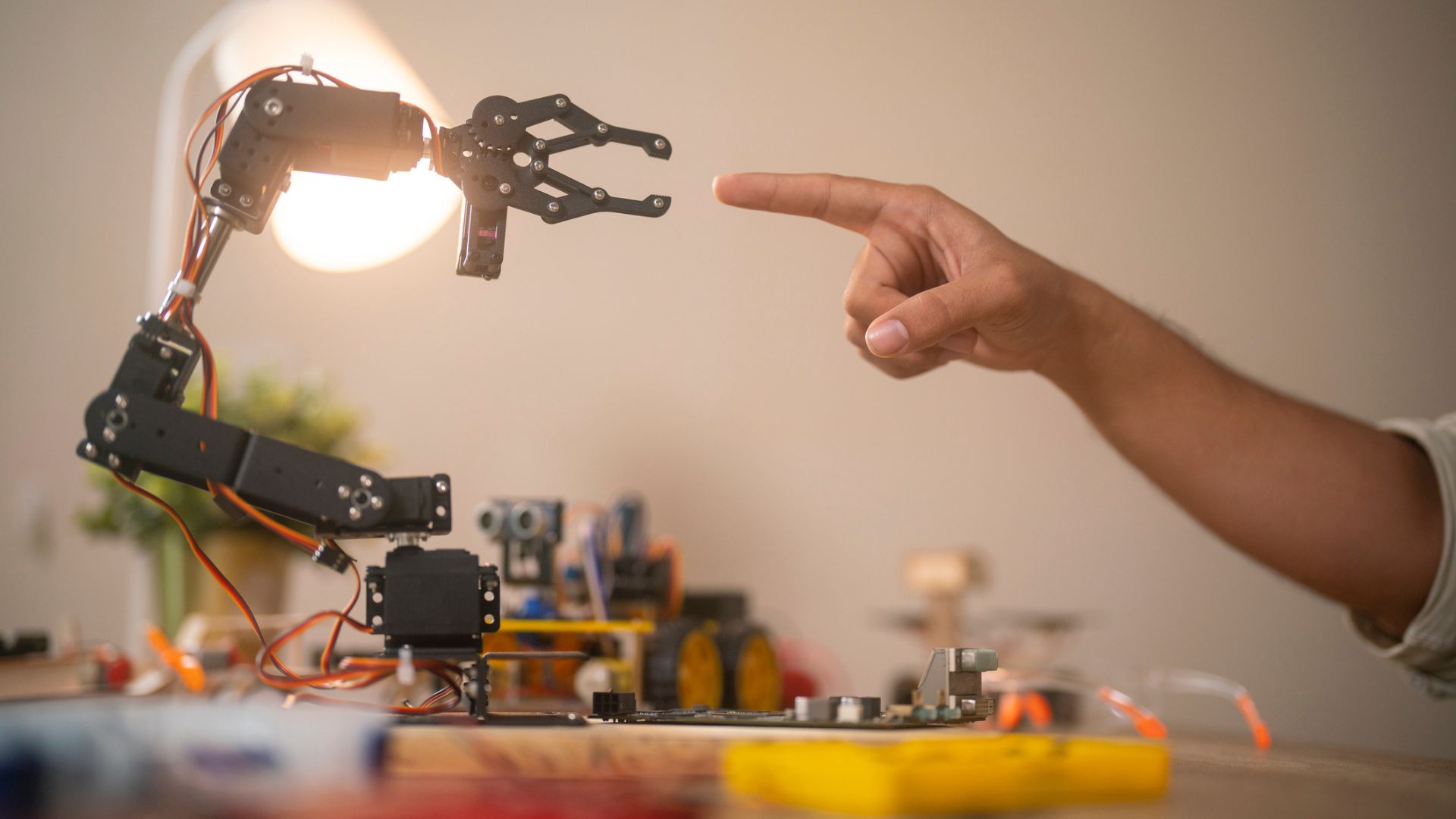
Chinese researchers have developed a new robot sensor that can “feel” objects without physical contact, inspired by electric eels. Similar to the eel, the new sensor uses weak electric fields that are distorted by nearby objects, enabling touchless detection and potentially identification. You can think of it as something like a combination of a proximity sensor and a crude artificial touch sensor. “We want the machine to sense an approaching target – distinguish its material and surface condition – before any physical contact,” said Zhang Weiqiang, a professor at Xidian University, in an interview. This is very similar to how electric eels hunt for prey and navigate their surroundings. In the wild, electric eels generate an electric field in the water. If a fish, rock, plant, etc. enters that field, the object changes the way electricity is distributed around the eel. Because different materials interact with an electric field differently, the eel can use those changes in the field to locate and partly characterize objects. According to the team, their sensor apparently copies that principle, but instead of using an eel’s electric organs, it uses a charged fluoropolymer surface. This acts something like a tiny static battery that can hold a charge for long periods of time. In turn, this long-lasting charge can be put to work by generating an electric field around the sensor. When “at rest” (i.e., nothing nearby), the field forms a particular predictable shape that can be monitored. If an object comes nearby, the shape of the field is distorted, which can be measured. “When an object draws near, the sensor picks up changes in the field and from those changes, it can infer the object’s electrical conductivity, dielectric properties and geometric shape,” Zhang said. The type, size, and other nature of the object will distort the field in a particular way, which can then, in theory, be used to figure out what it is. For example, metal is highly electrically conductive, so it would strongly alter the nature of the field. Plastic, glass, and wood don’t conduct electricity nearly as well, but they can still become electrically polarized in an electric field. It can also infer shape because the geometry of the field disturbance changes depending on the object’s geometry and distance. Larger, flat objects, for example, would change the shape more than, say, a small spherical object. Some interesting applications According to the team, the sensor can also give an estimate of the proximity of the object too. Such features could prove very useful for robots, especially in factory settings. For example, it’s potentially useful for delicate manipulation, prosthetics, manufacturing robots and robots working in darkness, smoke, dust or visually confusing environments. It could also help where cameras aren’t practical. A transparent glass object, for instance, can be surprisingly awkward for optical vision systems, whereas its dielectric properties still affect an electric field. All well and good, but it is not clear how accurate this sensor is at present. It is also not clear what its maximum range is, and how much things like humidity, temperature, etc, impact the sensor either. Get the latest in engineering, tech, space & science - delivered daily to your inbox.Christopher graduated from Cardiff University in 2004 with a Masters Degree in Geology. Since then, he has worked exclusively within the Built Environment, Occupational Health and Safety and Environmental Consultancy industries. He is a qualified and accredited Energy Consultant, Green Deal Assessor and Practitioner member of IEMA. Chris’s main interests range from Science and Engineering, Military and Ancient History to Politics and Philosophy.
Electric-field robot sensor lets machines ‘feel’ and identify objects without touch
Full Article
Original Source
Read the full article at Interestingengineering →KhanList aggregates and links to publicly available news content. We do not host full articles from third-party sources. Always verify important information with original sources.