
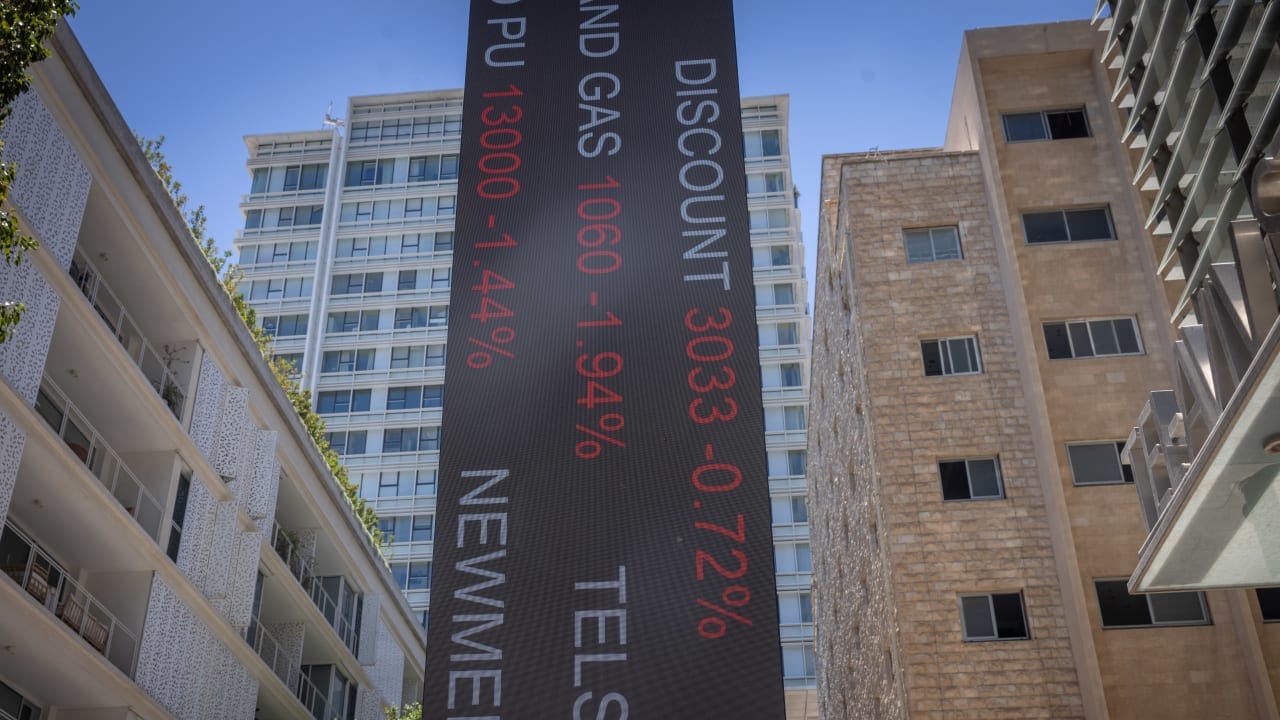
OCTOBER 28, 2026 15:52Financial markets fell sharply on Wednesday as preliminary election results pointed to a political deadlock, reversing two days of optimism driven by expectations of a possible change in government.The capital market awoke on Wednesday morning to a reality entirely different from the one investors had priced in during the election period. After two days of optimism and sharp gains, the publication of exit polls and the progress of the vote count changed the picture, or at least brought uncertainty back into focus.The dollar, which had fallen to around NIS 3.02 on Tuesday, surged to approximately NIS 3.10 on Wednesday morning. The Tel Aviv Stock Exchange also recorded declines as trading resumed following the election-day holiday.With election results increasingly pointing to an inconclusive outcome, shares on the Tel Aviv Stock Exchange fell sharply. The benchmark TA-35 and TA-125 indices lost 2.85% and 3.3%, respectively, with the construction sector leading the declines, plunging approximately 8%.Real estate and insurance indices also suffered steep losses of more than 6%, while the TA-90 declined 4.6% and banking stocks fell approximately 4%.Market data is seen on part of an electronic board displayed at the Tel Aviv Stock Exchange, in Tel Aviv, Israel November 4, 2020. (credit: REUTERS/AMIR COHEN)The bond market also reacted. The yield on Israel's 10-year government bond rose by approximately 0.06 percentage points to around 4.1%, indicating falling bond prices and higher returns demanded by investors.Markets had been betting on a change in governmentTo understand the scale of the market's reaction, it is necessary to return to the beginning of the week.On Monday, the final trading session before the election, the TA-35 surged approximately 1.99%, while the TA-125 gained 1.81%. On Tuesday, although the stock exchange was closed, the shekel continued to strengthen, reaching its highest level in approximately five weeks.Behind the rally was an assessment that high voter turnout could benefit the bloc opposed to Prime Minister Benjamin Netanyahu and potentially lead to a change in government.Investors were not necessarily expressing a political preference. Some believed that a change in the composition of the government could reduce diplomatic tensions, improve relations with Western countries, and lower Israel's risk premium. Such expectations had also been reflected in investors' assessments of the economic benefits of an opposition victory ahead of the election.However, as actual election results began to emerge, that scenario became increasingly uncertain.The exit polls released when voting stations closed initially showed a narrow advantage for the anti-Netanyahu bloc, although it remained short of the 61 seats required for a Knesset majority.During the night, as the vote count progressed, the picture shifted.According to estimates based on partial results, Netanyahu's bloc strengthened to approximately 55 to 57 seats, while the bloc opposing him weakened to around 47 to 50 seats. The remaining seats were attributed to Arab parties.Nevertheless, these figures do not give either side a clear majority with which to form a government, and the election results are not yet final.From the markets' perspective, the absence of a decisive outcome may be more significant than which party emerges as the largest.Why the shekel is reacting so quicklyThe foreign exchange market operates almost around the clock, making it the first to react to changing expectations.In late August, JPMorgan economists estimated that the election results could trigger a movement of as much as 3% in the shekel, partly because of their potential impact on Israel's international relations and perceptions of the country's risk.The movement recorded since Tuesday is already approaching that magnitude.However, it is important to remember that foreign exchange trading was relatively thin during election day. Changes in trading volumes and hedging activity by institutional investors could also amplify fluctuations.According to research by the Tel Aviv Stock Exchange, volatility increased by as much as 45% in the weeks following the vote across the 10 election cycles examined, compared with a typical trading week.Investors are now expected to focus on practical questions: Will a stable government be formed? Who will lead the Finance Ministry? Will it be possible to pass a budget for 2027? And what will happen to the deficit and defense spending?Ultimately, financial markets do not wait for official results before beginning to price in the future. They adjust prices whenever expectations change.And on Wednesday morning, after a day in which a change of government had appeared to be drawing closer, investors realized that the path to a decisive political outcome could be considerably longer than anticipated.The shekel, stocks, and bonds are already reacting accordingly.Follow us on Google
Election uncertainty rocks markets as Tel Aviv stocks tumble and shekel reverses gains
Full Article
Original Source
Read the full article at Jpost →KhanList aggregates and links to publicly available news content. We do not host full articles from third-party sources. Always verify important information with original sources.