
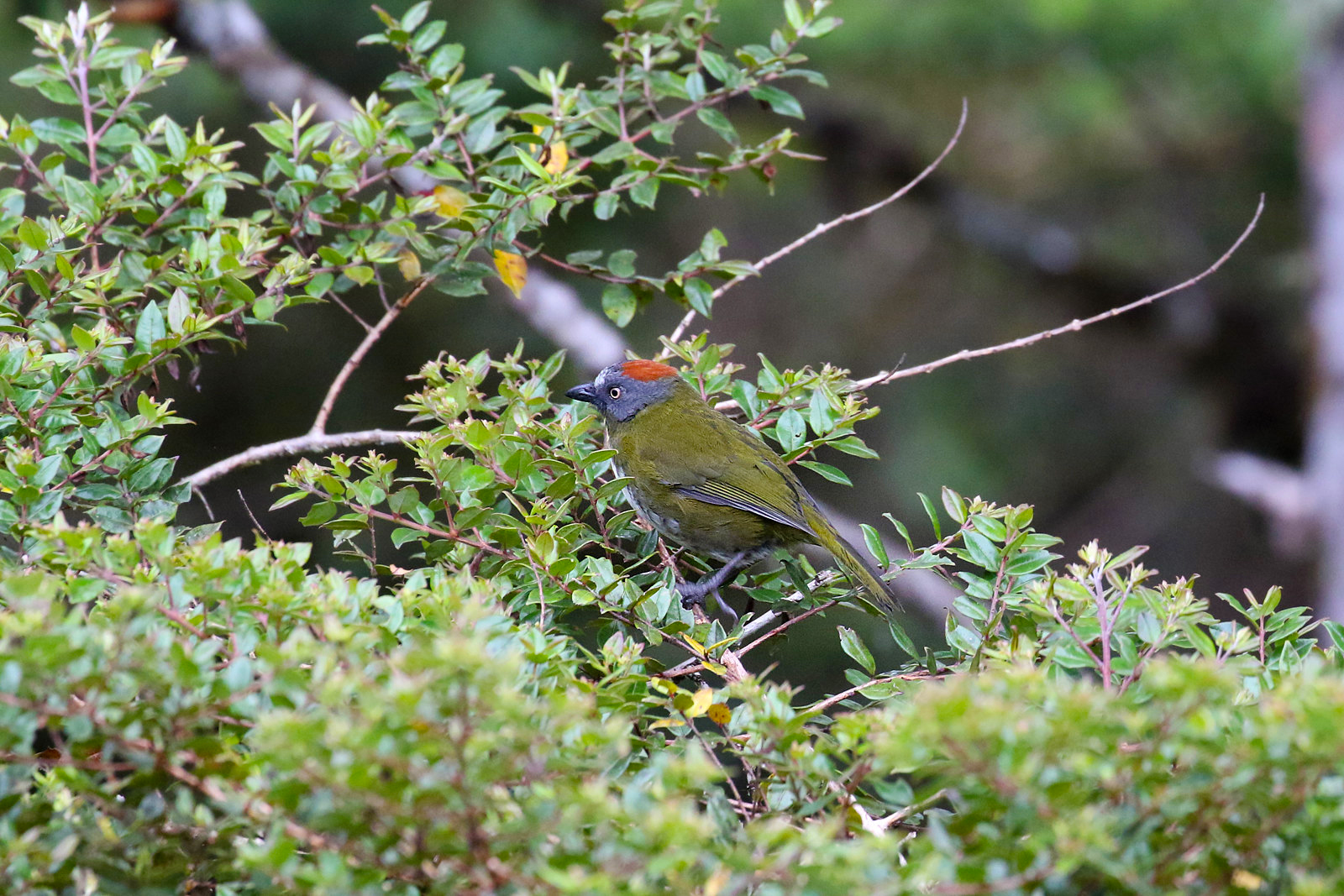
A recent study at a forest research site in Papua New Guinea found that more trees died after the 2015-17 El Niño drought than before or during it.Not all trees were affected equally, however. Trees located in valleys showed high mortality during the drought but recovered quickly, while trees on ridgelines showed a lagged effect, with mortality highest after the drought ended.The study adds to a growing body of research on how forests respond to drought, a critical question as global climate change makes droughts more common and severe. When the El Niño drought ended in a remote Papua New Guinea rainforest, the trees did not immediately recover. Many kept dying. That is one of the findings of a recent study of more than 21,000 trees in the Wanang Forest Dynamics Plot, a 50-hectare (124-acre) research site in northern Papua New Guinea. Researchers measured tree mortality before, during and two years after the catastrophic 2015-17 El Niño drought and found that mortality was significantly higher after the drought than before or during it. “It was after the drought, the post-drought period, that you could actually see those trees dying,” said Hayden Wagia, the study’s lead author and a faculty botanist at the Papua New Guinea University of Technology’s School of Forestry. The findings suggest the effects of drought can linger long after rainfall returns. Trees that survive a severe dry period may still be weakened enough to die later, although the researchers say their study cannot determine exactly what caused the delayed deaths. The 2015-17 drought brought a substantial reduction in rainfall to the Wanang forest. According to the study, only 5.2% of the area’s total precipitation fell during the dry season during the drought, compared with 13.1% before it and 9.6% afterward. One of the study’s most striking findings was how differently trees responded depending on where they grew. Valley trees experienced relatively high mortality before and during the drought but recovered quickly afterward. Ridge trees showed the opposite pattern, with mortality increasing after the drought and remaining elevated. For smaller trees, annual mortality in valleys reached 7.8% before the drought and 8.81% during the drought before falling to 4.91% afterward. On ridges, mortality increased from 4.66% before the drought to 7.07% after. The difference may reflect how water moves through the landscape. Valleys can retain more water than exposed ridges, potentially allowing trees there to recover more quickly once rainfall returns. The researchers also suggest that erosion on ridges could reduce water retention. German Vargas Gutierrez, a plant ecophysiologist at Oregon State University, U.S., who studies how trees respond to water stress, said the importance of dry-season rainfall stood out to him. Even though relatively little rain falls during those months, it may be essential for maintaining the forest’s water balance. “If they’re so sensitive to this dry season rainfall, it’s telling me that that little bit of rain they get in those months, even though it’s [little] compared to the rest of the year, is really important to keep the water balance of the system,” said Vargas Gutierrez, who was not involved in the Wanang forest study. The Wanang Forest Dynamics Plot, a 50-hectare (124-acre) research site in northern Papua New Guinea where researchers tracked tree mortality before, during and after the 2015-2017 drought. Image courtesy of Hayden Wagia. The findings illustrate how difficult it can be to predict which trees will survive a drought, even within the same forest. David Galbraith, a researcher at the University of Leeds, U.K., who studies tropical forest responses to climate change and who was also not involved in this study, said the results demonstrate the complexity of drought-related mortality. “There isn’t a one-size-fits-all kind of response of forests to drought,” Galbraith said. In Galbraith’s previous research in the Amazon, larger trees experienced some of the greatest impacts from drought. In the Papua New Guinea study, smaller trees died at higher rates overall, but researchers found no evidence that drought disproportionately affected them. Scientists have several possible explanations for delayed tree mortality. For one, severe drought can damage the xylem, the tissue that transports water through trees, disrupting water flow and limiting photosynthesis. Trees may also deplete carbohydrate reserves needed for recovery and defense against pests and disease. Galbraith said delayed mortality has also been documented elsewhere. In a large experimental drought in the Amazon, researchers excluded about 50% of rainfall from a forest plot. Mortality took roughly two to three years to increase substantially. “Trees were able to buffer those kinds of responses to drought up to some point,” Galbraith said. “And then you had these [kinds] of waves of mortality.” The long-term concern is how repeated droughts could change tropical forests. If some species are more vulnerable to drought than others, repeated periods of water stress could gradually change which trees survive and reproduce, potentially shifting the structure of the forest toward species better able to tolerate disturbances. “The structure and the composition of the forest would shift,” Wagia said. Vargas Gutierrez said that one important avenue for future research is measuring the traits that help trees survive drought. These include their hydraulic safety margins, which describe how close a tree’s water transport system comes to the point at which it can no longer function safely. Some trees continue drawing water even under severe stress, increasing the risk of damage. Others respond more conservatively, reducing water loss by closing the small pores in their leaves through which they exchange gases. Galbraith noted that his research has found that in parts of the southern Amazon, some larger trees draw water from deeper soil layers, while smaller trees rely more heavily on shallower layers that are more exposed to drying. Understanding these differences could help researchers predict which species are most vulnerable as drought conditions change. “I think we can only conserve what we understand,” Vargas Gutierrez said. Researchers working in the Wanang Forest Dynamics Plot found that small trees were overall more likely to die than large trees, but did not appear to be disproportionately affected by drought. Image courtesy of Hayden Wagia. Resilience in a changing climate The questions are becoming increasingly urgent as El Niño events occur against a background of rising global temperatures. Galbraith said warmer conditions can intensify the water stress associated with these events. Vargas Gutierrez said the findings remind us about how connected the Earth’s climate system is, with changes in one part of the world having implications for ecosystems far beyond it. Understanding those connections, he said, is important to predicting how forests will respond to future environmental changes and determining how best to protect them. “It’s a fascinating system because it really shows how interconnected the Earth’s climate system is,” Vargas Gutierrez said. Papua New Guinea’s forests are particularly important to study because they contain high levels of biodiversity and store large amounts of carbon. They also face other pressures, including logging and agricultural expansion, which could compound the effects of drought. The current El Niño conditions will not affect every part of the country in the same way. Wagia said rainfall changes vary across Papua New Guinea’s mountainous terrain, meaning findings from the lowland Wanang forest may not apply to forests at higher elevations. “So what we are observing now is from a lowland perspective,” Wagia said. “What’s going to be happening in the mountain region, we do not know about it.” The researchers recommend continued monitoring, studies across different elevations, and the use of remote sensing to determine whether the patterns observed at Wanang occur across larger areas. For Wagia, continuing to monitor the forest will be important because the effects of a drought may not become apparent immediately. “The bigger issue now is that we have to have consistent monitoring and see over a period of time to see what’s really happening,” Wagia said. Banner image: A rufous-naped Bellbird (Aleadryas rufinucha) in a tree in Papua New Guinea. Image by Brendan Ryan via Flickr (CC BY-NC-SA 2.0). 2015-2016 El Niño caused 2.5 billion trees to die in just 1% of the Amazon Citations: Wagia, H., Fibich, P., Venter, F., Peki, M., Yosi, C., Novotný, V., & Sheil, D. (2026). El Niño drought affects tree mortality in New Guinea forest. Biotropica, 58(4), Article e70231. doi:10.1111/btp.70231 Phillips, O.L., van der Heijden, G., Lewis, S. L., López-González, G., Aragão, L. E. O. C., Lloyd, J., … Vilanova, E. (2010). “Drought–mortality relationships for tropical forests.” New Phytologist, 187(3), 631–646. doi:10.1111/j.1469-8137.2010.03359.x da Costa, A.C.L., Galbraith, D., Almeida, S., Portela, B. T. T., da Costa, M., de Athaydes Silva Junior, J., … Meir, P. (2010). “Effect of 7 yr of experimental drought on vegetation dynamics and biomass storage of an eastern Amazonian rainforest.” New Phytologist, 187(3), 579–591. doi:10.1111/j.1469-8137.2010.03309.x FEEDBACK: Use this form to send a message to the editor responsible for this story. If you want to post a public comment, you can do that at the bottom of the page. Credits Topics
El Niño’s hidden toll on trees emerges years later in Papua New Guinea rainforest
Full Article
Original Source
Read the full article at News →KhanList aggregates and links to publicly available news content. We do not host full articles from third-party sources. Always verify important information with original sources.