
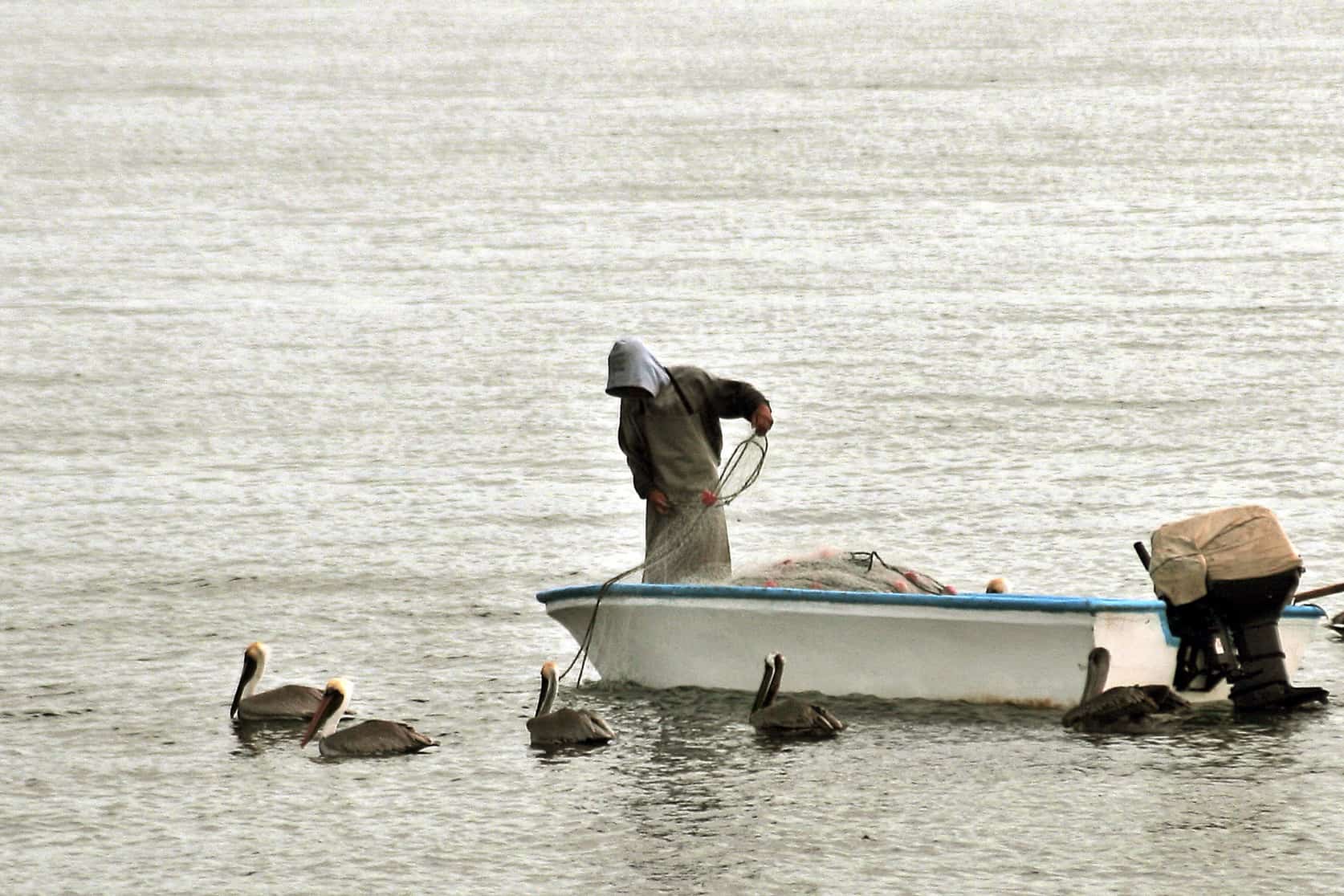
Fishermen in the Gulf of Nicoya say the unusually warm water El Niño has pushed against Costa Rica’s Pacific coast has left their nets close to empty, with many boats now returning from a day at sea with less fish than it takes to pay for the fuel. Giselle Campos, who fishes and gathers shellfish in Costa de Pájaros, Puntarenas, said her family now spends five hours on the water and may come back with two fish and 300 grams (about 10 ounces) of shrimp. The same trips used to bring in 10 to 40 kilograms (22 to 88 pounds) of shrimp and 70 to 100 kilograms (155 to 220 pounds) of fish, she said. Accounts from Costa de Pájaros, Isla Venado and neighboring communities describe sharp drops in shrimp, snapper, snook and corvina, the catches that have long sustained small-scale fishing in the gulf. They come less than two weeks after the National Emergency Commission (CNE) placed the waters off the entire Pacific coast under a red alert for El Niño, the first time the agency has extended an emergency alert to the sea. CNE President Alejandro Picado said at the time that the maritime alert was a response to the damage warming seas were doing to fishing and to the families who depend on it. The alert zone covers 12 nautical miles, about 22 kilometers (14 miles), from the shoreline of Guanacaste and Puntarenas, including the gulfs of Nicoya and Papagayo. Picado said no end date had been set. According to the CNE, sea surface temperatures in the central and eastern equatorial Pacific have run above normal for the past five months, reaching the highest values recorded since 1950. Along Costa Rica’s Pacific coast, readings are 1.5 degrees Celsius (2.7 degrees Fahrenheit) above normal, the commission said. Andrés Beita Jiménez, a marine biologist and science coordinator at the MarViva Foundation in Costa Rica, explained that in a normal year, winds crossing from the Caribbean through low-lying areas such as Guanacaste push the Pacific’s surface water offshore. That movement draws cold, nutrient-rich water up from the depths toward the coast, where sunlight turns those nutrients into plankton that feed the rest of the food chain. El Niño weakens those winds, Beita said. Warm surface water stays put, more warm water flows in from across the Pacific, oxygen levels drop and the nutrient-rich upwelling stalls. He described the current event as one of the strongest on record, with warming reaching deeper layers of the ocean as well as the surface. Beita stressed that the fish have not died off. Species that can move are heading to deeper or cooler water where they are not normally found, he said, which forces fishermen to travel farther and fish deeper to reach them. Less mobile life such as mollusks and corals cannot escape the heat and may suffer stress or bleaching. That extra distance is where the numbers stop working. Ezequiel Álvarez, a 64-year-old fisherman in Costa de Pájaros who was born on Isla Caballo, said a catch of around seven kilograms (15 pounds) now barely covers the gasoline for boats that burn 15 to 19 liters (four to five gallons) per trip in two-stroke engines. He described the last 10 months as very hard. Álvarez still goes out, but only on the most favorable tides, and he can afford to because he also uses his boat for tours of the gulf. Many of his neighbors have no such cushion, he said. On Isla Venado, Yolanda Bolívar, 54, estimated that fewer than 30% of the island’s fishermen are still working. Catches have been falling for three years, she said, but the gulf used to recover somewhat after each seasonal fishing ban, which this year ran from May 1 to July 31. This time it did not. Fishermen now risk spending fuel for two or three days, or even a week, and coming home with nothing, Bolívar said, so many have stopped going out. Sardines are what keep some families going, sold as bait to boats chasing mahi-mahi farther offshore. Others on the island have moved into tourism and transport, ferrying visitors between islands, building cabins or, as her own family has done, selling meals and produce from a home garden to neighbors and visiting tourists. Campos said younger people from Costa de Pájaros, Manzanillo, Chomes and Punta Morales have found work on the Barranca–Limonal highway widening, but she worries about what they will do once the project ends in an area with few jobs. Older fishermen have little choice but to keep going out with hand lines and nets. She said the monthly assistance payment from the social welfare agency IMAS, 145,000 colones (about $320), does not stretch far for households of seven or eight people. El Niño has struck a fishery that was already under heavy strain. Campos also blamed overfishing and illegal fishing for the losses. A 2022 marine and coastal atlas of the Gulf of Nicoya produced by MarViva found that fishermen were already reporting declines from overfishing and from some species moving to cooler water. It also documented illegal gear such as explosives, shrimp drags, purse seines and undersized mesh, along with pollution carried into the gulf by the Tárcoles and Tempisque rivers. How deep this year’s drop runs is still unmeasured. The Costa Rican Institute of Fisheries and Aquaculture (Incopesca) has published national catch statistics only through 2024 and has said its 2025 and 2026 figures are still being processed. The institute has not yet detailed any assistance plan for fishermen affected by El Niño. Relief is unlikely to come quickly. The National Meteorological Institute (IMN) has said conditions typical of a very strong El Niño could continue through the November-to-January period, part of an event forecasters have long expected to stretch into early 2027.
El Niño Leaves Gulf of Nicoya Fishermen With Catches Too Small to Pay for Fuel
Full Article
Original Source
Read the full article at Ticotimes →KhanList aggregates and links to publicly available news content. We do not host full articles from third-party sources. Always verify important information with original sources.