
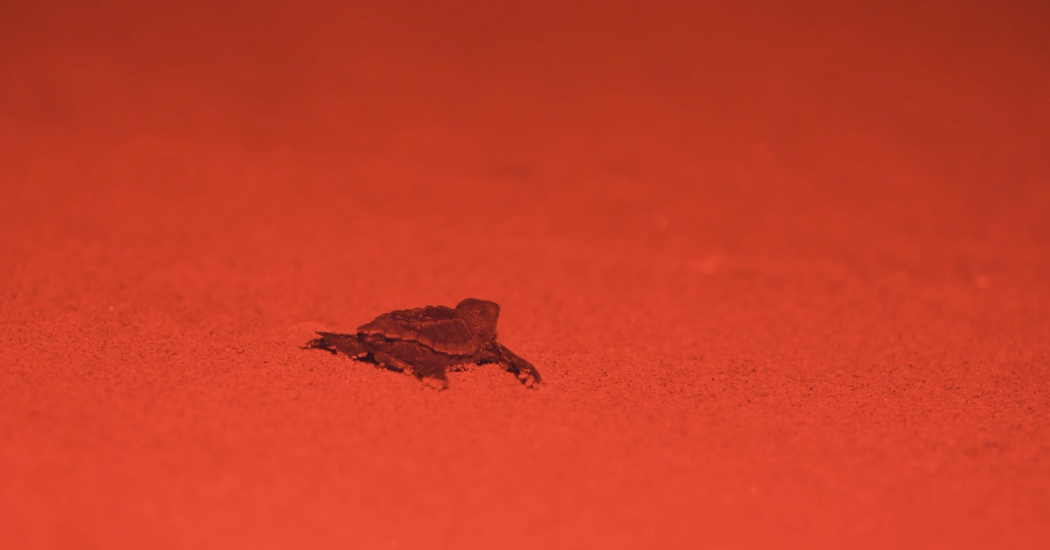
AdvertisementSKIP ADVERTISEMENTThese Newborns Are the Size of Strawberries and Already CrawlingThe California coast has seen an influx of olive ridley sea turtles, which are the smallest such reptiles and are normally found in tropical waters.VideoBaby Sea Turtles Swim Into Ocean Off California CoastFifty-four newborn olive ridley sea turtles, each roughly the size of a large strawberry and not weighing much more, made history this week.CreditCredit...Aquarium of the PacificNov. 16, 2026, 8:24 p.m. ETIn the middle of the night on a beach in Southern California, 54 newborn sea turtles scuttled onto the sand and made history.The hatchlings, each roughly the size of a large strawberry and not weighing much more, are the first ever known to be born in California, emerging from eggs laid in September in Seal Beach, about 30 miles south of downtown Los Angeles.They are known as olive ridley sea turtles, a protected species most commonly found in tropical and subtropical waters off the coasts of Mexico and India. Experts say that unusually temperate ocean waters tied to a major El Niño — a recurring climate pattern characterized by warmer Pacific Ocean temperatures — appear to have drawn the creatures to the shores of California.ImageCredit...Aquarium of the PacificOlive ridley sea turtles can live for 50 years and are the smallest type of sea turtle, weighing up to 100 pounds and measuring about three feet in length.A few days after the Seal Beach nest was discovered in September, another was spotted a few miles south, near the Huntington Pier. Biologists say that a different mother turtle laid each of the nests, both in Orange County.Scientists soon moved the clutches to the Aquarium of the Pacific in Long Beach to keep them safe from high tides and flooding, and to control the temperature and humidity as the eggs incubated for up to two months. There were concerns that the nighttime temperatures in California would be too cold for the eggs, which typically don’t do well below 80 degrees Fahrenheit.A third sea turtle nest found in November in Ventura, about 100 miles north, was destroyed by high tides, said Jonathan Snyder, a biologist with the U.S. Fish and Wildlife Service.ImageCredit...Aquarium of the PacificIn total, the two nests from Orange County contained 204 eggs, said Lance Adams, the director of veterinary services at the Aquarium of the Pacific. As of Monday afternoon, 94 had hatched and been released, he said, and staff members were monitoring the remaining eggs to see how many more would end up being viable.Dr. Adams said he had feared that none of the eggs would hatch. So it was a delight to see the first baby emerge on Friday night from beneath the sand lining the aquarium’s incubator. Within hours, dozens more had hatched, in what Dr. Adams called “an eruption of baby sea turtles.”“That was a big relief,” he said in an interview on Monday.VideoA baby olive ridley sea turtle emerges from its nest at the Aquarium of the Pacific.CreditCredit...Aquarium of the PacificScientists think the mother turtles came from Mexico, their closest breeding grounds, but they plan to test DNA from shell fragments to identify which colonies the mothers belonged to.Cali Turner Tomaszewicz, a research biologist with the National Marine Fisheries Service, the federal agency charged with protecting marine life, said it was common for Californians to spot olive ridleys in the open ocean, while on a fishing or whale watching boat. But it had been rare to see them near the beach — until this year.“We’ve gotten a lot of reports of olive ridleys near shore, all up and down the coast, from San Diego all the way up through Monterey Bay this year,” Dr. Tomaszewicz said at a news briefing over the weekend.The baby turtles have a big challenge ahead of them, Dr. Adams said. Once they enter the sea waters, they must swim for days and make it past fish and other predators until they reach the open ocean. Scientists estimate that only one in a thousand olive ridley sea turtle hatchlings reach adulthood, which is about 10 to 15 years old.For those that do mature, many will try to return to the Orange County beaches from where they were released to lay their eggs — if the ocean cooperates, Dr. Adams said.“If it’s cold here they’re not going to come here, they’re going to stay in the warm water,” he said.Soumya Karlamangla is a Times reporter who covers California. She is based in the Bay Area.Related ContentAdvertisementSKIP ADVERTISEMENT
El Niño Draws Sea Turtles to California’s Coast for the First Time
Full Article
Original Source
Read the full article at Nytimes →KhanList aggregates and links to publicly available news content. We do not host full articles from third-party sources. Always verify important information with original sources.