
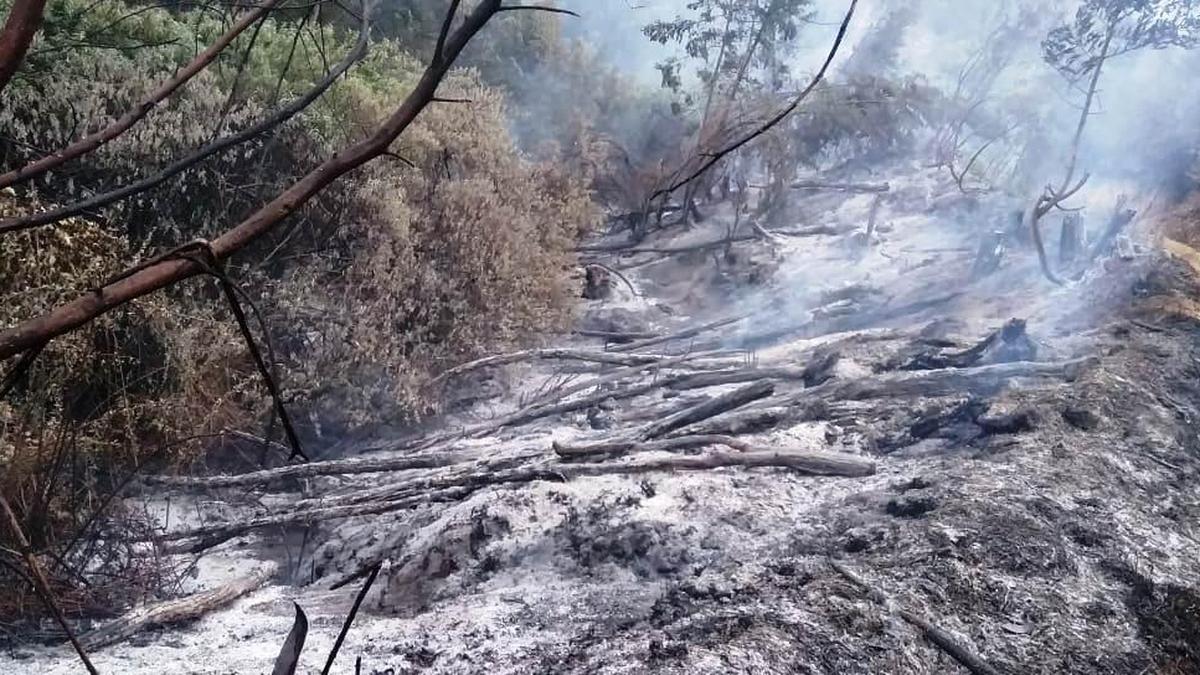
A forest fire that occurred in Munnar in 2019. | Photo Credit: File picture The developing strong El Niño could intensify dry conditions in Keralam, raising concerns over forest fires, the early drying of forest streams and waterholes, changes in wildlife movement and a potential increase in human–wildlife conflict.The State’s 28% deficit in southwest monsoon rainfall could compound the situation if dry conditions persist. Experts said the impact on forests and wildlife would depend on local rainfall patterns, temperature changes and the duration of dry spells.Forest water sources that would normally last until March or April could dry up sooner, forcing wild animals to seek alternative sources. This could bring them closer to forest fringes and human-dominated landscapes, increasing the risk of human–wildlife encounters. Higher temperatures and declining water availability could also cause physiological stress and behavioural changes in wildlife, though these effects would need to be established through field observations, experts noted.High temperatures and fewer showers could increase the risk of forest fires and bring forward the onset of the fire season. Authorities might need to advance preventative measures, including creating fire lines along forest boundaries, experts said.The potential impacts of El Niño could extend to forest health, regeneration and ecosystem functioning, according to K.A. Sreejith, senior principal scientist at the Kerala Forest Research Institute (KFRI).“El Niño can alter monsoon circulation, potentially causing rainfall deficits and prolonged dry spells. This can reduce soil moisture and increase water stress in plants, affecting forest phenology and regeneration,” Mr. Sreejith said.Forest phenology — the seasonal timing of events such as flowering, fruiting, leaf shedding and plant growth — is closely linked to rainfall, temperature and other climatic factors. Changes in these cycles could affect the seasonal availability of food and other habitat resources, disrupting interactions between plants and animals and the functioning of forest ecosystems.The severity of the impact would depend on forest type, elevation, soil moisture, and the prevailing climatic conditions. Species also differ in their ability to withstand drought, with some relatively tolerant and others highly susceptible to water stress.Forests may retain their overall canopy appearance even as their physiological health declines. Prolonged drought could kill vulnerable trees, limit regeneration and eventually alter forest composition in favour of drought-tolerant species. Comparing forest phenology during El Niño years with historical records could help researchers assess its effects on seasonal changes in forest vegetation, Mr. Sreejith said.According to the Forest Survey of India, Keralam reported 49 large forest fire incidents so far in 2026, compared with 52 in 2025.C.K. Vishnudas, executive director of the Hume Centre for Ecology and Wildlife Biology, said it was too early to determine the full ecological impact of the developing El Niño event. The amount and distribution of northeast monsoon rainfall would be crucial in determining water availability in forests and the extent of stress on wildlife.Although high temperatures could trigger localised convective rainfall and isolated heavy downpours, such showers might not adequately replenish water sources across wider areas.“If dry conditions intensify and temperatures rise, forest streams and waterholes could dry up earlier than usual, forcing wild animals to seek alternative sources of water. This could increase the possibility of human–wildlife encounters, while the risk of forest fires could also rise,” Mr. Vishnudas said, adding that a clearer assessment might be possible in about a month, depending on weather conditions. Published - October 18, 2026 07:00 am IST
El Niño could intensify stress on Keralam’s forests and wildlife
Full Article
Original Source
Read the full article at Thehindu →KhanList aggregates and links to publicly available news content. We do not host full articles from third-party sources. Always verify important information with original sources.