
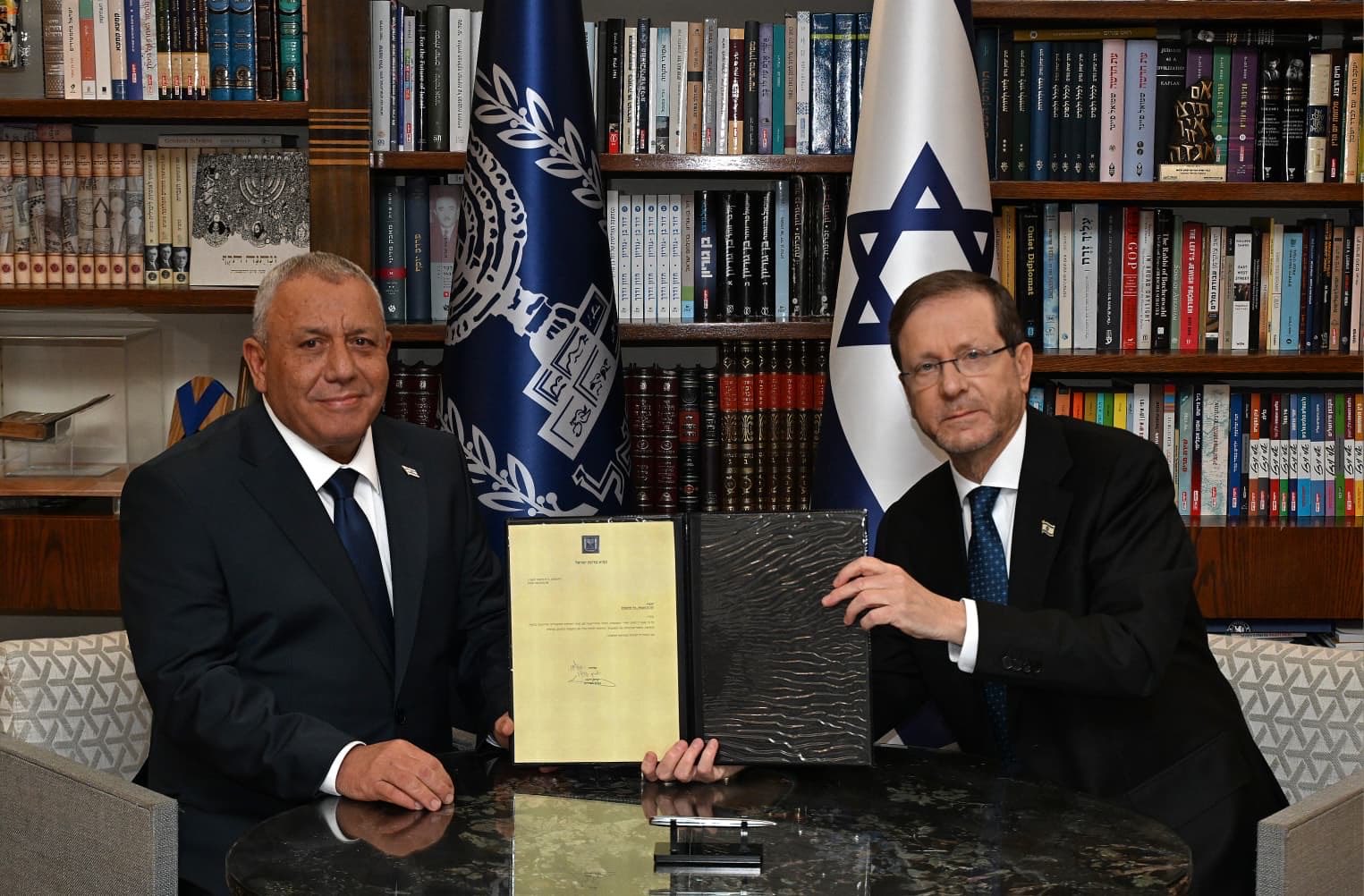
Israeli Prime Minister-designate Gadi Eisenkot is reportedly preparing to announce the formation of a government next week as negotiations with Israeli Prime Minister Benjamin Netanyahu’s Likud party remain at an impasse. Meanwhile, the Board of Peace has acknowledged continued obstacles to implementing the US-backed ceasefire agreement in Gaza, where Israeli forces have intensified their targeting of senior Hamas military and security officials. Eisenkot, whom Israeli President Isaac Herzog tasked with forming a government on November 8, has sought to establish a broad national emergency government. However, Netanyahu has insisted on retaining the premiership under a prospective unity government. Eisenkot’s efforts to incorporate ultra-Orthodox parties into his coalition have also been complicated by his insistence on universal military or civilian national service and the establishment of a state commission of inquiry into the October 7, 2023, massacre. Eisenkot’s mandate expires on December 6, though he could receive a two-week extension. Despite the absence of a new government, Eisenkot’s bloc has begun exercising its parliamentary majority with the support of Israel’s two Arab-led parties. The Knesset elected Matan Kahana, a member of Eisenkot’s Yashar party, as its speaker on November 17, replacing Likud’s Amir Ohana. The new parliamentary majority has also begun advancing legislation to reverse elements of the outgoing government’s judicial reforms. In Gaza, little progress has been made toward transferring governing authority from Hamas to the National Committee for the Administration of Gaza (NCAG). In its second semiannual report to the United Nations Security Council, the Board of Peace criticized both Israel and Hamas for impeding the implementation of the ceasefire agreement, citing Israeli restrictions on the entry of NCAG personnel and Hamas’s continued retention of its weapons and governing authority. The board subsequently reiterated that Hamas and other Palestinian factions had agreed to relinquish their weapons and transfer civilian and security authority under a 15-point roadmap adopted on July 30. While Hamas has yet to implement these provisions, the NCAG has continued recruiting personnel and developing its administrative capabilities. Representatives from 17 countries also participated in a workshop in Kiryat Gat to advance the establishment of a Palestinian police force. As Hamas works to reconstitute its military capabilities, the Israel Defense Forces (IDF) have targeted several of the group’s senior commanders. Among those targeted was Muhammad Abu Ismail, commander of Hamas’s Khan Younis Brigade, whom Israeli forces struck alongside several other operatives at Nasser Hospital on November 12. In total, the IDF reported 20 ceasefire violations by Hamas and other Palestinians terror groups from November 6–24: On November 12, the IDF and Shin Bet announced that they struck Muhammad Abu Ismail, commander of Hamas’s Khan Younis Brigade, and several other Hamas operatives at Nasser Hospital in Khan Younis overnight. According to the military, Hamas used the hospital as a military headquarters to plan attacks against Israeli forces, store weapons, conduct interrogations, and rebuild the brigade’s capabilities. On November 13, the IDF and Shin Bet announced that they had killed Hamas Nukhba operative Muhammad Atta Zaki Qishawi the previous week. Qishawi had infiltrated Israel during the October 7, 2023, massacre. Later the same day, the IDF and Shin Bet reported that they killed Ali Naim Aish Abu Atza, an operative in the Sayf al Islam faction who manufactured weapons for Hamas’s military wing, during the previous week. Also on November 13, the IDF and Shin Bet announced that they killed Hani Ibrahim Said Khudari, a supply platoon commander in Hamas’s Sabra Battalion who had infiltrated Israel during the October 7 massacre, during the previous week. Later the same day, the IDF and Shin Bet reported that they had destroyed a Hamas military wing weapons-production workshop the previous week. On November 15, the IDF and Shin Bet announced that they killed Samir Mahmoud Hassan Abu Younis, commander of Hamas’s Rafah Brigade, in southern Gaza overnight. Abu Younis assumed command of the brigade following the elimination of his predecessor, Naal Abu Ubeid, on September 15 and had since worked to rebuild its military capabilities, according to the Israeli military. On November 16, the IDF and Shin Bet reported that their November 12 strike on Nasser Hospital also killed three Hamas operatives: Murad Tawfiq Mahmoud Abu Zarifa, an engineering cell commander involved in abducting Adina Moshe on October 7, 2023; Khaled Osama Abu Anza, a communications official in Hamas’s military intelligence apparatus; and Muhammad Nafed Abu Awad, a Nukhba operative in the Khan Younis Brigade. The military said that Hamas continued operating from the hospital despite repeated Israeli warnings. Later the same day, the IDF announced that it killed Muaman Razak Muhammad Shangdali, a platoon commander in Hamas’s Western Jabalia Battalion, and Muhammad Gahad Razak Amar, an operative in the same battalion, in Jabalia two days earlier. Also on November 16, the IDF reported that it killed Ramzi Abu Tim, a cell commander in Hamas’s Yibna Battalion, on November 12. Later the same day, the IDF announced that it killed Hussam Saleha, a Hamas platoon commander who infiltrated Israel during the October 7 massacre, on November 12. Also on November 16, the IDF reported that it killed Nashat Awad, a Hamas Nukhba cell commander, on November 12. The Israeli military said the five operatives had recently planned attacks against Israeli forces and worked to rebuild Hamas’s military capabilities. On November 18, the IDF and Shin Bet announced that they killed Ashraf Nayef Muhammad Tabasi, a platoon commander in Hamas’s Khan Younis Brigade, in Khan Younis the previous day. Later the same day, the IDF and Shin Bet reported that they killed Saber Nayef Mahmoud Nabhan, a platoon commander in Hamas’s Western Jabalia Battalion, in a separate strike in Jabalia the previous day. Also on November 18, the IDF and Shin Bet announced that they launched an operation to destroy a tunnel west of the Yellow Line that posed an immediate threat to Israeli forces. On November 20, the IDF and Shin Bet announced that they killed Ahmed Abu Armana, commander of Palestinian Islamic Jihad’s (PIJ) Nukhba forces in its Central Camps Brigade, earlier that week. Abu Armana was responsible for training PIJ operatives and coordinating military activity with Hamas. Later the same day, the IDF and Shin Bet reported that they killed Abd al Raouf Naim Abd al Hay Nabhan, deputy commander of a Hamas Nukhba cell who infiltrated Israel during the October 7 massacre, in Nuseirat two days earlier. Also on November 20, the IDF and Shin Bet announced that they killed Thaer al Wadiya, commander of PIJ’s Nukhba forces in Gaza City, the previous day. Later the same day, the IDF reported that it struck several Hamas operatives who had gathered in central Gaza to plan attacks against Israeli civilians and military personnel. The Israeli military said the operatives included members of Hamas’s Nukhba forces and participants in the October 7 massacre. On November 22, the IDF announced that it struck Ahmed Badran Nimr Suafiri, a PIJ engineering platoon commander, and two other operatives, Mustafa Youssef Mustafa Rafai and Khaled Odeh Fathi Naim, in northern Gaza the previous day. The IDF disputed reports identifying the three as humanitarian aid workers. On November 24, the IDF and Shin Bet announced that they killed Naim Muhammad Ashour Abu Nahal, head of Hamas’s Internal Security Apparatus, earlier that day. Abu Nahal assumed leadership of the apparatus approximately two months earlier following Israel’s arrest of his predecessor. Samuel Ben-Ur is a research analyst at the Foundation for Defense of Democracies.
Eisenkot nears government formation deadline, Hamas and other groups violate ceasefire 20 times Nov. 6–24
Full Article
Original Source
Read the full article at Fdd →KhanList aggregates and links to publicly available news content. We do not host full articles from third-party sources. Always verify important information with original sources.