
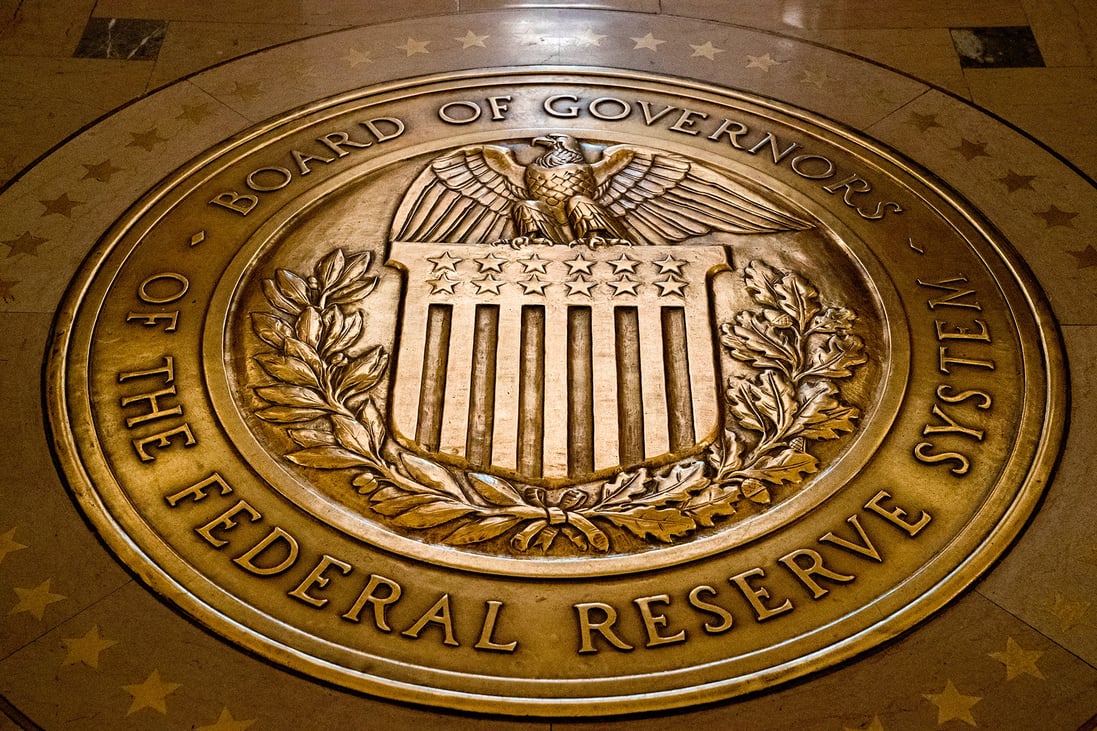
While the court found the uniform cap unlawful, it did afford some flexibility for the Fed, admitting "perfection" is unrealistic.MINNEAPOLIS (CN) — The Eighth Circuit ruled Monday that the Federal Reserve Board must rework its long-standing rule capping how much banks can charge to process debit card transactions.For over a decade, banking and retail industries operated under the Fed’s 21-cent interchange fee cap, a one-size-fits-all formula established after Congress instructed the central bank to address soaring, “unchecked” swipe fees.In the 11-page appellate ruling, U.S. Circuit Judge David Stras throws that standard out the window, finding the board overstepped its authority by lumping fixed costs into the fee formula, and it has no legal cushion or “deference” to fall back on.“In passing the Durbin Amendment, Congress could hardly have been clearer,” the Donald Trump appointee said in the ruling. “Zero deference from the Administrative Procedure Act, plus zero deference under the statute we are interpreting, still adds up to nothing.”Enacted in 2010, the Durbin Amendment requires the Fed to ensure interchange fees are “reasonable and proportional” to the “incremental cost” a bank actually incurs for a given transaction, as part of a broader effort to curb skyrocketing fees.Following intense lobbying by the financial sector, the Fed eventually set the nationwide limit at 21 cents — a number it reached by including general, fixed costs like hardware and fraud prevention.The cap affected banks with over $10 billion in assets, and while it did not force banks to charge 21 cents, the cap quickly became the standard rate.Corner Post, a North Dakota-based convenience store that filed the initial suit in 2021, challenged the rate, arguing the Fed went far beyond what the statute allowed by imposing a fee cap benefiting big banks.The U.S. District Court for the District of North Dakota decided in favor of the store in 2025, finding the 21-cent cap illegal — a ruling the Eighth Circuit affirmed.Pulling on economic principles, Stras reasoned incremental cost to mean “marginal cost" — the amount added to a bank’s cost by one particular debit transaction.“It does not take much detective work to figure out that the Federal Reserve shall consider marginal costs in setting debit card interchange fees, but not fixed costs,” Stras said, noting any future fee cap cannot be affected by the price of hardware, software, labor and other network-connectivity costs.The Fed defended its existing framework in front of the Eighth Circuit in May, noting the cap cut pre-regulation rates by about half, thus fulfilling Congress’ goal of lowering fees while still allowing issuers to recover basic transaction costs.In response to the Fed’s concern certain expenses can be fixed for some banks and incremental for others — such as in-house fraud detection versus per-transaction outsourcing — Stras said the statute treats both the same.“No matter how much some banks and payment networks disagree with approaching the problem this way, the Federal Reserve does not get to revise Congress’ work,” he said, noting the establishment of a uniform cap exceeds the board’s authority.The Eighth Circuit did give the Fed some breathing room, admitting it need not calculate the exact penny cost for every transaction across the country and may use economic shortcuts to calculate an average variable cost.“The word ‘proportional,’ after all, does not require perfection,” Stras said.It remains to be seen how the Fed will rework the fee cap, though Corner Post argued in May it could set tiered standards based on banks’ asset size, transaction volume and geography to alleviate concerns of an “administrative nightmare” stemming from issuer-specific fee caps.In 2023, the Fed did propose lowering the cap from 21 cents to 14.4 cents, but it has been stalled by fierce resistance from banking groups.Corner Post initially had its challenge swatted due to statute of limitations concerns until a landmark 2024 Supreme Court ruling held the six-year statutory clock starts only when a plaintiff is actually injured — allowing the store’s claim to proceed as it opened for business years after the fee cap was put in place.The Fed declined to provide a comment, and Corner Post’s attorneys did not respond to a comment request.Subscribe to our free newslettersOur weekly newsletter Closing Arguments offers the latest about ongoing trials, major litigation and rulings in courthouses around the U.S. and the world, while the monthly Under the Lights dishes the legal dirt from Hollywood, sports, Big Tech and the arts.Additional Reads
Eighth Circuit strikes down Federal Reserve’s 21-cent debit card fee cap
Full Article
Original Source
Read the full article at Courthousenews →KhanList aggregates and links to publicly available news content. We do not host full articles from third-party sources. Always verify important information with original sources.