
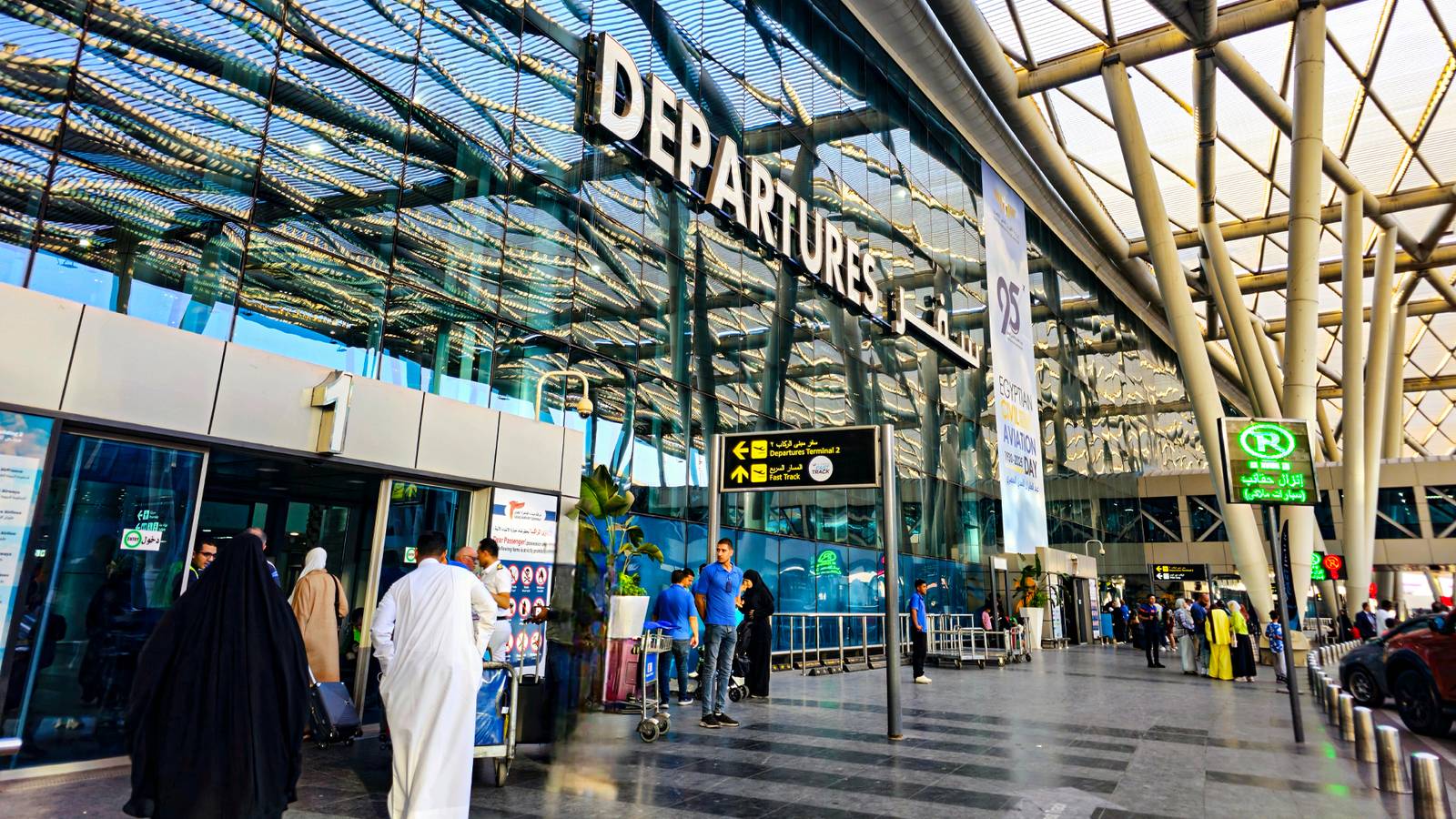
Published Oct 1, 2026, 3:01 PM EDT Prachi is a London-based journalist with extensive experience in the aviation industry. She has worked for several leading industry publications, covering a broad range of topics. Her expertise lies in aircraft maintenance, emerging technologies, and advanced air mobility. She is currently pursuing a PhD in Journalism, focusing on data journalism and its potential to transform conventional aviation reporting. Global air travel demand is expected to grow significantly over the coming decades. According to the International Air Transport Association's (IATA) latest Long-Term Demand Projections, global passenger demand is expected to more than double by 2050, reaching 20.8 trillion revenue passenger kilometers (RPKs) under the organization's mid-range scenario. All regions are expected to see higher demand. Africa is set to be one of the world's fastest-growing aviation markets, with passenger demand forecast to rise by between 3.2% and 3.9% annually over the next two decades. Demand for travel between African countries is expected to grow even faster, at an average annual rate of 4.9% through 2050. Egypt will be a key part of that growth. IATA expects the country's air travel demand to increase by 3.4% annually through 2050. The country's airlines are already adding capacity. EgyptAir is expanding and modernizing its fleet, while Air Cairo has continued to grow its operations. That growth will put more pressure on the country's airports, particularly Cairo International Airport (CAI), which is the country’s busiest hub. The government is now investing billions of dollars to expand the airport's capacity to meet the country's growing air travel demand. Rising Passenger Numbers Are Increasing The Pressure On Egypt's Airports Credit: Khaled Aboun-Nasr | Shutterstock Egypt's recent passenger numbers show why the government is looking to add more airport capacity. Airports operated by the Egyptian Airports Company handled around 28 million arriving and departing passengers in 2025, up from 22.9 million in 2024. The number of flights also rose from about 173,800 to 209,800, a 20.7% increase. The increase was particularly noticeable at airports serving the country's tourist destinations, as international travel picked up during the winter season and the Christmas holidays. The growth has carried into this year. Between January and April, Egyptian airports handled around 9.4 million passengers compared with 8.8 million during the same period last year, according to ahramonline. Flight movements also increased, reaching 70,700 compared with 65,800 in the first four months of 2025. That puts passenger growth at 6.8% and flight growth at 7.4% for the period. CAI accounted for a large share of that traffic. It handled 30.94 million passengers in 2025, up 6.8% from 28.97 million in 2024, and recorded 224,303 flights during the year. The airport has continued to add capacity this year. OAG's September 2026 data shows Cairo had around 1.79 million scheduled seats, up 11.2% from September 2025, putting it ahead of Addis Ababa Bole International Airport, which had 1.19 million seats. Cairo Airport's Existing Terminals Are Struggling To Keep Pace With Demand Credit: Tamer A Soliman | Shutterstock CAI started 2026 with another strong increase in traffic. It handled almost three million passengers in January, up from 2.64 million in the same month a year earlier, a 14% increase. In February as well, the airport handled 2.76 million travelers, up 12% year-on-year. By the end of March, more than eight million passengers had passed through the airport, up 9% from the first quarter of 2025. The increase has continued through the summer. Between June and the end of August, CAI handled nearly 7.94 million passengers across 57,440 flights, compared with 7.83 million passengers and 56,699 flights during the same period in 2025. August was particularly busy, with 3.13 million passengers passing through the airport, up 9% from the 2.87 million recorded in August 2025. If passenger traffic continues to grow at this rate, CAI is likely to surpass last year's total. Civil Aviation Minister Sameh El-Hefny has said that the airport is expected to handle about 31 million passengers by the end of 2026. This would, of course, put it above the combined annual capacity of its existing passenger terminals. Terminals 1, 2, and 3 can handle roughly 28 million passengers. El-Hefny has acknowledged that the airport already handles more passengers than its existing terminals were designed to accommodate. With passenger numbers continuing to rise, the current facilities have limited room to absorb further growth. That capacity gap underpins the government's plan to add a fourth terminal at Africa’s busiest hub. Cairo Airport's New Terminal 4 Will Add 40 Million Passengers Of Annual Capacity Credit: Colinmthompson | Shutterstock The Egyptian government is now moving ahead with plans to build a fourth passenger terminal at CAI. The new terminal is expected to add around 40 million passengers in annual capacity, taking the airport's total capacity to between 68 million and 70 million passengers. The project is estimated to cost between $3.5 billion and $4.5 billion and is expected to take around four years to complete. Notably, the government has been considering an expansion at CAI for years, ever since the airport operated at around 75% capacity. In 2019, Cairo Airport Company said it had completed the necessary studies to build a fourth terminal. The project was intended to reduce congestion in the airport's existing terminals and increase its overall annual capacity. In 2023, the company signed two memoranda of understanding with a consortium led by US-based Pangiam, which also included AECOM and other international companies specializing in architecture, engineering design, and financial advisory services. The government plans to finance the project through the state-owned Holding Company for Airports and Air Navigation. It has opted for a self-financing model to avoid increasing Egypt's sovereign debt. What To Expect From Cairo International Airport's New Terminal 4 Credit: Haruka Okita | Shutterstock As of August 2026, Egypt has not announced a definitive groundbreaking date or named the main construction contractor for Terminal 4. There are also limited details available about the terminal itself. However, Prime Minister Mostafa Madbouly said last year that the project is expected to become a leading model in airport design and operation worldwide. As reported by Egypt Today, Madbouly said the project will include a new runway equipped with advanced navigation and ground lighting systems. It will also use artificial intelligence, digital technologies and smart operating systems to improve passenger services and operational efficiency. In addition, the plan will unify the visual identity of Terminals 2, 3, and 4 to give the airport a more cohesive, modern appearance. Furthermore, the plan includes developing a new cargo city alongside the passenger facilities. It will have an initial annual capacity of one million tons, which can later be expanded to two million tons. Interestingly, Egypt's approach to the expansion differs from some of the major airport projects now under development elsewhere in Africa. Ethiopia, for instance, is building Bishoftu International Airport as a new greenfield hub for Ethiopian Airlines. The airport's construction officially started earlier this year. The first phase is designed to handle 60 million passengers annually, and later phases are expected to increase capacity to 110 million. The entire project is currently valued at approximately $12.5 billion. Cairo, meanwhile, is more than doubling its existing passenger capacity at the same airport rather than building an entirely new hub. By using CAI's existing airfield, road connections, and other airport infrastructure, the project does not require Egypt to build an airport entirely from scratch. This helps keep the cost significantly lower, with the $3.5 billion to $4.5 billion project costing around a quarter to a third as much as Bishoftu's $12.5 billion development. Terminal 4 Could Give EgyptAir More Room To Expand Its Cairo Hub Credit: Khaled Aboun-Nasr | Shutterstock Indeed, the expansion will be important for EgyptAir, which dominates operations at CAI. The airline operates more than 3,000 flights from the airport every month, connecting Egypt with destinations across Africa, Europe, Asia and beyond. However, limited capacity at its main hub also limits how much it can grow from Cairo. Therefore, the additional capacity from Terminal 4 will give the Star Alliance member more room to increase frequencies and open new routes without facing the same pressure on slots and gates. That capacity will become more important as EgyptAir expands its fleet. The airline is targeting around 97 aircraft by 2030/31, with further growth expected beyond that. Its fleet expansion includes Airbus A350-900s for long-haul operations and Boeing 737 MAX aircraft for short- and medium-haul routes. At the 2025 Paris Air Show, EgyptAir increased its A350-900 order from ten to 16 aircraft. It also has 15 Boeing 737 MAX aircraft on order. Furthermore, the new terminal will also give the airline more space to expand its hub-and-spoke operation, which depends on passengers connecting through Cairo to reach other destinations on the network. EgyptAir already depends heavily on connecting traffic through its Cairo hub. Around 30% of its customers currently connect through the airport. The airline's CEO, Captain Ahmed Adel, told AeroTime that he expects transit passenger numbers to grow faster once the new Terminal 4 opens. The new terminal could also improve the experience for those connecting passengers. Its planned use of artificial intelligence, biometric systems, e-gates and other digital technologies is expected to make passenger processing more efficient. Egypt Is Investing In Airport Capacity Beyond Its Cairo Hub Overall, Cairo's Terminal 4 is part of a much wider investment in Egypt's airport infrastructure. The country has been expanding its airport network and upgrading existing facilities to support growth in aviation, tourism and cargo. Egypt now has 23 airports, compared with 19 in 2014. The government is planning to add a new terminal at Hurghada International Airport(HRG), the country's second-busiest airport by passenger numbers, as Egypt continues to develop the Red Sea coast as a major tourism and real estate destination. The airport handled approximately 10.5 million passengers during the 2024–2025 financial year, up 22% from the previous year. Hurghada currently has two terminals with a combined capacity of more than 13 million passengers a year. The third terminal would add another ten million to 15 million passengers of annual capacity, potentially taking the airport's total design capacity to more than 23 million passengers and, at the upper end, close to 28 million. Egypt has also recently completed a major modernization project at Alexandria International Airport (ALY), including the country’s first eco-friendly, solar-powered terminal. The 40,000-square-meter facility increased the airport's annual capacity from 1.2 million to six million passengers. Taken together, these projects show that Egypt is not relying on Cairo alone to accommodate the country's growing aviation and tourism demand.
Egypt's $4 Billion Bet To Bolt 40 Million Passengers Onto Cairo's Existing Airport
Full Article
Original Source
Read the full article at Simpleflying →KhanList aggregates and links to publicly available news content. We do not host full articles from third-party sources. Always verify important information with original sources.