
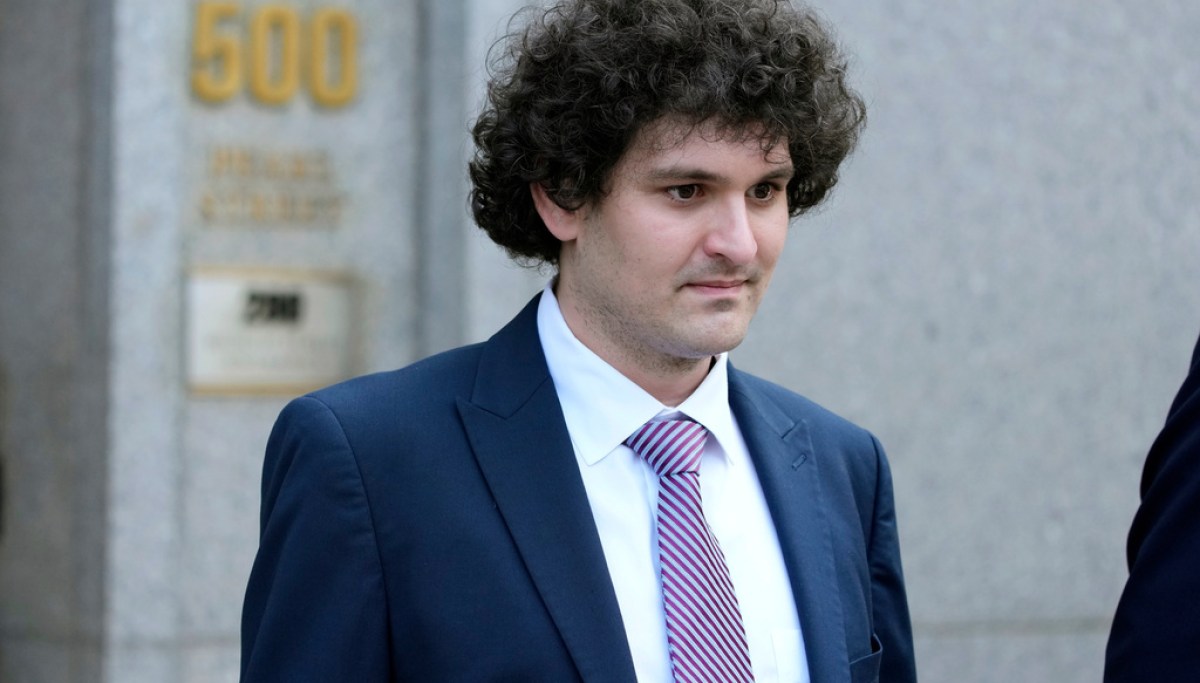
Imagine that your commute to work every day takes you past a shallow pond.One morning, you notice that a child has fallen into the pond and appears to be drowning. To rescue the child would require getting your clothes wet and dirty, necessitating a return home to change, and thus causing you to be late to work. The answer to this little thought experiment may seem obvious, but the reasoning behind it inspired a multibillion-dollar global movement that has strategically placed adherents in influential positions across tech, academia, media, and government and is now seeking control of the commanding heights of the country’s most consequential emerging industry.William MacAskill, the co-founder of the Center for Effective Altruism, first read atheist professor Peter Singer’s 1972 essay Famine, Affluence, and Morality at the age of 18, and by the time he was a graduate student in philosophy at Oxford, it had become the guiding principle of his life.Singer’s point was that if you are morally obligated to save the drowning child at a trivial cost to yourself, then distance should make no moral difference in real life either. Affluent people in wealthy nations are obligated to sacrifice relatively small comforts to save strangers from preventable suffering abroad. MacAskill and fellow Oxford philosopher Toby Ord turned that principle into a practical program, defined by using evidence to determine where each dollar can do the most good, and from that mustard seed grew the movement now known as effective altruism.In 2009, Ord and MacAskill founded Giving What We Can, asking members to pledge at least 10% of their incomes to the charities that evidence showed could do the most good. The idea caught on faster than its founders expected. Within a year, 64 people had joined and pledged a combined $21 million over their lifetimes.That success suggested the same principle could be applied to more than charitable donations. In 2011, MacAskill and fellow Oxford student Ben Todd began asking how people could maximize the good accomplished through their careers. After an early lecture prompted several students to change their career plans, they launched 80,000 Hours, named for the roughly 80,000 hours a person spends working over a lifetime.Giving What We Can and 80,000 Hours were soon brought together under the Centre for Effective Altruism, turning a successful giving society into the beginnings of a broader movement for optimizing how people used both their money and their lives.From there, effective altruism spread through elite universities, conferences, local chapters, books, and an expanding network of nonprofits devoted to identifying the world’s most important problems and to steering money and talent toward solving them. MacAskill’s 2015 book Doing Good Better helped popularize the movement, while its conception of “doing good” expanded beyond poverty to animal welfare, pandemic prevention, existential risk, and eventually, artificial intelligence.What transformed effective altruism from an Oxford philosophy project into a financial force, however, was its attraction to Silicon Valley wealth. Facebook co-founder Dustin Moskovitz and his wife, Cari Tuna, embraced the movement’s central question — where can each dollar accomplish the most good? — and became the principal funders of Open Philanthropy, which has poured billions into causes selected using effective altruist reasoning. Other wealthy technologists followed. By 2025, donations to effective altruism-linked causes reached roughly $2 billion annually.FILE – FTX founder Sam Bankman-Fried leaves Federal court on July 26, 2023, in New York. (AP Photo/Mary Altaffer, File) One early convert to effective altruism was Sam Bankman-Fried, who first met MacAskill at an 80,000 Hours event at MIT in 2012. After graduating from MIT in 2014, Bankman-Fried took a lucrative job at the quantitative trading firm Jane Street, where he donated about half his salary to charities favored by effective altruists.In 2017, Bankman-Fried left Jane Street to found the cryptocurrency trading firm Alameda Research, followed two years later by the cryptocurrency exchange FTX. His fortune exploded. By age 29, Forbes estimated his net worth at $26 billion, and Bankman-Fried publicly promised to give nearly all of it away. He became effective altruism’s most famous benefactor, launching the FTX Future Fund to pour money into the movement’s increasingly ambitious priorities, including pandemic prevention, artificial intelligence, and other threats to humanity’s long-term future. MacAskill himself joined the fund as an adviser.Then the empire collapsed. In November 2022, FTX filed for bankruptcy after revelations that billions of dollars in customer deposits had been funneled to Alameda. Bankman-Fried was arrested, convicted on seven counts of fraud and conspiracy, and, in 2024, sentenced to 25 years in federal prison for what prosecutors described as one of the largest financial frauds in American history. A federal judge found that FTX customers alone had lost $8 billion.It seems that in the drive to earn as much as possible so that wealth could be spent wisely, some ethical shortcuts were taken along the way.And fraud isn’t the only deviation from traditional ethics in which Bankman-Fried engaged. His Bahamas penthouse was home to a bevy of supposedly consensual nonmonogamous sexual relationships involving nine other FTX and Alameda executives. It appears that, unmoored from the traditional Christian norms that created Western civilization, the effective altruist movement has had trouble policing some of the baser desires of its predominantly wealthy and male adherents.Time magazine has documented allegations from women in the effective altruist movement who say they were pressured to join polyamorous relationships with older, wealthier, powerful men. Singer himself is an advocate of such relationships, arguing that ancient prohibitions on promiscuity are out of date in an age of easily accessible contraception. If consensual nonmonogamy produces more happiness without imposing comparable harms, there is no obvious consequentialist reason to prohibit it.Yet a movement skeptical of traditional restraints in its own moral behavior has become increasingly eager to design new restraints for everyone else. Just as Bankman-Fried once came before Congress to ask it to regulate crypto, Anthropic’s Dario Amodei is now asking the government to regulate artificial intelligence.Amodei wants Congress to create a federal regulatory regime for the most powerful AI models. Under Anthropic’s proposal, frontier AI companies would be required to test their models for catastrophic risks, submit to independent third-party evaluations, and meet government-mandated security standards. The third party named by Amodei is the nonprofit Model Evaluation and Threat Research, or METR.But METR isn’t so independent. It grew out of the effective altruist movement. Its predecessor, ARC Evals, was created by artificial intelligence safety researchers closely tied to effective altruism; it received early funding from Open Philanthropy; it was promoted at effective altruism conferences as a way to reduce the risk of catastrophic AI; and it has employed veterans of major effective altruist organizations. Its connection to the movement is foundational, not incidental. This is the fox guarding the henhouse.The French sociologist Emile Durkheim once defined religion as a unified system of beliefs and practices concerning things regarded as sacred that binds its followers into a moral community. Effective altruism supplies precisely that structure.It identifies an overriding moral good — maximizing the welfare of sentient beings and safeguarding humanity’s future — prescribes sacrifices of money, career, and personal comfort in service of that good, and binds adherents together through pledges, conferences, canonical writings, and a shared moral vocabulary. Its sacred object is not God but the measurable well-being and future potential of humanity itself.THE INTERNET ISN’T KILLING GODBut effective altruism is an extraordinarily young religion. Its institutions are barely more than a decade old and have not been tested across generations or had centuries to develop mechanisms for policing misconduct, disciplining leaders, resolving internal disputes, or checking the influence of wealthy benefactors.Bankman-Fried may be an extreme example, but what limited track record the movement does possess is hardly reassuring. That should matter before its adherents are entrusted with helping write the rules governing one of the most consequential technologies ever created.
Effective Altruism: The atheist religion of the global tech elite
Full Article
Original Source
Read the full article at Washingtonexaminer →KhanList aggregates and links to publicly available news content. We do not host full articles from third-party sources. Always verify important information with original sources.