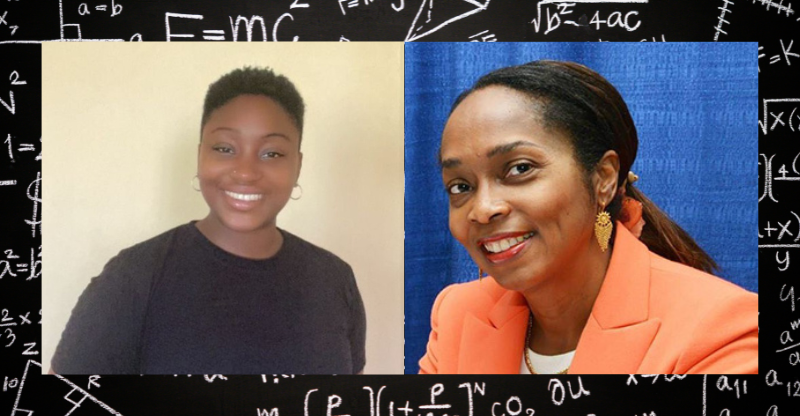
Dr Zhane Bridgeman-Maxwell (left) and Paula Ann Moore (right). Two education advocates have called for greater operational transparency, comprehensive public reporting and deeper national inquiries into student well-being after the release of the 2026 Caribbean Examinations Council (CXC) preliminary examination results. While thousands of candidates across the Caribbean celebrated their academic milestones in the Caribbean Advanced Proficiency Examination (CAPE), Caribbean Secondary Education Certificate (CSEC), Caribbean Vocational Qualification (CVQ) and Caribbean Regional Certificate of Secondary Competence (CCSLC), the education advocates argued that the official figures mask systemic vulnerabilities that require urgent scrutiny. The latest metrics show a regional pass rate of 72.18 per cent for CSEC examinations and 93.5 per cent for CAPE, for which passing grades span Grades 1 through 5. But Paula-Anne Moore, parent advocate and spokesperson for both the Group of Concerned Parents of Barbados and the Caribbean Coalition for Exam Redress, questioned the real-world value of these broad statistical passing bands. Moore said: “Passing grades or what CXC calls ‘acceptable grades’ for CAPE are Grade 1 to 5. I would like to know which employer or reputable university finds a Grade 4 or 5 ‘acceptable’ in a highly competitive environment. Even a Grade 3 is not acceptable for many universities.” She urged CXC and regional ministries of education to publish detailed breakdowns of Grade 1 attainment rates for CAPE and CSEC to align with international best practices, such as the public reporting of A and A* grades for University of Cambridge A-Levels in the UK. Moore also expressed concern over the lack of public reporting regarding the proportion of students passing five CSEC subjects, including Mathematics and English A, which she identified as a key benchmark for post-secondary matriculation. While acknowledging a positive rise in CSEC Mathematics pass rates to 42 per cent, she warned against statistical presentations that encourage self-congratulation rather than total transparency. You Might Be Interested In Analysing differences between CAPE and CSEC performance, science educator Dr Zhanè Bridgeman-Maxwell noted that the structure of post-secondary education naturally influences student outcomes. “Those that are choosing to do CAPE are choosing a more narrow, career-focused discipline. When you are intrinsically motivated, and you’re choosing something that you like, students tend to be more engaged,” she said. She pointed out that while high CAPE pass rates show sixth-form students are thriving, a substantial proportion of the regional cohort does not progress beyond the CSEC level before accessing post-secondary opportunities. While some tertiary institutions, such as the University of the West Indies, offer preliminary entry pathways to bridge these gaps, the barrier remains a critical hurdle for many young people. Beyond academic scores, both advocates highlighted alarming trends regarding candidate absenteeism and examination irregularities. CXC reported over 35 000 no-shows and 128 recorded cases of malpractice, largely attributed to unauthorised smart devices, candidate collusion and the emerging threat of artificial intelligence. Dr Bridgeman-Maxwell framed both absenteeism and examination breaches as underlying coping mechanisms in response to high-stakes testing environments. “At the end of the day, any source of irregularity in an exam and absenteeism are two sides of the same coin. What is common between the two is that candidates are finding a way of coping with facing a high-stakes test, whether that means not showing up or attempting unauthorised means to sit the exam,” Dr Bridgeman-Maxwell observed. She called on regional ministries, universities and social workers to conduct localised studies to address academic anxiety, student disengagement and a widening gender gap that reflects increasing male attrition across secondary schools. Dr Bridgeman-Maxwell warned that the unregulated use of generative AI posed a growing challenge to critical thinking and said attempts at technological cheating were likely to increase without structured classroom interventions. Moore sharply criticised CXC for focusing solely on students and teachers in examination challenges while failing to acknowledge what she termed institutional missteps. Pointing to the January 2026 hybrid e-testing exams for English A and Mathematics, Moore recalled widespread disruption across Barbados and Trinidad and Tobago, where technical failures, severe delays and inadequate paper backups caused significant distress. “Thousands of students were traumatised by these exams. They were inadequately piloted, no mock exams or basic preparation was provided, and exams were delayed by three to seven hours in a morass of confusion,” Moore said. “Yet CXC claimed no student was disadvantaged and delays were minimal. This callous, dismissive communication destroys trust and confidence in the system year after year.” She noted that persistent issues, including unaddressed exam paper errors, repeated multiple-choice questions and unresolved recommendations from the 2020 Independent Review Team, continue to threaten the credibility of regional qualifications. The discussion also centred on CXC’s newly piloted CTEC certification, a modular system designed to reduce cognitive stress by breaking assessments into smaller units. CXC reported an 80 to 90 per cent pass rate for the CTEC Mathematics Module 1 pilot, citing it as evidence that modularisation improves candidate retention and reduces examination panic. While cautiously welcoming alternative learning pathways, Dr Bridgeman-Maxwell cautioned against premature celebrations based solely on entry-level modules. “Module 1 covers foundational entry level concepts. High pass rates there do not necessarily map onto students performing well in higher-order mathematical mastery required in module 2 and module 3,” Dr Bridgeman-Maxwell cautioned. “My policy question is: does modularisation build genuine competence in students, or does it simply certify basic skills for better reporting metrics of CXC?” Both advocates agreed that while structural additions like CTEC offer potential, modular tools cannot substitute for foundational classroom learning, robust diagnostic teaching and full institutional accountability across the CARICOM education ecosystem. (RR)
Education advocates urge transparency, deeper scrutiny following CXC results
Full Article
Original Source
Read the full article at Barbadostoday →KhanList aggregates and links to publicly available news content. We do not host full articles from third-party sources. Always verify important information with original sources.