
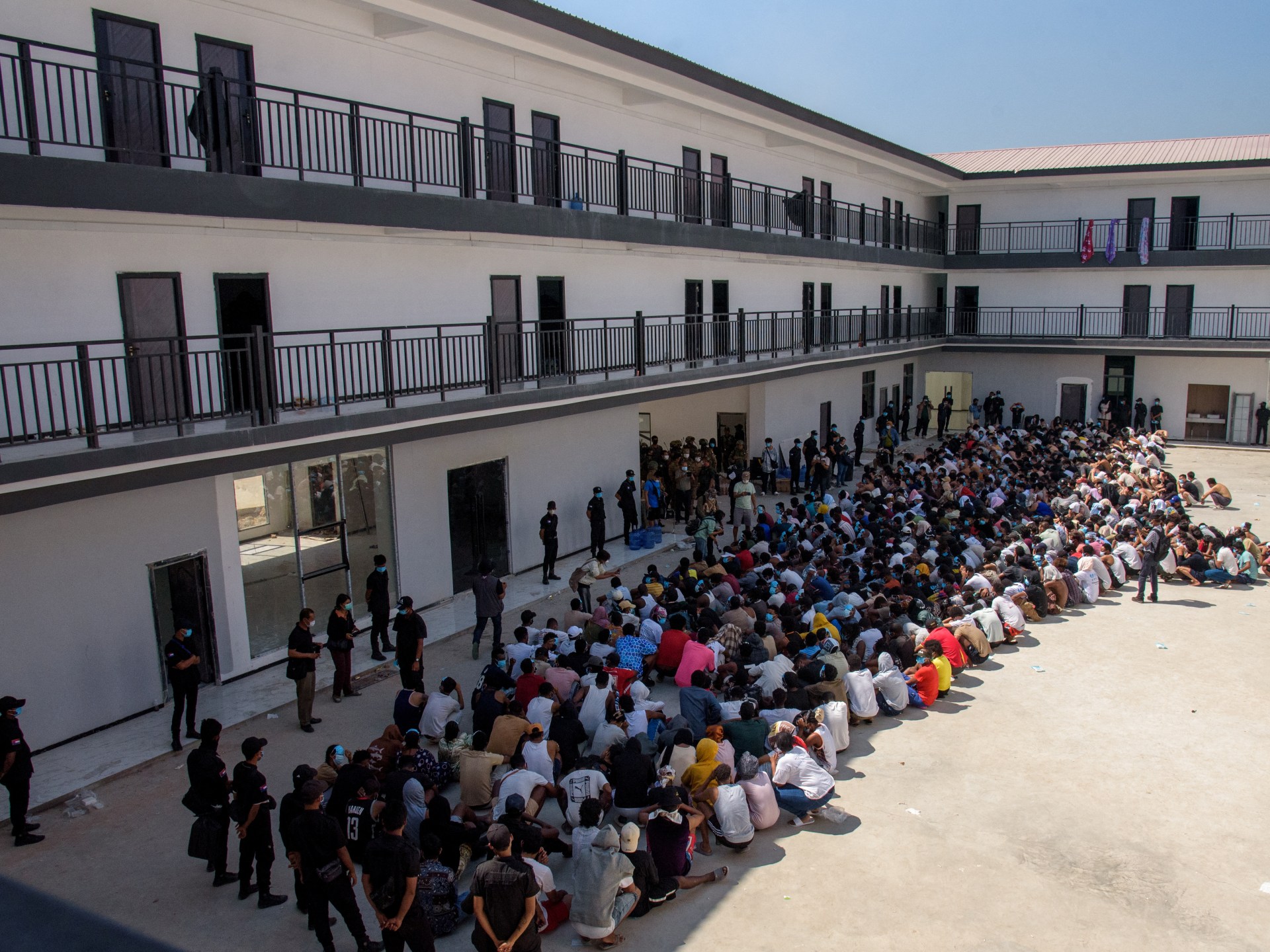
Good salary. Visa sponsored. Flight included. Applicants must be educated, fluent in English and confident online.It sounds like a great opportunity for a young graduate, but it is the bait in a trafficking operation.The advertised job does not exist. On arrival, the person’s passport is taken. They are moved to a compound they cannot leave and are forced to run online scams: impersonating strangers, building false relationships and persuading people thousands of kilometres away to send money.Those who miss their targets may be beaten, starved or placed in solitary confinement. Their families may sell land or take on debt to raise money to pay for their release.I heard versions of this story firsthand during a recent visit to Rwanda, where I met two survivors who had been trafficked through fraudulent job offers. They were fluent in English and comfortable with technology. They had been looking for the same thing as millions of other young people: a good job and the chance to build a better future.Those qualities made them valuable to the traffickers. They were given scripts and forced to impersonate women online, build romantic relationships with people in Europe and persuade them to send money.Today, after returning home with support from the International Organization for Migration (IOM), they are working alongside us to warn communities and other young people. They are using some of the same platforms on which traffickers search for recruits to help others recognise the danger.Their experience exposes a crime that creates victims on both sides of the screen. One person is held under threat and forced to deceive. Another has their trust exploited and may lose their savings. The criminal network profits from both.At least 300,000 people are estimated to have been trafficked or coerced into scam compounds across Southeast Asia. People from at least 80 countries and territories have been identified among them.Across the Asia Pacific, scams cost people an estimated $88bn to $114bn in 2025. Those losses cover a wider range of scams, but they show the scale of the criminal economy in which these compounds operate.The threat is also reaching further into Africa. IOM and its government partners are identifying a growing number of victims from countries like Ethiopia, Kenya, Uganda and Tanzania. During recent visits to Tanzania and Rwanda, leaders told me of fraudulent job offers reaching young graduates and other jobseekers through social media.These networks are global by design. Recruitment may happen in one country, travel through another and exploitation in a third. The scams can target people anywhere. When an operation is disrupted, it moves and starts again elsewhere.Government responses are often divided. Labour authorities see an unlicensed recruiter. Border officials see suspicious travel. Police see online fraud. Consular teams see citizens stranded abroad. Traffickers exploit the gaps between them.These gaps need to be closed. Governments should provide trusted ways to verify overseas employers, recruiters, contracts and visas. Labour, border, police and consular authorities need to share alerts quickly and investigate the networks together.Technology companies have an equally important role. Fraudulent recruitment happens openly on social media, messaging services and job platforms. Companies should detect and remove deceptive advertisements, make them easy to report and preserve evidence that can help identify those responsible. Awareness campaigns designed with survivors must reach young people in those same spaces.Above all, people forced to run scams must be treated as victims of trafficking. Some escape the compounds only to be detained or prosecuted for immigration offences or crimes committed under threat. No one should be punished for acts they were compelled to carry out because they were trafficked.From 2022 to 2025, IOM assisted more than 3,500 victims from 39 countries who were trafficked for forced criminality in Southeast Asia. Survivors need protection, medical and psychological care, a safe way home and support to rebuild their lives.Jobseekers can take precautions. A legitimate employer should have a verifiable address. The contract should describe the work, and the visa should match the job. A recruiter should not pressure someone to travel immediately, keep the offer secret or surrender their passport.But polished deceptions are designed to appear credible. The burden of defeating sophisticated international criminal networks cannot rest on jobseekers alone.Before someone boards a flight, there must be a reliable way to verify the offer. When trafficking is suspected, authorities must act together. When a victim escapes, they must be met with protection rather than punishment.For many people, trafficking now begins with an ordinary message on an ordinary phone. Our response must reach them there.Every jobseeker should be able to ask: Is this really a job, or is someone trying to lure me into a trap?None should be left to answer that question alone.The views expressed in this article are the author’s own and do not necessarily reflect Al Jazeera’s editorial stance.
Educated? Skilled? Ambitious? Traffickers are looking for you
Full Article
Original Source
Read the full article at Aljazeera →KhanList aggregates and links to publicly available news content. We do not host full articles from third-party sources. Always verify important information with original sources.