
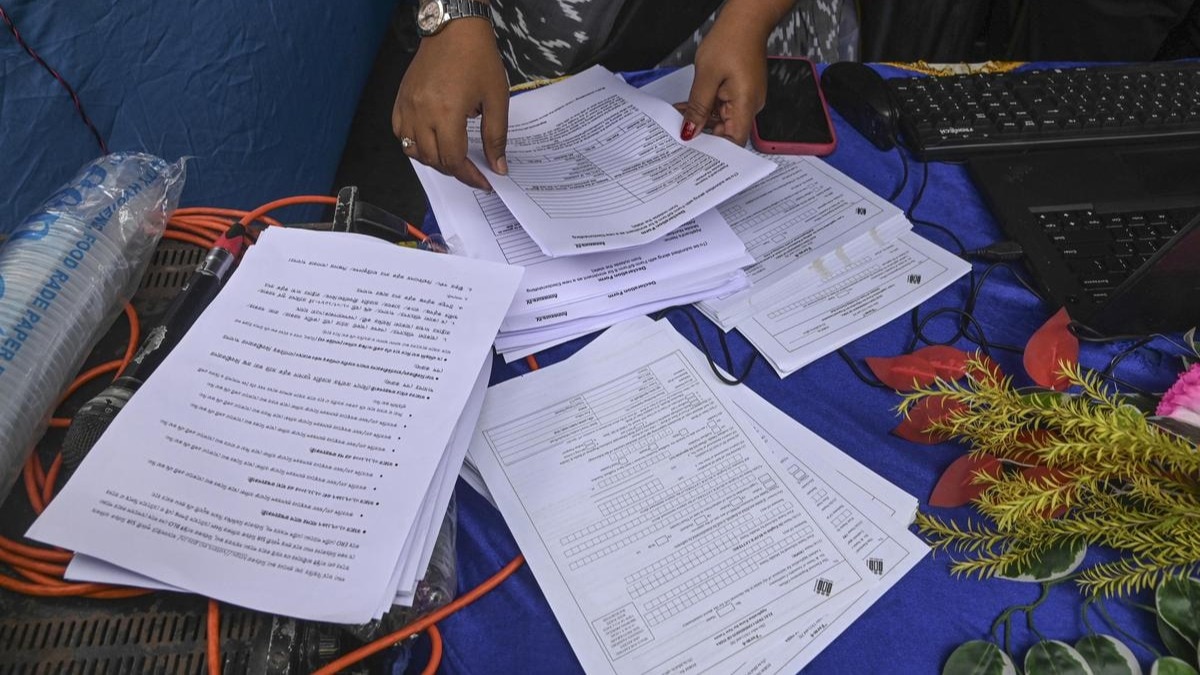
The Election Commission has capped the number of Form 7 applications an individual elector can file to object to the inclusion of names or seek deletions from electoral rolls, amid reports of people submitting objections in bulk.Under the new rules, an individual elector can file a maximum of 10 Form 7 applications during the entire claims and objections period. During the continuous updating of electoral rolls, the limit will be five applications per month.The Election Commission has directed Chief Electoral Officers (CEOs) of all states to inform electoral officials about the new limits and ensure compliance.The move is aimed at discouraging bulk filing of objections by individual electors, reducing inconvenience to voters and easing the workload of election officials. WHAT ARE NEW LIMITS ON FORM 7 APPLICATIONS?Form 7 is used to object to the proposed inclusion of a name in the electoral roll or seek the deletion of an existing entry. Under Rule 13(2) of the Registration of Electors Rules, 1960, such objections can be filed only by a person whose name is already included in the electoral roll of the constituency concerned.During the claims and objections period, an individual can file a maximum of 10 Form 7 applications throughout the entire period. During the continuous updating of electoral rolls, the limit is five applications per month. The Commission said that although the number of online applications an individual could file at a time had been limited to six, there was no defined limit on the number of physical forms that could be submitted in bulk. This had left the matter to the discretion of EROs and created challenges for officials working on the ground.The revised limits are intended to address this gap and discourage individuals from filing objections in bulk.EXISTING RULES ON BULK FILING OF OBJECTIONSDuring the Special Intensive Revision (SIR), the Election Commission had already allowed Booth Level Agents (BLAs) of recognised political parties to submit Form 7 applications in bulk, subject to daily limits. A BLA can submit a maximum of 50 forms per day to the Booth Level Officer (BLO) before publication of the draft electoral roll and 10 forms per day thereafter.For individual electors, the Election Commission's Manual on Electoral Rolls, 2023, states that bulk claims and objections, including those sent by post, should not be entertained. It also provides for personal cross-verification by the Electoral Registration Officer (ERO) when the same person files objections in more than five cases.However, while the number of online applications an individual could file at a time had been capped at six, subject to the disposal of applications, there was no defined limit on bulk submission of physical forms. This left the matter to the discretion of EROs and created challenges for field officials, prompting the Commission to prescribe uniform limits for both online and offline applications.WHAT RULES MUST ELECTORAL OFFICIALS FOLLOW?The Commission has directed EROs to ensure that Form 7 applications contain all the required details and are signed by the objector at the appropriate place. A seal of the objector's signature cannot be accepted as a substitute for an original signature.Officials must also verify the applicant's genuineness by checking the details against the electoral roll.Under Rule 17 of the Registration of Electors Rules, 1960, an ERO must reject a claim or objection that is not filed within the prescribed period or does not comply with the specified form and procedure.Further, under Rule 19, if an objection is not disposed of under Rule 17 or Rule 18, the ERO must issue a notice to the objector, hear them personally and record their statement separately for each Form 7 application. The officer must satisfy themselves about the validity of the objections before proceeding with their disposal under Rules 19 and 20.The person whose name is being challenged must also be given an opportunity to be heard before an order is passed.ACTION AGAINST FALSE OBJECTIONSThe Election Commission has also directed officials to take action if an ERO finds that a complaint is false or fabricated.Under Section 31 of the Representation of the People Act, 1950, action can be initiated against an applicant who knowingly makes a false statement or declaration in writing in Form 7.- EndsWith PTI inputs
EC caps Form 7 submissions at 10 per person to curb bulk voter deletion requests
Full Article
Original Source
Read the full article at Indiatoday →KhanList aggregates and links to publicly available news content. We do not host full articles from third-party sources. Always verify important information with original sources.