
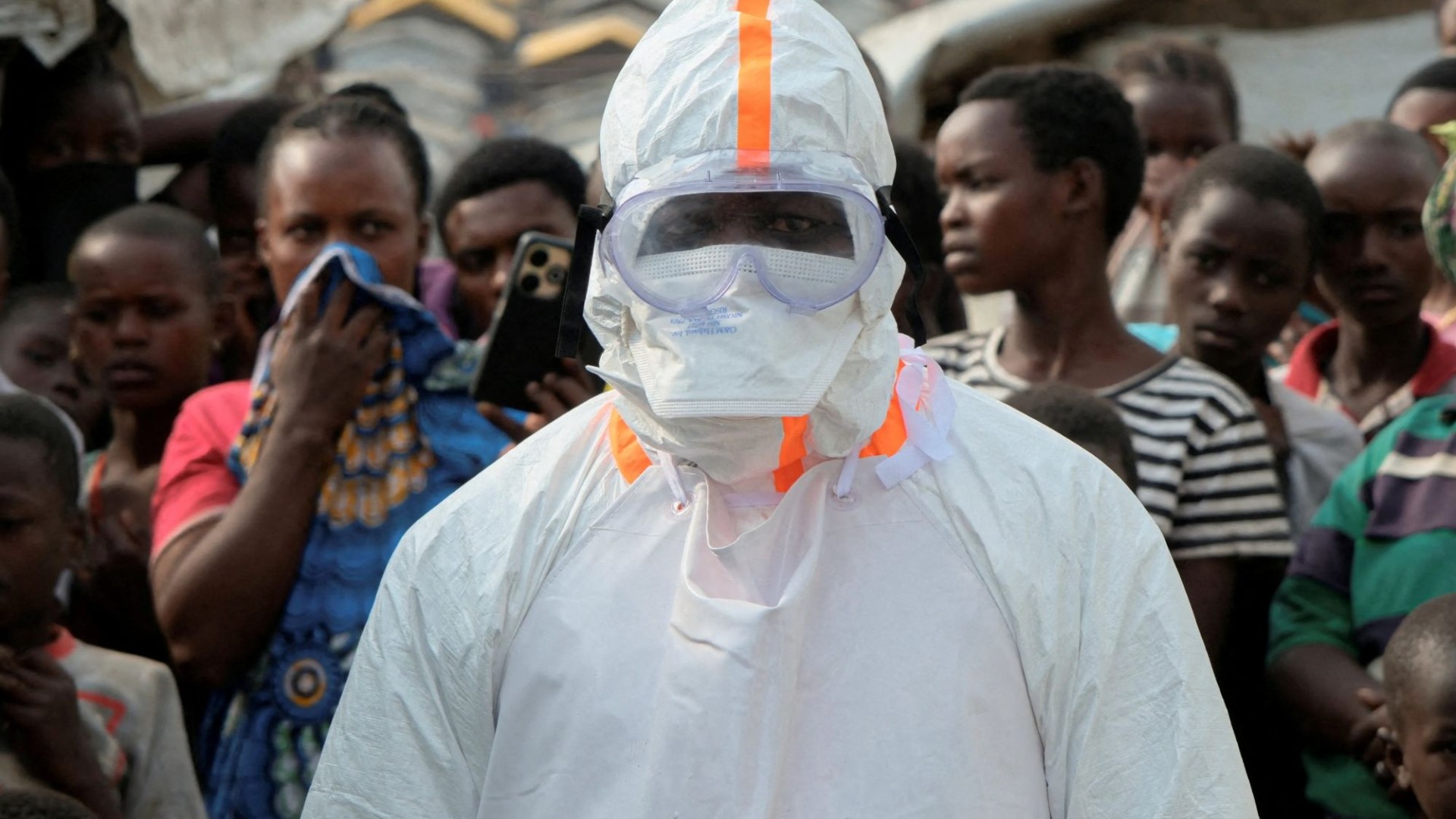
THE current Ebola outbreak is on track to surge past the deadliest of all time, the head of the World Health Organisation (WHO) has warned. Chilling projections suggest it could surpass the previous record outbreak from 2014 to 2016, which killed more than 11,000 people. The ongoing Ebola outbreak is on track to become the deadliest on record Credit: Reuters More than 2,000 people have died in the current outbreak Credit: AFP WHO chief Tedros Adhanom Ghebreyesus has said that “at its current pace, it’s on track to eclipse” that epidemic. This year’s outbreak, which was declared on May 15, has so far caused more than 2,000 deaths and seen at least 4,300 cases. Sign up for the Health newsletter Thank you! It has been described as the fastest-growing eruption of the disease on record. The outbreak in eastern Congo is unlike previous ones because the rare Bundibugyo virus responsible for it has no approved vaccines or treatments. Read more about the outbreak Red Cross workers disinfect Rwampara general hospital before handling the body of a person who died of Ebola Credit: Reuters A volunteer intercepts a passenger boat after a passenger who had disembarked earlier died after developing symptoms consistent with the disease Credit: Reuters Efforts to stop it have also been complicated because the outbreak took at least five months to be spotted, according to a report published in Science journal. Scientists interviewed 97 people, including doctors and community leaders, and learnt that the outbreak started in January or even earlier, on the outskirts of the mining town of Mongbwalu, in the Ituri Province. Tedros said: “The outbreak had a big head start, still way ahead of us, and we’re playing catch-up.” WHO Africa director Mohamed Janabi agreed that health officials are chasing the virus at a press conference in the city of Bunia, near the outbreak’s source. Most read in Health Red Cross workers wearing PPE prepare to lower the coffin of a doctor Credit: Reuters Health officers register information of passengers from an intercepted boat outside Kinshasa Credit: Alamy He said research showed it originated in February and was initially misdiagnosed as malaria or typhoid. Experts say the outbreak is now moving quicker than it can be tracked and managed as it is passing through a conflict zone in eastern Congo. Most new cases and deaths are being reported in communities outside the reach of health workers in a region of poor infrastructure and ill-equipped health centres. To add to the difficulties, some workers have gone on strike over lack of pay. Misinformation about the virus has also been rife and spreading through communities that are wary of outsiders. Dr. Abdirahman Mahamud, WHO’s director for health emergency alert and response operations, said the agency expects the peak of the outbreak to be reached in six months. He said: “But that’s the moderate scenario. There is a one-case scenario where this outbreak may last nine months to 12 months.” The current outbreak has killed more people faster than any other. Today, one person died in a province not previously affected by the ongoing outbreak, raising fears of wider transmission. The 2014-16 epidemic took about eight months to reach 1,000 deaths and ended with an estimated 28,000 cases. Ebola is a viral haemorrhagic fever named after a river in DRC, where it was discovered in 1976. Scientists believe Ebola originates in fruit bats, which can carry the virus without becoming seriously ill themselves. Humans are usually infected through contact with infected wild animals — including bats and monkeys — often during hunting, butchering or preparing bushmeat. The initial symptoms appear suddenly and are flu-like, such as a fever, headache and tiredness. As the disease progresses, vomiting and diarrhoea develop and the body’s organs do not work as well. Later, patients can experience failed liver and kidney function and internal bleeding. Meanwhile, health experts warned last month that Ebola could be spreading from dead bodies. The transport of Ebola victims’ bodies between different areas of the DRC for funerals or burial risks the virus spreading further, the International Organisation for Migration (IOM) said. The virus remains highly contagious after death, making funeral practice a critical component of outbreak control. Comment now
Ebola outbreak on track to be deadliest ever and ‘eclipse’ 2016 epidemic that killed at least 11,000, WHO chief warns
Full Article
Original Source
Read the full article at Thesun →KhanList aggregates and links to publicly available news content. We do not host full articles from third-party sources. Always verify important information with original sources.