
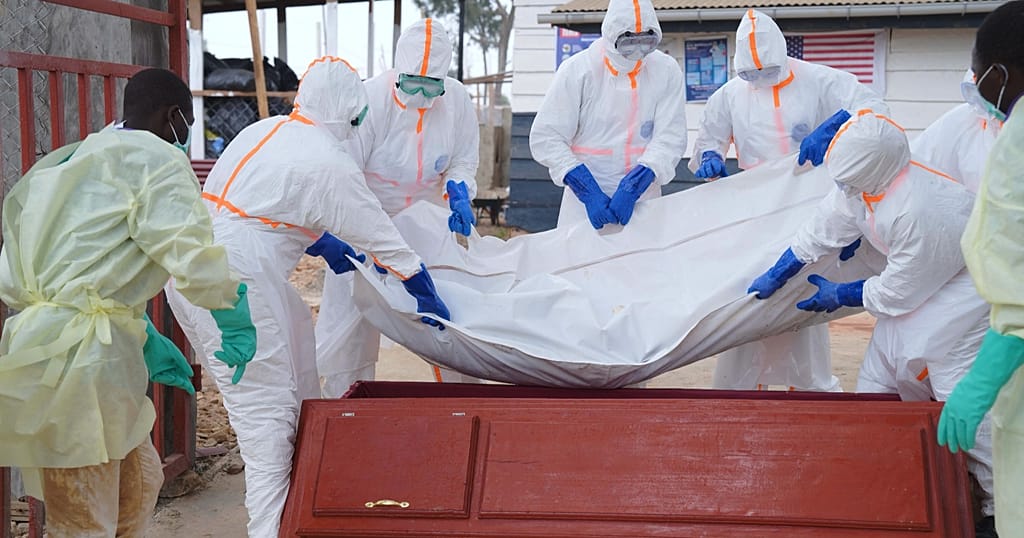
A dignified and safe burial team from the Ebola response effort is about to retrieve the body of a person who died of Ebola on November 17, in Kokola, near Beni, in the east of Democratic Republic of Congo (DRC). Among the team members is a woman, Chimène Mwanaki, who is fighting against prejudice against women in the fight against Ebola. “Some people tell us that we might even kill our husbands (through contamination) or that we’ll never find anyone willing to marry us, because they think we’re the ones spreading Ebola—even though that’s not the case,” said Mwanaki. Six months after an Ebola outbreak was declared in the DRC, the disease remains out of control and efforts to contain it are faltering. More than 11,000 cases have been recorded, and nearly half of those infected have died, according to government data. It is the deadliest the DRC's history and is on track to surpass the death toll from the West African outbreak that killed 11,000 people between 2014 and 2016. To break the chain of transmission, the Dignified and Safe Burial (DSB) programme has established community-based teams to handle deaths in areas where DSB teams are not present. These local teams are called ECUMAIR, or Community Teams for Dignified and Safe Burial. By the time the outbreak was announced in mid-May, 43 deaths had already been recorded, suggesting the virus had circulated undetected for an extended period. It has since spread to eight of the country’s 26 provinces, moving at a pace aid groups have likened to wildfire. New hotspots continue to emerge, stretching an already strained health care system. This week, Jean Manina, supervisor of the DSB teams in the Oicha health zone, visited the local team in Erengueti to check in and ensure that work is being carried out in accordance with burial protocols to prevent members of these local teams from becoming infected themselves when they remove their protective gear. “Every day, the first thing I do is check the dashboard. If we have an alert from a health zone where we have an ECUMAIR team, I have to go out there to see how they’re doing their work. Now, in areas where we don’t have ECUMAIR teams — that is, the rest of the Oicha health zone — it’s the mobile team based here in the area that is deployed,” said Jean Manina, supervisor for the DSB teams in the Oicha health zone. In addition to health risks and the lack of time to spend with their families, these burial teams are sometimes attacked by community members who falsely accuse them of mutilating the bodies of the deceased because they take samples to test whether Ebola was the cause of death. But often, members of these teams face prejudice even within their own neighbourhoods. “When we’re at home, our neighbours tell us: ‘You’re part of the response, so you’re making money. You’re making it easier for white people (Westerners) to kill our fellow citizens.’ And yet that’s not true—we’re fighting to break this chain (of Ebola transmission),” said Jean Manina, supervisor for the DSB teams in the Oicha health zone.
Ebola burial teams in DRC work through health risks and prejudice
Full Article
Original Source
Read the full article at Africanews →KhanList aggregates and links to publicly available news content. We do not host full articles from third-party sources. Always verify important information with original sources.