
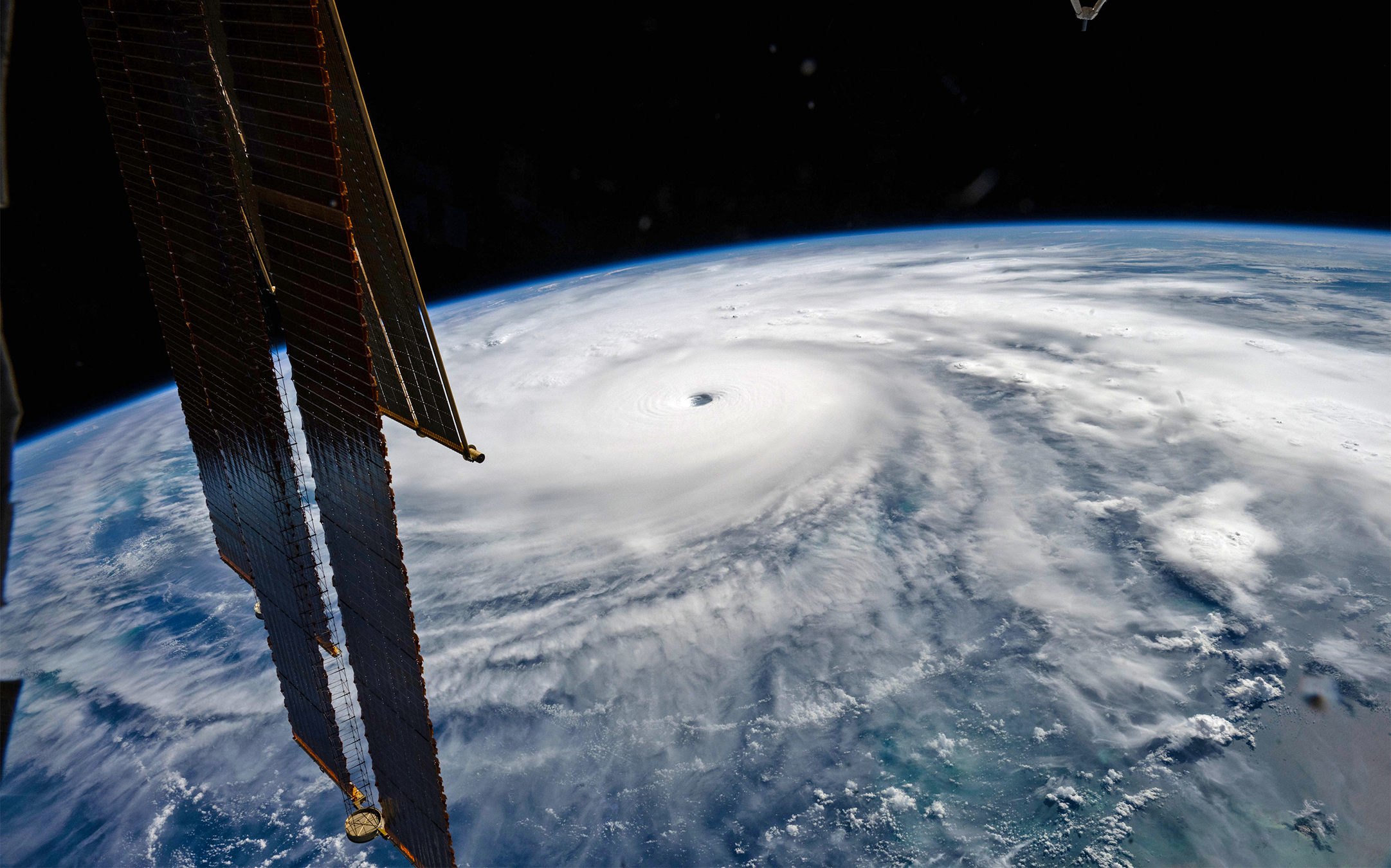
planetary boundaries — vital for preserving the safe operating space for humanity — are transgressed and heading further into the danger zone.Mounting pressures on land carbon sinks, the seafloor, and escalating releases of novel entities (various forms of synthetic pollution) risk increased destabilization of Earth’s life support systems.Large-scale and urgent action is needed to return as swiftly as possible to the safe zone, scientists say. Human activities continue eroding the planet’s stability, resilience and life-support functions, the third edition of the Planetary Health Check released in September warns. The “scary” part of the 2026 report, says lead co-author Levke Caesar, is that the trends are largely going in the wrong direction. “We still have seven out of the nine planetary boundaries are transgressed, and actually for those seven, the pressure is increasing,” she told Mongabay in an interview. The report is co-published by the Planetary Boundaries Science Lab at the Potsdam Institute for Climate Impact Research (PIK) and Planetary Guardians, an NGO. Last year, ocean acidification became the seventh planetary boundary to pass its safe limit, alongside the already transgressed climate change, biosphere integrity, novel entities, freshwater, land use change, and biogeochemical flows (nitrogen and phosphorous pollution) boundaries. All seven continue heading further into the danger zone based on recent data featured in the report. Meanwhile, the stratospheric ozone depletion boundary remains stable, though the new report underlines that the recovery of the atmospheric ozone layer appears to have plateaued. Atmospheric aerosol loading risk — due to emissions of a wide range of polluting particulates — is declining globally, but regionally South Asia remains beyond safe limits and that trend is worsening. Seven of the nine planetary boundaries have now been breached, threatening the safe operating space for humanity, according to scientists. Image courtesy of Planetary Health Check 2026. The “solemn, silent message” of the 2026 report is that the global situation is still far from improving, Caesar said. In addition to updates for the nine planetary boundaries, the document raises alarm about the declining resilience of Earth’s land carbon sinks, threats to seafloor integrity, and rampant production of novel entities (synthetics ranging from plastic waste to nuclear bomb material). “This year’s Planetary Health Check also draws attention to emerging risks whose full consequences remain uncertain. Human activities are now reaching parts of the Earth system once thought insulated from global environmental change, including the seafloor, where disturbance affects biodiversity, nutrient cycling, and carbon storage in ways we are only beginning to understand,” Carlos Nobre wrote in the report’s foreword; he is a Planetary Guardian Earth System scientist and co-chair of the Science Panel for the Amazon. Land burned to make way for cattle grazing in Brazil’s Acre state. The Planetary Health Check warns that land carbon sink capacity may be overestimated, reducing the available remaining carbon budget. Image by Victor Moriyama/Climate Visuals (CC BY-NC-ND 4.0). Protecting land and sea The last year offered up mounting evidence of destabilized planetary systems, ranging from mass coral bleaching to one of the strongest Atlantic hurricanes on record. In the first half of 2026 alone, unprecedented heat waves swept North America, Europe, Asia and Africa, while fierce wildfires burned across Canada, France, Spain, Greece, Indonesia and the United States. The catastrophic Nepal flash flood in August had a clear climate change fingerprint, as do India’s monsoons — the weakest in nearly two decades. All this and more is increasingly undermining Earth’s resilience, the report states, underlining the urgent need to protect and restore vital ecosystems. “So, the message [of] this year’s health check is that unfortunately we’ve not turned things around yet,” co-author of the report Johan Rockström, PIK Director, said at the launch of the Planetary Health Check. “We’re still moving ourselves in a very dangerous direction.” One critical warning sign: Indications that the resilience of Earth’s land carbon sink is weakening, the authors warn. A study earlier this year noted that the Amazon rainforest, for example, is nearing a critical tipping point, with deforestation, drought and wildfires hastening its transition to becoming a source of carbon, rather than a sink. “We’re seeing a stagnation in the land carbon sink in the last decades,” lead author of the report Boris Sakschewski, a PIK scientist, told Mongabay in an interview. “That is most likely due to climate change and local biosphere integratory loss due to biodiversity loss, and all the pressures that we are exerting on the vegetation.” Whether carbon sink threats will worsen remains unclear, but their stagnation is cause for concern, the report says. Banking on CO2 “fertilization” to enable growth of the land carbon sink is a key part of Net Zero goals. But if sinks weaken, that shrinks the available carbon budget. “We have this assumption that if we continue to put CO2 into the atmosphere, then the land carbon sink is going to increase because we’ve got this fertilization impact,” Caesar explained. That fertilization effect occurs as higher concentrations of CO2 spur photosynthesis, encouraging plant growth. But, she warns, “that’s not necessarily true.” With climate-driven extremes — such as drought and wildfires — becoming more frequent and strengthening, combined with human pressures, the impact on land carbon sinks will increase. “We will lose more carbon into the atmosphere, which means a less strong land carbon sink,” Sakschewski said. The seafloor requires greater protection from trawling and mining activities. Disrupting ecosystems not only harms biodiversity but can have cascading impacts on carbon stores and nutrient flows. Image by Ocean Network Canada via Flickr (CC BY-NC-SA 2.0). Protecting and maintaining healthy ecosystems is vital to enhancing resilience, slowing climate change and maintaining Earth’s stability. Similarly, the authors emphasized the need to increase seafloor protections. Though out of sight and regularly out of mind, the world’s vast seafloor is home to rich ecosystems, untold biodiversity, and is a key long-term carbon store. Trawling — which disturbs an estimated 1-2% of the seafloor each year — is particularly problematic. Estimates show trawling could release as much as 160-400 million tonnes of carbon annually. The advent of seafloor mining could add yet more disturbances. That, the authors say, could damage marine biodiversity, the carbon cycle and nutrient flows in the oceans. Processes which could take centuries to recover. “In other words, damage to the seafloor may not always remain veiled as the seafloor itself, but propagate through the Earth system,” the authors write. Maintaining seafloor stability, the report states, will require international cooperation, effective management of marine protected areas, and a precautionary principle approach to emerging activities such as deep-sea mining. An ocean beach cluttered with plastic debris. Approximately 350,000 synthetic chemicals and compounds have entered Earth’s environment, representing a tidal wave of industrial innovation that has made life easier for humanity, but the harms of which have been poorly researched. Image by Dustin Woodhouse via Unsplash. ‘Flying blind’ on novel entities Production and release of vast amounts of novel entities continues to erode ecosystem health and resilience, the report warns. Each year an estimated 2,000 new entities are added to an already expansive list of around 350,000 synthetic chemicals and compounds entering the environment. Though plastic is the best-known and perhaps most notorious face of this pollution, novel entities include myriad chemicals and compounds used in industry and manufacturing, and in pesticides and pharmaceuticals. Many have impacts across their entire life cycle, can disrupt other planetary boundaries, and pose severe human health risks. Little is known about interactions between this multitude of pollutants and their compounding impacts. Chemical pollution is implicated in biodiversity declines, for example, and identified as one of five major drivers of extinction. “Our capacity and ability to invent and produce new novel entities, new chemicals, and so on, has hugely outgrown our capacity to actually understand and test [the safety of] those novel entities,” Caesar said. “The main concern is that we are flying blind.” Part of the solution: Reducing overconsumption and continuing global efforts to restrict and eliminate the most harmful pollutants. “We definitely have to be stricter, and companies should really show that whatever they produce and start putting into their products is really not harmful to the environment,” Sakschewski said. “There’s a very fundamental problem when it comes to the release of new substances, and there needs to be a complete reform of how we are handling them.” A father and son stand together in front of the ruins of their family home following Hurricane Melissa, a category 5 hurricane, in Jamaica, October 2025. The storm impacted 1.5 million people and resulted in $8.8 billion in physical damage to infrastructure. Image by World Central Kitchen via Flickr (CC BY 4.0). Returning to the safe space The 2026 Planetary Health Check comes on the heels of the September U.N. Environmental Programme’s “Limiting Overshoot” report that confirmed the 1.5° Celsius (2.7° Fahrenheit) Paris Agreement limit will be breached in the next few years. Experts agree that all efforts must now focus on returning below the transgressed planetary boundaries as quickly as possible. “We do not have the luxury of time, but we do have the knowledge, capacity and solutions to change course,” Rockström said in a statement. “Accelerating action to return to the safe operating space across all Planetary Boundaries is essential to protect lives and livelihoods, and to deliver on the promise of shared future prosperity.” The authors emphasize the pressing need to trigger positive tipping points in society by hastening decarbonization efforts and the embrace of renewable energy. But, the focus of such endeavors must not only revolve around curbing climate change, but take into account the interconnections between all nine planetary boundaries. Efforts are ongoing to identify “low-hanging fruit” that can provide benefits across multiple planetary boundaries, Sakschewski said. Nature conservation is one example, as it can support other boundaries including climate and freshwater. “In general, it is a good idea to be focusing on the interconnections of planetary boundaries if we want to find solutions on how to come back [to the safe operating space for humanity],” he said. “What’s important to note is that a lot of that [action] has to be systemic change,” Caesar said. “That means going along that path of trying to reduce the use of resources, use them more wisely, more efficiently, and reducing the amount of waste put into the Earth system.” Banner image: Hurricane Melissa as seen from the International Space Station. One of the most powerful landfalling hurricanes ever recorded, researchers found climate change increased its maximum wind speed by around 7%. The impacts of breaching planetary systems are increasingly becoming evident, the new report warns. Image by NASA Johnson via Flickr (CC BY-NC-ND 4.0). World must look to the past to prepare for likely unprecedented El Niño Citations: Caesar, L., Sakschewski, B., Andersen, L. S., et al. (2026). Planetary health check 2026: A scientific assessment of the state of the planet. Potsdam Institute for Climate Impact Research. doi:10.48485/pik.2026.25 Mahara, S., Ebi, K. L., … Vogel, C. (2026). Adapting to overshoot realities in the context of development [chapter 4]. Limiting overshoot: navigating exceedance of 1.5° C and pathways towards return, 65-87. doi:10.59117/20.500.11822/49857 Rockström, J., Steffen, W., Noone, K., Persson, Å., Chapin III, F. S., Lambin, E. F., … Foley, J. A. (2009). A safe operating space for humanity. nature, 461(7263), 472-475. doi: 10.1038/461472a FEEDBACK: Use this form to send a message to the author of this post. If you want to post a public comment, you can do that at the bottom of the page. Cite this articleSean Mowbray (2026). Earth life support systems are flashing red, warns 2026 Planetary Health Check. Mongabay Conservation news. DOI: https://doi.org/10.66709/news-330685 Credits Topics
Earth life support systems are flashing red, warns 2026 Planetary Health Check
Full Article
Original Source
Read the full article at News →KhanList aggregates and links to publicly available news content. We do not host full articles from third-party sources. Always verify important information with original sources.