
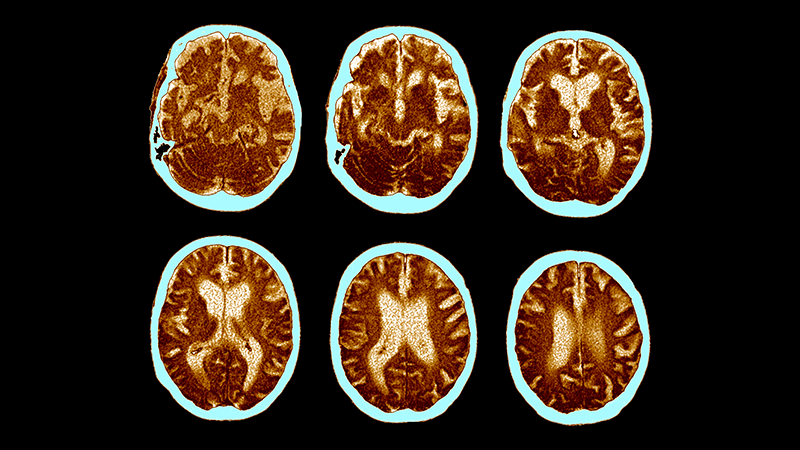
Women who reach menopause around age 47 — 5 years earlier than the average age of onset — may experience accelerated cognitive decline, earlier onset of Alzheimer’s disease, and faster brain aging, a new study in JAMA Network Open suggested.The associations between cognitive changes and earlier onset of the biological stage are consistent with previous research. But the new study adds data from longitudinal MRI, showing that timing was associated with brain changes decades later, said Riley Bove, MD, professor of neurology at the University of California, San Francisco, who worked on the study.“What’s new about the study is that you really see the lasting trace,” Bove said.Bove and colleagues followed 2603 older women for up to 18 years after the onset of menopause. For every year earlier that menopause occurred, a small but statistically significant increase in the rate of global cognitive decline and episodic memory decline was observed.Bove and colleagues analyzed two long-term datasets tracking aging and brain health in older nuns and residents in retirement communities. Participants underwent annual cognitive testing and clinical evaluations and donated their brains at death for autopsy. Over one quarter also underwent MRI scans every 2 years. They filled out questionnaires on age at menarche and menopause (natural or caused by surgery) and use of hormone therapy.The women had a mean age of 78.3 years when they entered the cognitive analysis. The median age of the start of menopause was 50 years among women with spontaneous menopause (67.3%) and 43 years among those with surgical menopause, which involves a sudden loss of hormones (P < .001).In the MRI analysis, researchers found that women who went through menopause at age 47 showed a faster rate of accumulation of white matter hyperintensities — areas of brain changes that can reflect small vessel disease and other brain injury — than did women who went through menopause at around age 52. The association remained significant after accounting for the many statistical tests Bove and colleagues ran (false discovery rate [FDR]-corrected P < .001).Among those who underwent MRI scans, earlier menopause was also associated with faster accumulation of white matter hyperintensities among those with spontaneous menopause (P < .001) than among those with surgical menopause.Bove and her colleagues estimated that a woman whose menopause occurred at age 47 would accumulate about 15% more white matter hyperintensity volume over a decade than women who went through menopause at the average age of 52, assuming the observed difference in accumulation rate remained constant.They also found that for each 1-year decrease in age at menopause, the estimated time to Alzheimer’s disease diagnosis was multiplied by 0.998 (P = .02). However, the results showed no significant association between menopause timing and Alzheimer’s disease pathology measured at autopsy (odds ratio, 0.99; 95% CI, 0.97-1.00; P = .14; FDR-corrected P = .15).Bove said women should not interpret earlier menopause as a predictor of dementia. Earlier reproductive aging and brain aging may be linked signs of a broader biological process — they could not establish causation between menopause and later cognitive issues, Bove said.The findings reinforce the importance of addressing cardiovascular and metabolic risk factors during midlife, said Monica Christmas, MD, associate medical director of the Menopause Society and director of the Menopause Program and Center for Women’s Integrated Health at the University of Chicago in Chicago, who was not involved in the study.“It’s a critical timeframe in a woman’s life to be able to address and educate on modifiable risk factors,” which include controlling hypertension and diabetes and counseling on alcohol, smoking, exercise, and a heart-healthy diet, Christmas said. “Anti-inflammatory foods also are good for brain health, too.”Clinicians may overlook risk in younger women who appear healthy but enter menopause early. Clinicians should check blood pressure and cholesterol levels, as well as provide counseling on the same lifestyle factors.“I don’t want women to come away with thinking, ‘Oh my God, now I’m terrified of my menopause,’” she said. “Many women have gone through menopause and not developed dementia.”The findings also raise questions about menopausal hormone therapy, which did not significantly modify the association between menopause timing and brain volume trajectories.Christmas said evidence that hormone therapy prevents cognitive decline or dementia remains inconclusive.“At best we can just say it’s equivocal,” she said. “I can’t tell you that it’s helping.”For women who experience premature menopause before age 40 and potentially early menopause before age 45, Christmas said evidence supports hormone therapy until the typical age of natural menopause.Future research should determine whether interventions can actually slow or prevent the brain changes associated with earlier menopause, she said.“We actually don’t know why the white matter density changes occur or what is the mechanism underlying that really is the cause,” Christmas said. “And, other than the modifiable risk factors that we all know about and those have shown to have some benefit, is there something else to slow those changes down?”Bove and Christmas disclosed no relevant conflicts of interest.Lara Salahi is a health journalist based in Boston.
Early Menopause Leaves Lasting Trace on Brain
Full Article
Original Source
Read the full article at Medscape →KhanList aggregates and links to publicly available news content. We do not host full articles from third-party sources. Always verify important information with original sources.