
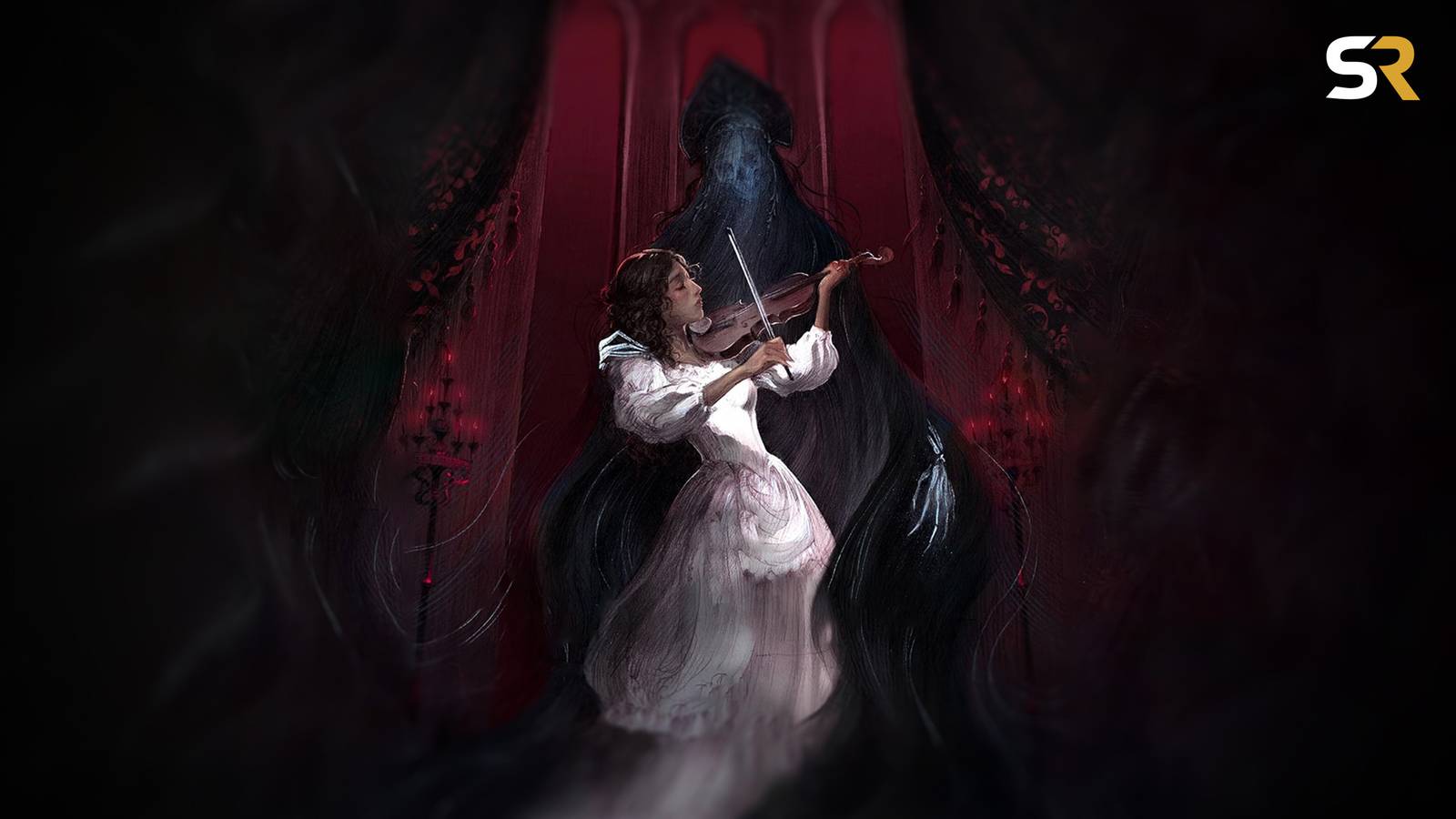
What if The Phantom of the Opera wasn't a guy in a mask, but an actual phantom, even Lady Death herself? An upcoming sapphic dark fantasy puts this haunting twist on the beloved musical, pulling inspiration from Slavic and Polish folklore. The Haunting of Lady Death stars musician Kasia, a violinist who's determined to become the concertmaster of the Nectar Performance House. In fact, she's worked toward that goal for years, and when the current concertmaster dies, she thinks she's finally found her chance. But to her surprise, she's denied the audition thanks to her heritage. This leads Kasia to strike a deal with the theater's resident specter, who just so happens to be Death herself. Lady Death is happy to help, so long as Kasia promises to stay by her side. Soon, Kasia will begin to wonder whether the bargain is really worth the cost. This thrilling new dark fantasy book from bestselling author Maddie Martinez will release on February 9, 2027. But ScreenRant has an exclusive excerpt from the story, so you can get an early look at the haunting story of music, performance, and obsession right now. You can pre-order The Haunting of Lady Death here. An Exclusive Early Look at a Chapter from The Haunting of Lady Death Nectar was no ordinary theater, and it offered no ordinary performance. The Larzeg Symphony Orchestra was as beautiful to the eye as to the ear. The performers did not sit around the conductor. Instead, they moved around the stage as actors would, their bodies and their instruments characters of their own. Of course, other theaters-desperate to compete with Nectar's success- tried this imaginative format, but they could not conjure the same indescribable feelings that accompanied the performances within Nectar's walls. This innovation in style had allowed Nectar to rise in status, buoyed by Larzeg's thriving industry. It was that same economic wave that had cleared the way for Kasia to ride in on its coattails. Nectar was hungry for new talent to join their company. For once, it did not matter that her father had been an Azjarian immigrant, or that both her parents were Ludi. It only mattered that she could make a violin sing. Or so she had assumed. She had been barely twenty when she joined the company. Young and naive. Still unsettled from the strange occurrence in the women's dressing room, Kasia made her way backstage, desperate to shake the sensation of icy fingers on the back of her neck. The wings of the theater unfurled before her, velvet curtains sweeping the boards as the lights pooled backstage in sharp angles. She could already hear the low murmuring of the audience, and it stirred excitement in her belly. Her brow furrowed, though, when she noticed several of the ensemble members huddled together, speaking in hushed tones. Violin tucked safely under her arm, Kasia headed toward them. "What's happening—” she began, but cut herself short. Through the gap in the bodies, Kasia caught a glimpse of the famed Perła, Agnieszka Piotrowska, sitting on a stool. Her pallor was sickly, Kasia could tell even through the greasepaint. Beads of sweat gathered on her forehead, smearing the pressed powder. Margie was fanning her with a book. Mieszko, the Szafir, was crouched beside Agnieszka, his hands on her knees. Though he had not yet donned his costume fully, he wore his silver tights and a thin white shirt, contrasted by dark leather suspenders across his back. He had rolled his sleeves up to his forearms. "Is she feeling unwell?" Kasia asked, but no one acknowledged her. She balanced on her toes to see Agnieszka through the crowd. "Could it have been something she ate?" asked Margie. "Possible," Mieszko considered. "Could also be a sickness of some sort. It is the season for it." In the circle, he glanced toward Dmitriy, the first cellist and Mieszko's understudy. "Would you grab a bucket?" Agnieszka waved a dismissive hand. “I'm fine, no need to bother," she responded, but her speech was slurred, and her eyes drooped as she keeledover. Mieszko signaled to Dmitriy, who backed away from the group and went on his mission. Kasia slipped into the gap he left behind. Mieszko stood, and all eyes found him. Traced him, the way they would his performance as he walked across a stage, the fire of the footlights tracking him through shadow. He commanded an audience like no one else. It was disarming, it was enchanting. She remembered when she had first learned of Mieszko. She had beenonly a child when murmurings around Larzeg told of a new star cellist coming to Nectar. Theaters all over the continent had attempted to seduce him into joining their symphonies, talented as he was, but Nectar had won him over with the promise of the role of Szafir, a new leading position created just for him. He would join the Perła as the face of Nectar Performance House, the co-star of every production. Two gems set into the priceless crown of the theater. Mieszko was tall, pale, and beautiful. Strong, with long fingers that caressed his instrument with ease. Kasia had been at once envious and entranced. The beauty of him seemed more suited for a performance where an instrument did not upstage him, like ballet or opera. Yet here he had dedicated himself to the strings and body of his cello. "All will be well," he said to the uneasy group of musicians surrounding him. "Carry on as normal." Reluctantly, they disbanded. Kasia shook off her concern. She would be no good for the symphony if she was distracted. If Mieszko was not distressed, she would not be either. By the time she crossed the stage, all was silent. Her next ritual: the tapping of her leather shoes across the wooden floor, the warmth of the lights as they doused her skin in gold, her father's violin humming in her grasp as if it, too, could feel the anticipatory silence of the crowd in the moments before thunderous applause. The first movement of Kazuch's Sixth Symphony was titled "The Ludi in the Bramble"; through music, it retold the Plimish folktale of the same name. A wily young man, played by Mieszko, ventured into the woods, where he met a witch, played by Agnieszka. Enchanted by the Wily Man's beauty and charisma, the Witch offered him a wish, for which the Wily Man thought carefully. He decided: a cello that, when used to play any melody, forces those who hear it to dance. While on his way home, the Wily Man encountered a Ludi boy, played by the violist Leon, who asked him for directions. The Wily Man assisted him, only to realize later that his bag of coins had gone missing. He caught up with the Ludi Boy and demanded his money back. When the Ludi Boy feigned ignorance, the Wily Man pulled out his cello and played, forcing the Ludi Boy to dance in a thicket of thorns until the stolen coins fell from his pockets. A moral lesson never to steal, and never to trust a Ludi when itcame to coin. She took her seat with the rest of the thorny bramble, where soon the Ludi Boy would dance. The crowd would laugh at the Ludi Boy, unable to cease his dancing as red ribbons dripped from his costume to emulate blood from the slicing of the thorns. The audience always laughed. It was a folktale that had long angered Kasia, how it portrayed the Ludi people. But it was little grief in the face of what playing Kazuch's Sixth Symphony offered: her, on this stage, where she promised her father she would be. The conductor-Florian-emerged from the wings. He held his baton delicately in his hands, as if it were glass. Perhaps it was. Lord Tadeusz would spare no expense in the name of opulence. After all, the more lavish the shows, the more prestige they garnered. And this season would be the most prestigious yet. Florian was speaking, but Kasia wasn't listening. Mieszko had returned and settled his cello between his legs, pressing on the strings in succession to make sure they were in tune. Once satisfied with his instrument, Mieszko leaned it against his chest, the brown neck of the cello falling against his own pale neck, their contours meant for each other. A harmonious fit, her father would say. It was the same thing he had said to her when she first held his own instrument up to her chin. He was wrong, of course. As a child, Kasia was too small for the instrument, the neck too far for her little arms to reach, fingers too stubby to stretch across the octaves. If she had been Agnieszka, she would have used a children's violin on which she could learn properly until her body demanded a full-sized one. The tapping of Florian's wand on his podium dragged Kasia back to the stage. She had unconsciously pressed her bow so hard into her thigh the blood pooled warm beneath her skin. She squinted to see if Agnieszka was waiting in the wings for her star turn, in which the applause was so expected it was marked into their sheet music. But the light from the vast array of candles onstage dimmed anything in the curtain's shadow too much to see. It did not matter. As the curtains rose, the audience gasped as they glimpsed the stunning hand-painted set pieces for the first time, glittering in shades of green and blue. The forest and the sky. But the set was not the only feast for the eyes— the performers, too, dressed in colorful and glittering costumes, drew a chorus of awe. Florian raised his hands, the air soundless save for the rise of the instruments to their positions. The anticipation grew taut as the audience leaned forward in their seats. Florian's hands drummed downward, and the music began. Mieszko's solo stunned the audience, as was expected. They traced every movement of Mieszko's fingers up and down the fingerboard with a lustful fervor, his every note moody and played with perfect intonation. Sweat already gleamed on his forehead, yet it suited him well, glimmering like the beads that decorated the crown around his head. He was a supplicant to the body of wood between his thighs, resonant like choir song, chanting a prayer for the divine alone. He was beautiful, a star, the protagonist of a story that left everyone breathless: the audience, the stagehands, the rest of the symphony orchestra. Kasia was not exempt. She would do anything for him when he played— be anyone he wished her to be. But he did not want her, did not know her. She was a bramble, entangled with the rest. But Agnieszka had always caught his eye. Even when he was lost to his music, he would stare when Agnieszka played her first notes; track her movements as she raised her violin to her shoulder, ran her fingers along its neck until it found its resting place in the crest between her thumb and forefinger. That was the allure of the Perła. Now, as he finished his solo, all awaited the Perła's entrance-the arrival of the Witch who would offer the Wily Man a wish. Florian held his baton high in the air, waiting for her entrance. One breath. Another. Only as beads of sweat formed on Florian's forehead did Agnieszka reveal herself from the wings. She held her instrument in the crook of her elbow, her bow hooked on her finger. She did not rush onto the stage; instead, she took slow, confident steps toward her seat near Mieszko. It was no use playing music to complement her entrance-the crowd's roar did more than enough to fill the theater with sound. Yet when Agnieszka's bow touched string, the crowd silenced. Chairs creaked as the rest of the symphony orchestra came in to accompany her as her instrumentation began, as Mieszko's character enchanted her enough to offer him the wish. From Kasia's spot in the bramble, she could see the slight shake of Agnieszka's hands, but her musicality did not suffer from whatever sickness ailed her. Her notes were buttery, inviting, the story unfolding in a smooth legato. When Agnieszka began her next passage, her fingers slipped out of tune, the flat notes clashing with the rest of the orchestra. So shocking was it to hear a slip this impressive, several more eyes from the ensemble darted to Agnieszka. But Agnieszka did not carry on-she was frozen, violin tucked under her jaw, bow resting on the strings. Florian grew an undesirable shade of pink as he continued to conduct the rest of the orchestra. Agnieszka swayed. Her instrument slipped from her hand, clattering to the floor. Mieszko reached out, but he was not fast enough to catch her. She thumped onto the stage, curling into herself like a wood louse. The ensemble ceased their playing as their eyes darted to Agnieszka in alarm. Agnieszka was shaking, her movements jerky and unnatural as her limbs rattled against the floor with enough force to bruise. Mieszko was in front of her, turning her on her side. But it was too late—she had stilled, blood dripping from her nose and onto the polished floor. The crowd was silent. Then thundering chaos overtook the theater. Kasia could see Agnieszka and then she could not. The Perła was swarmed by people, members of the orchestra and stagehands running to her aid. There were worried whispers from the crowd, unsure if this was part of the performance and unwilling to look away. Kasia shot up from her seat. Someone bumped her, and she bumped into someone else, before a quick release of the counterweight draped the curtain around them, extinguish- ing several of the candles in its haste. Kasia clutched her father's violin tight to her chest as she was ushered from the stage with the rest of the ensemble. She stared over her shoulder, her last image of the stage the in-house physician bending over Agnieszka, and the fountain of blood and spittle that poured from the Perła's mouth in a foamy pink. An hour passed. Kasia tapped her fingers against the top rail of her chair as she leaned against its back. The rehearsal room had never been this unnervingly silent. Florian had ordered the orchestra to wait for further instruction. Nectarhad protocols for fire evacuations and malfunctioning pulleys, but the Perła collapsing on the stage floor during a performance did not appear to be a situation they had ever considered. The forty-eight other orchestra members in the room looked as fraught as Kasia felt―disheveled hair caused by anxious hands, smeared face paint from tears or sweat or both. Many of the men had discarded their short jackets, including Mieszko, who was bent at the knee consoling the violist Harriet, one of Agnieszka's closer friends—as close as one could get to the Perła. Kasia stared at Mieszko, studied his stoic posture. So calm, so level. Yet even he could not hide the tensing of his brow and chewed-up lip. It was a thinly veiled rumor that he and Agnieszka were lovers—one that Kasia preferred to ignore. The door of the rehearsal room swung open, the theater manager Marcyn's appearance causing several of the performers to jump to their feet. Kasia leaned forward, fists gripping tight around the chair. "What news do you bring, Marcyn?” Mieszko asked. Marcyn took his doily from his breast pocket and blotted his forehead. "Not good news, I'm afraid. The Perła is dead." Upon the utterance of this news, the room broke out into cries and shouts. But the ringing in Kasia's ears drowned out any other voice. Agnieszka was dead. Hours ago, Kasia had stared at her name on the advertisement with a jealous hunger, tracing each letter with her eager gaze. The Perła was dead. The role was open. And at the start of this season, too. The first Industrial Exhibition held in the Plimish territories would happen in the spring here in Larzeg, and in addition to the Larzeg Symphony Orchestra giving the Exhibition's opening performance, the Perła and her Szafir were set to play larger roles in its unveiling. Kasia admonished herself with a shake of her head. She imagined what her father would say if he could hear her thoughts now. But all she did was in service to her father; Perła had been their shared dream, one Kasia was determined to make real. "This is a great and untimely loss," Marcyn continued. “Lord Tadeusz and I will discuss how we shall move forward. But rest assured, Nectar isresilient." "How did she die, Lord Marcyn? Please, tell us!" Harriet begged. Her eyes were rimmed with red. "She gave no signs of illness or distress until today," Sylvia added. “Surely it wasn't natural?" "What if it was the Nectar Ghost?" Kasia grew queasy—the memory of the chilled touch on her neck and the flicker of the shadow in the broken mirror prickled gooseflesh across her skin. "It did look as if Agnieszka could have been possessed!" "Yes! The way her limbs moved, it was not natural!" The volume of the room reached another crescendo, one that was much harder for Marcyn to quell. Only when Mieszko banged his fist on the table dideveryone settle. "No more talk of this imaginary ghost, please,” said Marcyn. "The last thing we need is another topic for the rumor mill. We still do not know what happened. Go home, get some rest. Tomorrow, we will reconvene and the position of Perła will be discussed—but, uh, be ready to audition if you would like. We must not let this horrible tragedy thwart this important season." Kasia swiped her tongue along her bottom lip, her heart a voracious drum in her chest. This was her chance, and it very well might be her only one. Used with permission from Tor Books, an imprint of Tor Publishing Group; a trade division of Macmillan Publishers. Copyright (c) Maddie Martinez, 2027.
Early Look At Dark Fantasy Twist On Phantom Of The Opera Ahead Of February Release
Full Article
Original Source
Read the full article at Screenrant →KhanList aggregates and links to publicly available news content. We do not host full articles from third-party sources. Always verify important information with original sources.