
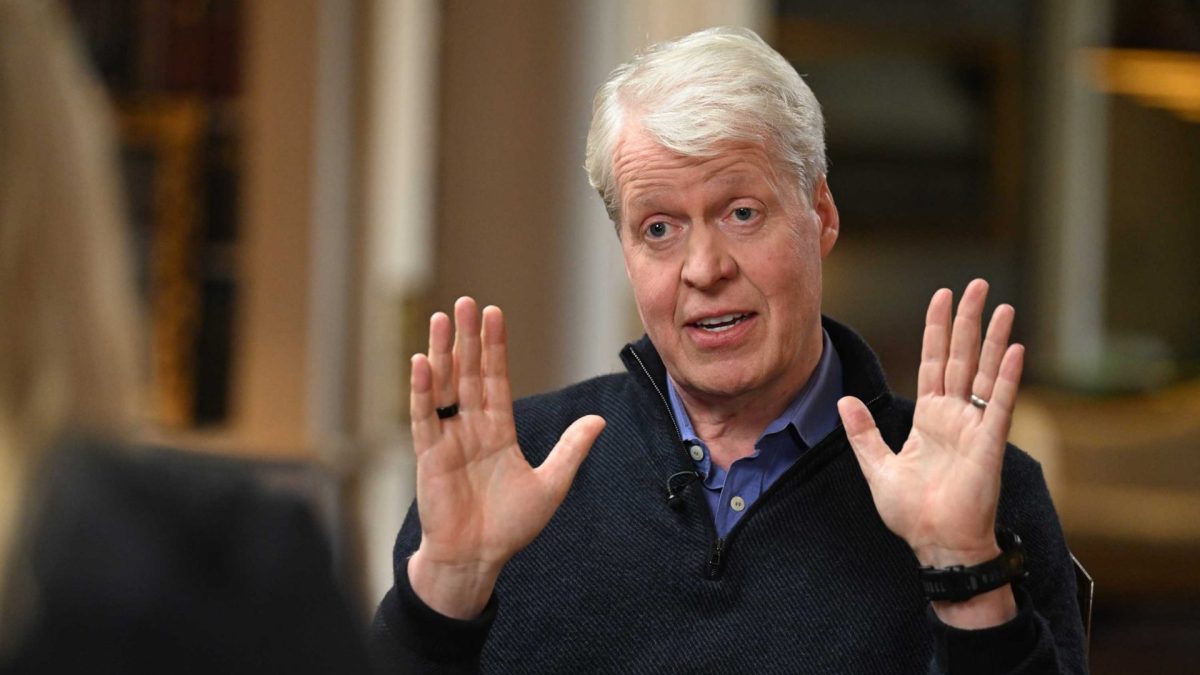
This is not to suggest that the altercation between Piers Morgan and Earl Spencer is Shakespearean in its resonance. However, at the end of a week in which the public discourse has been dominated by two notoriously unsympathetic, self-regarding figures, it is tempting to conclude: a plague on both your houses. Morgan is suing Earl Spencer for defamation over a claim in Earl Spencer’s new book about his sister, Diana, Princess of Wales, that Morgan was editor of The Daily Mirror in 1993 when the paper published pictures taken by a hidden camera of Diana, in a leotard, exercising in a West London gym. It was an egregious infringement of her privacy that cost the publishers of The Daily Mirror more than £1 million in reparations. The problem with this assertion, however, is that Morgan didn’t become editor of The Daily Mirror until 1995, so this is one excess of tabloid journalism of which he incontrovertibly doesn’t have ownership. So why shouldn’t Morgan – a world-class self-publicist – make a big old fuss, parading his outrage on every media outlet, every digital platform, podcast and YouTube channel known to man? And why should Earl Spencer, who, in his interviews, reminds us he is a historian with nine books in his canon, get away with such a sloppy piece of writing? It was, he wants us to believe, one “small error” in 384 pages of otherwise faultless recollections of Diana. And that he made this “assumption” because it explained why Morgan was “surly and annoyed” when told he was uninvited to Diana’s funeral in 1997. But, inevitably, it leads us to wonder how many other “small errors” there are in the book. And what does this sorry episode say about the state of our publishing industry? Has Earl Spencer’s book been fact-checked at all? One quick Google by a copy editor would have established that Morgan was not the editor of The Daily Mirror in 1993 and prevented this embarrassing, and extremely costly, mistake. Penguin has such a lot resting on the success of this book that you think it could have spent some of its marketing budget on ensuring their author was saved from himself. Earl Spencer insists that he “stands by” everything else in the book, including the explosive claims that the now King Charles “sounded giddily elated” in the aftermath of Diana’s death, and that he told Earl Spencer we would forget her “soon enough”, but can we trust an author who presents “assumptions” as facts? Most pertinently, his book, Swan Song: Diana, My Sister, recalls a time when the relationship between the Royal Family and the British public was historically unsettled, and the depiction of Charles as cold and uncaring in the light of her death is highly damaging. It led to Buckingham Palace issuing an unprecedented statement, which, while acknowledging that it did not “comment on books as a matter of principle”, wanted to say that “fraternal grief can cloud reason, affect judgment and colour memory in ways others do not recognise”. The spat between Morgan and Earl Spencer has, of course, diverted attention from the enmity between the Spencers and the Windsors, a blood feud of much more substance and significance. And how the Royal Family must be pleased that Morgan has become a proxy for their own battles. He has got into the ring and traded blows with Earl Spencer, allowing the King to maintain a lofty distance. The Palace statement is perfectly judged to pour cold water on Earl Spencer’s claims without having to go to the trouble of disproving them. In any case, the recollection of a private conversation from three decades ago can never be a verified fact. Morgan has exposed a lack of accuracy in the book, and the Royal Family has mightily benefited from this, both from the re-orientation of the news cycle and the casting of doubt over Earl Spencer’s other, much more contentious and emotionally charged accusations. Earl Spencer’s allegations about the King’s demeanour remain matters of public interest, and there will be some inclined, on the basis of evidence available, to think they have the ring of truth. Nevertheless, a week which might have seen the King and his supporters embroiled in an unseemly, who-said-what-to-whom confrontation with an historic enemy has ended rather more satisfactorily, with the focus instead on Earl Spencer, who has a book to sell, and Morgan, who has a YouTube channel to promote. Another example, if it were needed, is that the British monarchy has never needed to win the argument. It simply needs to outlast it.
Earl Spencer’s embarrassing mistake is a victory for the Royal Family
Full Article
Original Source
Read the full article at Inews →KhanList aggregates and links to publicly available news content. We do not host full articles from third-party sources. Always verify important information with original sources.