
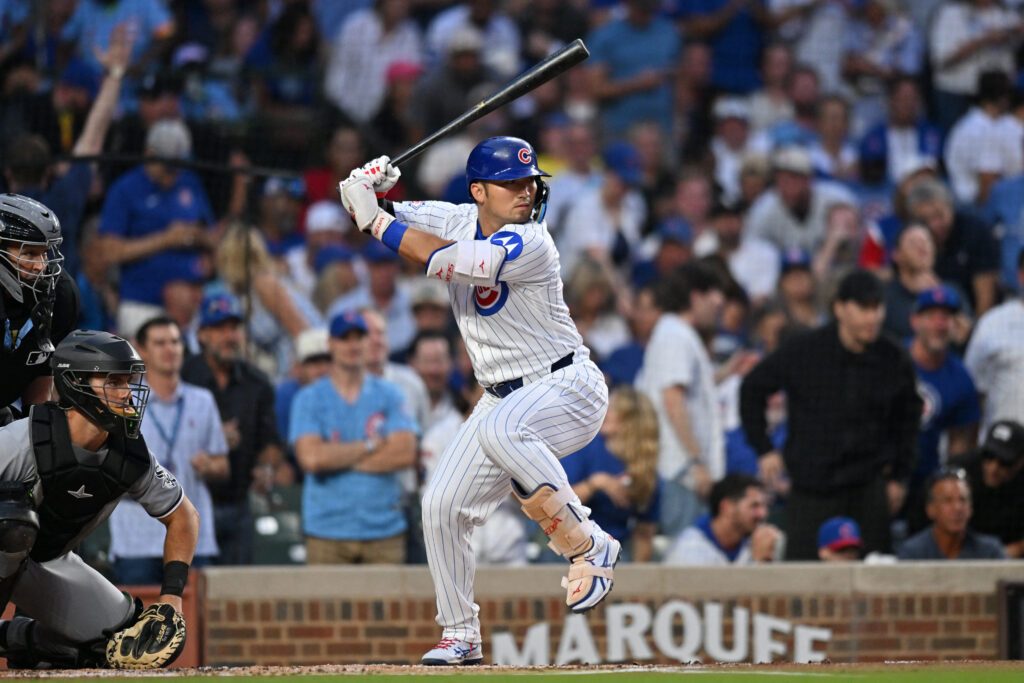
The qualifying offer is one of the offseason’s key mechanisms, as teams have until five days after the end of the World Series to decide whether or not to issue this specialized one-year contract to eligible free agents. If a player has played with his team throughout the entire 2026 season and hasn’t received a QO in the past, he is eligible to be issued a qualifying offer, and thus the player can opt to accept the one-year pact (worth $23.15MM this winter) and forego free agency altogether to stick with his club. If the player rejects the QO, his former team is now in line to receive a draft pick if the free agent signs elsewhere. Since the current collective bargaining agreement ends on December 1, this might very well be the last time the qualifying offer process will operate in this form, or even at all. This factor plus the inevitable lockout adds some extra layers of intrigue for both clubs and players in terms of issuing or accepting qualifying offers. A free agent who is uncertain about his market or wary of waiting out an extended labor stoppage might be more inclined than usual to accept a QO, whereas these same circumstances could make a team might be more or less inclined to issue a QO to such a borderline candidate. Here is the breakdown of what every team will receive if one of their qualified free agents indeed heads to another club. The finalized list of teams within each category won’t be known until MLB releases its official payroll calculations in early December, and last winter’s calculations saw the Cardinals drop into the recipient camp for the first time. This listing of the non-tax teams is based on how the clubs were categorized last winter, apart from the teams went over the tax line in 2026. As the projections from MLBTR’s Payroll Tracker indicate, the nine CBT payors exceeded the $244MM threshold by a wide enough margin that there isn’t any doubt about which teams will or won’t be paying the tax. Revenue Sharing Recipients: Athletics, Brewers, Cardinals, Diamondbacks, Guardians, Mariners, Marlins, Orioles, Pirates, Rays, Reds, Rockies, Royals, Tigers, Twins If any of these teams has a QO-rejecting free agent who signs elsewhere for more than $50MM in guaranteed money, the compensatory pick falls after the first round of next year’s draft. (Looking back to the 2024-25 offseason for an example, the Orioles received both the 30th and 31st overall picks in the 2025 draft since qualified free agents Corbin Burnes and Anthony Santander each signed for more than $50MM with their new teams.) If a team has a QO-rejecting free agent who signs elsewhere for less than $50MM guaranteed, the compensatory pick in the 2027 draft would come between Competitive Balance Round B and the start of the third round, which is usually somewhere in range of the 70th-75th overall selection. Most of this offseason’s probable QO candidates are coming from this group of teams, as MLBTR’s Anthony Franco wrote last month about the position players and pitchers who are likeliest to receive qualifying offers. Mariners outfielder Randy Arozarena and Orioles southpaw Trevor Rogers are sure things to get a QO, and Twins catcher Ryan Jeffers and Pirates second baseman Brandon Lowe also seem likely to get an offer before they hit the open market. There’s a much slimmer but non-zero chance that a QO could be offered to such players as Brewers first baseman Jake Bauers, Mariners infielder J.P. Crawford, Diamondbacks right-hander Michael Soroka, or Reds right-hander Brady Singer. Teams Who Don’t Receive Revenue-Sharing Funds, And Who Didn’t Pay The Competitive Balance Tax: Angels, Astros, Giants, Nationals, Rangers, White Sox For these teams, their compensatory 2027 draft pick for losing a qualified free agent would also fall between CBR-B and the start of the third round (regardless of whether or not the player signed for at least $50MM). The Cubs were in this group last offseason and earned the 75th overall pick as compensation when Kyle Tucker rejected Chicago’s qualifying offer and then signed with the Dodgers. Competitive Balance Tax Payors: Blue Jays, Braves, Cubs, Dodgers, Mets, Padres, Phillies, Red Sox, Yankees If a team exceeds the luxury tax line, their compensatory pick falls after the fourth round of the 2027 draft. The Padres and Phillies were also CBT payors last winter, and San Diego got the 136th overall pick (as compensation when Dylan Cease signed with Toronto) and Philadelphia the 137th overall pick (when Ranger Suarez signed with Boston). Cubs outfielder Seiya Suzuki will definitely receive a qualifying offer this winter, and Yankees closer David Bednar and Padres set-up man Adrian Morejon are also decent candidates for the QO. All three of those teams have another impending free agent (Chicago’s Ian Happ, New York’s Jazz Chisholm Jr., and San Diego’s Ty France) who are more longshot candidates for the QO, with Chisholm probably the likeliest of that trio.
Each Team’s Draft Compensation For Losing A Qualifying Offer-Rejecting Free Agent
Full Article
Original Source
Read the full article at Mlbtraderumors →KhanList aggregates and links to publicly available news content. We do not host full articles from third-party sources. Always verify important information with original sources.